
Acne · Laser
We are often asked why we keep so many acne devices. The answer is simple: acne is not a single problem but an overlapping state of sebum, clogged pores, inflammation, and the marks and scars left behind. Each sits at a different depth and calls for a different kind of energy.
Acne is not one single lump of a problem
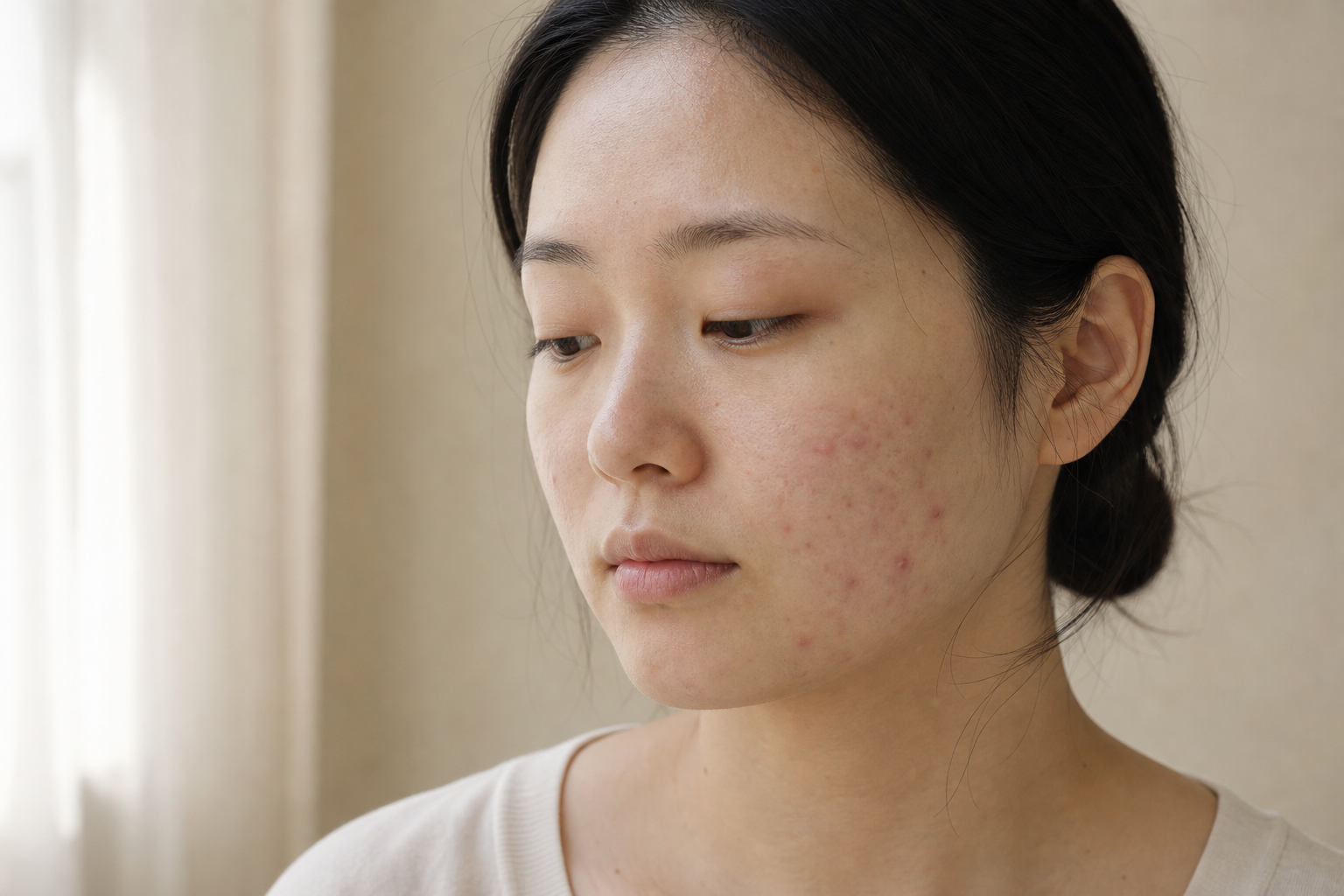
Even when everyone calls it ‘acne,’ the faces we see in the consultation room are all different. Some skin is covered in small bumps across the entire forehead; some keeps forming large lesions in the very same spot on the chin for months. In other cases, the inflammation has all settled, yet only red marks remain that makeup cannot cover.
Breaking the process of acne into stages shows why. Sebum production increases, the keratin at the pore opening thickens and blocks it, bacteria multiply inside, and inflammation eventually develops. If the inflammation runs deep, the tissue collapses and scars remain. The four stages follow in order, but which stage is the biggest problem differs from person to person.
The skin is very shiny and makeup does not last. Even after extractions, the pores fill up again within days. This calls for an approach that lowers the activity of the sebaceous glands themselves.
There is little inflammation, but small bumps and closed comedones linger for a long time. The priority is clearing the keratin layer and opening the pore entrances.
Red, painful, swollen pustular lesions keep recurring. The method used depends on whether they are spread widely or concentrated in one spot.
The inflammation is over, but red marks, brown pigmentation, and depressed scars remain. This is the realm of regeneration and pigment treatment, not acne treatment itself.
Each device reaches a different depth
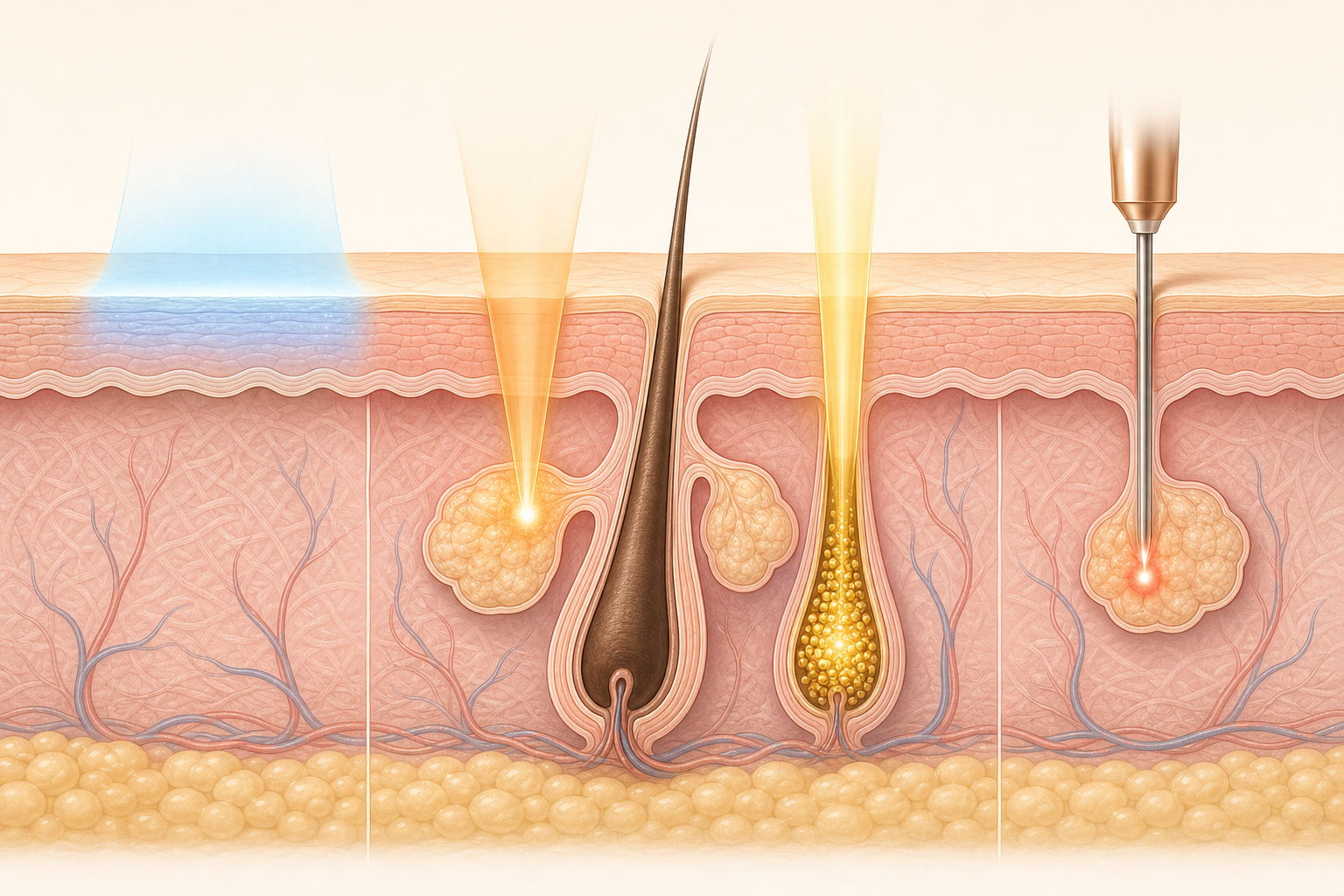
Here lies the real reason for keeping multiple acne devices. Sebaceous glands generally sit at a depth of 400~600㎛ below the skin surface. Wavelengths absorbed in the epidermis cannot reach this far, while energy that travels deep cannot handle the keratin and pigment at the surface.
No single device can cover every depth. Once the wavelength is set, so is the depth it reaches. This is also why the device suited to widespread inflammation differs from the one suited to lesions that keep recurring in one spot on the chin.
A wavelength is chosen so that it is absorbed by specific tissue. It can pass over a wide area at once without needles, making it favorable for lesions spread across the whole face.
Microneedles travel to the target depth and generate heat only at that point. Because each lesion is targeted individually, it is favorable for spots that recur locally.
Lumiin’s acne devices, and the role each one holds
Each device is good at something different. Below is a summary of which stage each of the devices used in acne care at Lumiin Dermatology actually covers.
Devices for inflammation and sebum
| Device | How it works | Main role |
|---|---|---|
| NeoBeam | 1450nm diode laser. Concentrates heat at the depth of the sebaceous glands while protecting the epidermis with cooling gas | Inflammatory acne spread across the forehead and cheeks, excess sebum, oily skin |
| Gold PTT | Gold nanoparticles are delivered into the follicles, then activated by laser so heat builds only at those points | Inflammatory acne across the face, skin environments where acne keeps recurring |
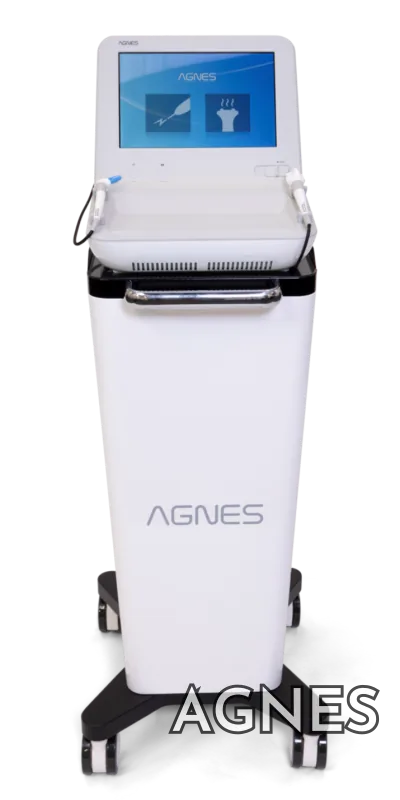
| Agnes | Insulated microneedles enter directly into the sebaceous gland, generating radiofrequency heat only at the needle tip | Pustular lesions that keep rising in the same spot, sites of localized recurrence |
Devices for red marks and pigmentation
| Device | How it works | Main role |
|---|---|---|
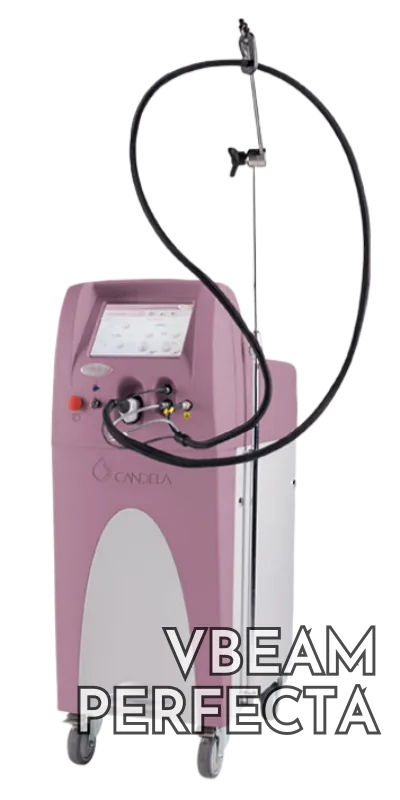
| Vbeam Perfecta | 595nm pulsed dye laser. Selectively absorbed by hemoglobin | Red marks left after acne has passed, dilated superficial vessels |
| PicoSure | Delivers 755nm in picosecond pulses, breaking pigment apart with pressure waves | Brown pigmentation left after inflammation |
Devices for depressed scars and pores
| Device | How it works | Main role |
|---|---|---|
| Avio | 2940nm Er:YAG laser. Performs fine resurfacing and creates fractional channels while leaving little residual heat | Surface unevenness, thickened keratin, closed comedones caused by keratin buildup |
| Potenza | Emits radiofrequency from the microneedle tips, delivering thermal stimulation only to the dermis | Deep depressed scars, enlarged pores, rough skin texture |
| Rejuran S | Locally injects high-viscosity polynucleotides into the dermis of the scarred area | The stage of filling depressed areas and creating a regenerative environment around scars |
The lead role changes with the stage
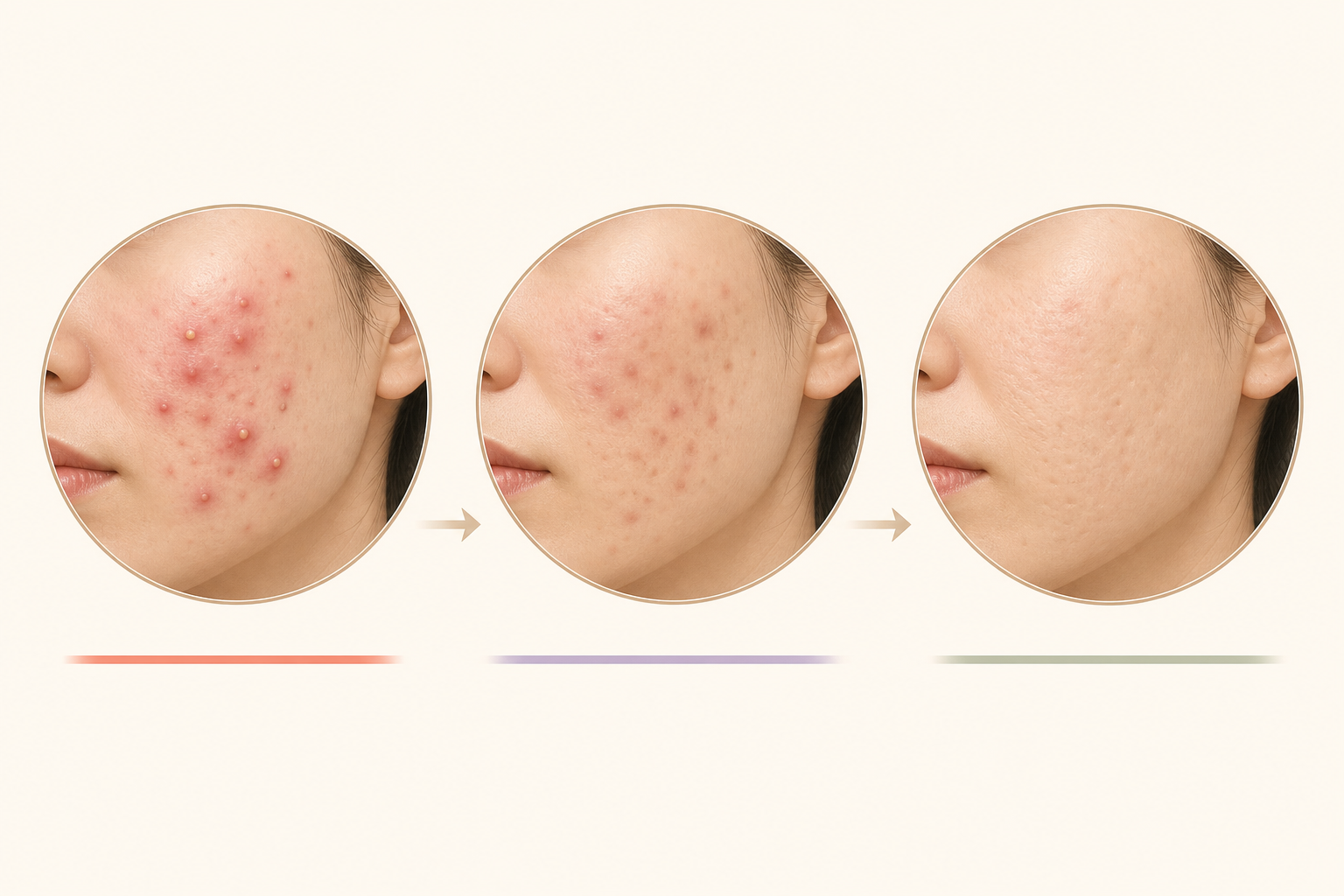
The second reason for keeping multiple devices is time. Even the same person’s skin can need different treatment within a matter of months. Running a scar laser while inflammation is at its peak can make the inflammation worse, while continuing only sebum control on skin whose inflammation has fully ended leaves the remaining marks as they are.
- Calm the inflammation first
Reducing the number of lesions comes first. Extractions and scaling are combined with medication when needed, while NeoBeam, Gold PTT, and Agnes handle sebum and inflammation. Skipping this stage makes the later treatments take longer. - Clear the red marks and pigmentation
Once the inflammation has settled, Vbeam is planned for the remaining red marks, and toning treatments and PicoSure for the marks left brown. Marks can also fade with time, so we do not rush into aggressive treatment. - Address the depressed scars
Avio is combined for surface unevenness, Potenza for deep scars and pores, and Rejuran S for depressed areas. Because intensity is raised gradually across divided sessions, this is the stage that takes the longest. - Manage recurrence
For skin that produces a lot of sebum, it is better to continue maintenance care at longer intervals even after treatment is complete. Acne is a condition closer to ongoing management than to a one-time cure.
In severe acne with widespread nodules and cysts, or when scars are increasing rapidly, oral medication carries a much larger share of the treatment. Starting with lasers in these cases can add time and cost. While taking isotretinoin, the type and timing of procedures should be discussed separately.
In summary
Having multiple acne devices is not about boasting of the number of machines. It is because the depth of the sebaceous glands, the extent of the inflammation, the color of the marks, and the shape of the scars each demand different conditions.
What matters in the consultation room is not which devices are available, but precisely determining which stage of treatment this particular skin needs right now.
If lesions are forming large, red, and firm, keep recurring in the same spot, or depressed marks are already increasing, medical care should come before self-care. Scars created by squeezing with your hands are difficult to reverse.
Medical references
- Korean Society for Acne Research acne treatment guidelines — stepwise treatment principles by severity
- American Academy of Dermatology guidelines for the management of acne vulgaris — priority of pharmacological treatment and the adjunctive role of procedures
- Literature on the principle of selective photothermolysis — target chromophores and penetration depth by wavelength
- 1450nm diode laser for inflammatory facial acne: studies on sebaceous gland targeting combined with cooling
- Gold microparticle-assisted photothermal therapy for acne vulgaris: studies on selective sebaceous gland photothermal treatment
- Insulated microneedle radiofrequency for acne: clinical reports on selective coagulation of sebaceous glands
- Literature on the treatment of post-acne erythema and post-inflammatory hyperpigmentation — PDL, IPL, and picosecond lasers
- Acne scar treatment literature — ablative fractional laser, microneedle RF, subcision, and combination therapy
- Specifications of the equipment at Lumiin Dermatology and manufacturer-provided materials
Equipment
이 진료에 함께 쓰는 장비
NEOBEAM
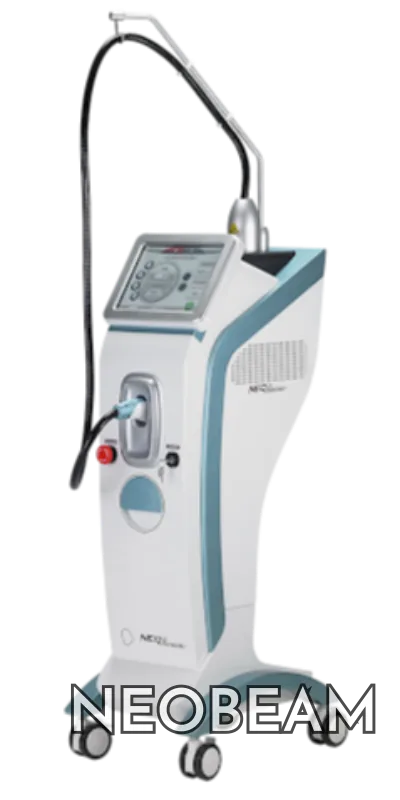
Used for inflammatory acne, oily skin, and pores enlarged by sebum. The 1450nm wavelength concentrates heat on the sebaceous glands 400–600㎛ below the skin surface, while a cooling spray protects the epidermis, which helps control sebum and improve inflammation.

Gold PTT
Used for inflammatory acne spread widely across the face and a skin environment where breakouts keep recurring. Gold nanoparticles are delivered into the follicles and sebaceous glands, then activated by laser so heat gathers only at those points, which helps improve inflammation while reducing the burden on normal tissue.
Agnes
Used for pustular acne that keeps recurring in the same spots and excessive sebum. An insulated microneedle reaches directly into the sebaceous gland and generates radiofrequency heat only at the needle tip, which helps improve frequently recurring lesions while reducing the burden on the epidermis.
Cellec V
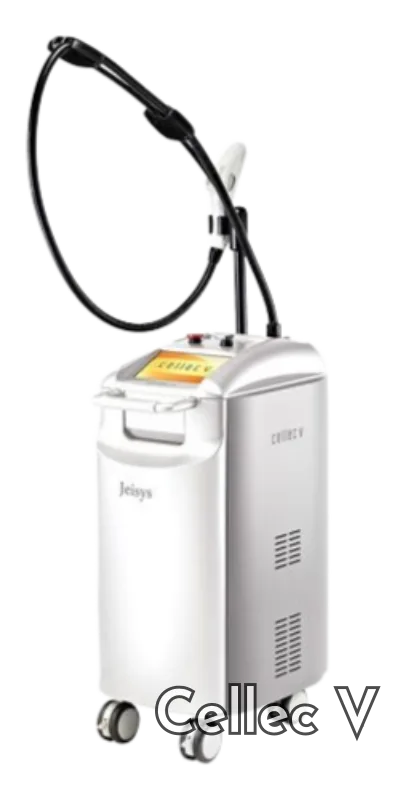
Used for complex skin concerns where melasma and blemishes coexist with redness. With 9 filters dividing the 420–700nm wavelength range, it targets pigment and vessels in a single treatment, helping tidy up pigmentation and redness together.
Vbeam Perfecta
Used for concerns where vessels show through and the skin looks red, such as facial flushing, dilated capillaries, and red post-acne marks. The 595nm wavelength is absorbed by hemoglobin, coagulating only the dilated vessels, while cryogen spray protects the epidermis as it helps improve redness.
Clarity II
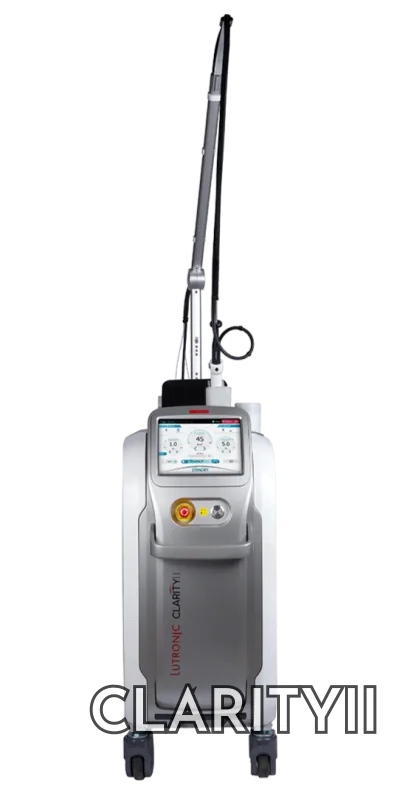
Used for concerns where pigment and vessels overlap, such as facial redness, dilated capillaries, blemishes, and fine hair. The two wavelengths are assigned by depth — 755nm for epidermal pigment, 1064nm for deeper dermal vessels — while cryogen spray protects the epidermis, helping improve these concerns.
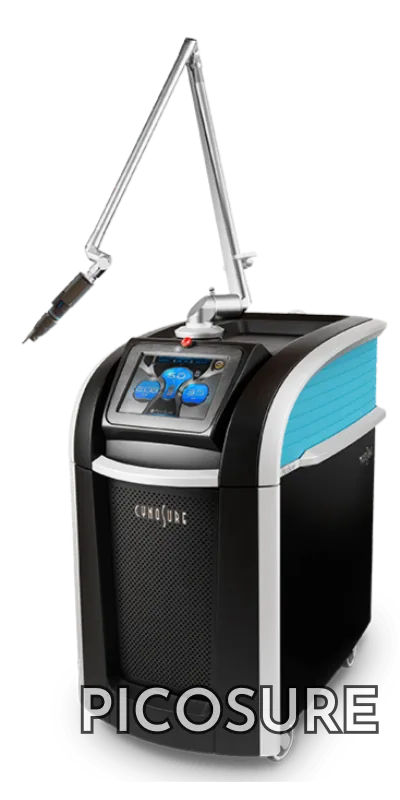
PicoSure
Used for settled pigment concerns such as melasma, blemishes, and age spots, as well as acne scars. It fires a 755nm wavelength in picosecond pulses, shattering pigment with instantaneous pressure waves rather than heat, which helps improve pigmentation while reducing the burden on the epidermis.
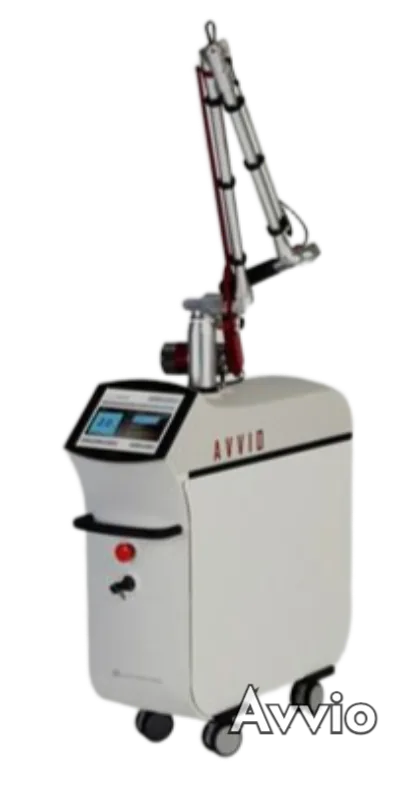
AVVIO
Used for uneven surface concerns such as depressed acne scars, enlarged pores, and thickened dead skin. The 2940nm wavelength is absorbed in the shallow layers, finely ablating the stratum corneum without leaving residual heat, and fractional channels induce regeneration to help with improvement.
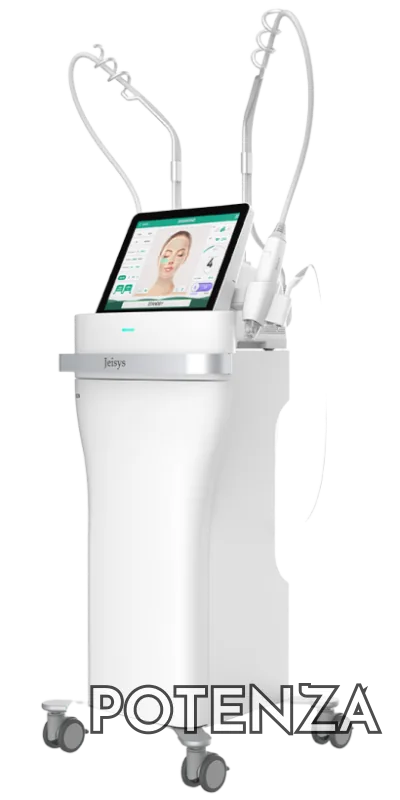
Potenza
Used for uneven surface concerns such as enlarged pores, depressed acne scars, and rough skin texture. Microneedles reach into the dermis and deliver radiofrequency heat only at the needle tips, which helps improve skin texture and scars while reducing the burden on the epidermis.
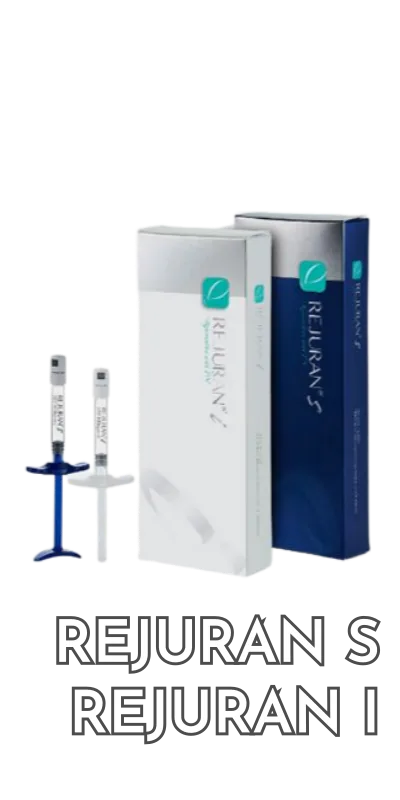
Rejuran S/I
Used for concerns involving dermal damage, such as depressed acne scars and thinning skin around the eyes. Polynucleotides purified from salmon are placed 1.5–2.5mm deep in the dermis to stimulate fibroblasts, and as collagen fills in, this helps improve scars and fine lines.