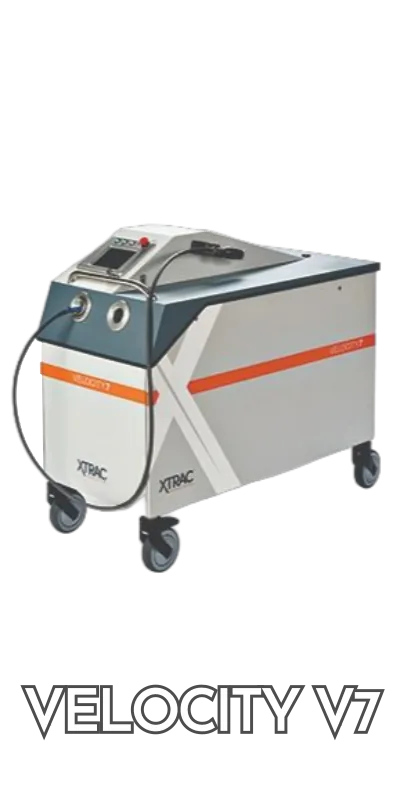
XTRAC Velocity V7 Excimer Laser · STRATA Skin Sciences
Velocity Excimer Laser
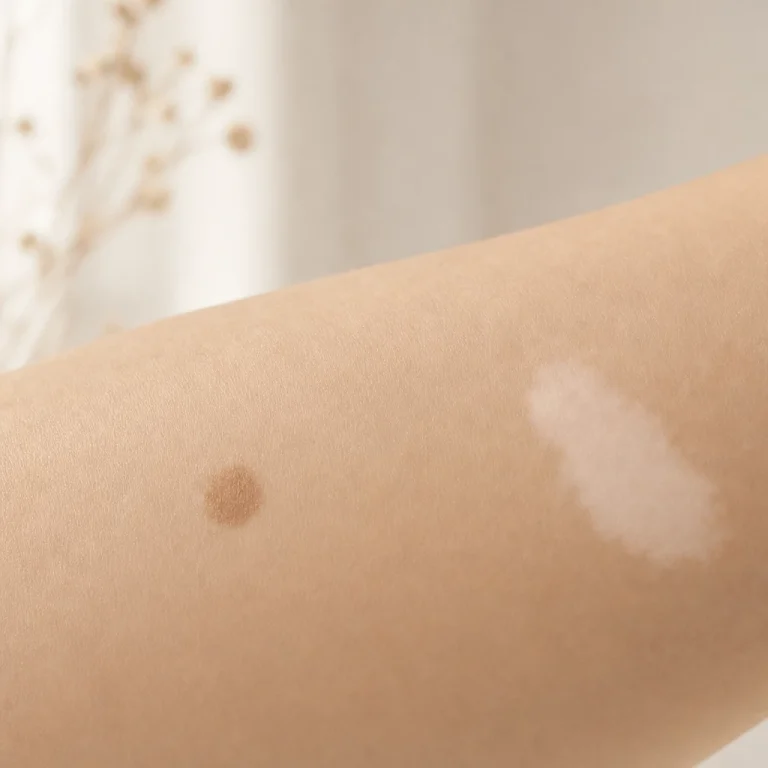
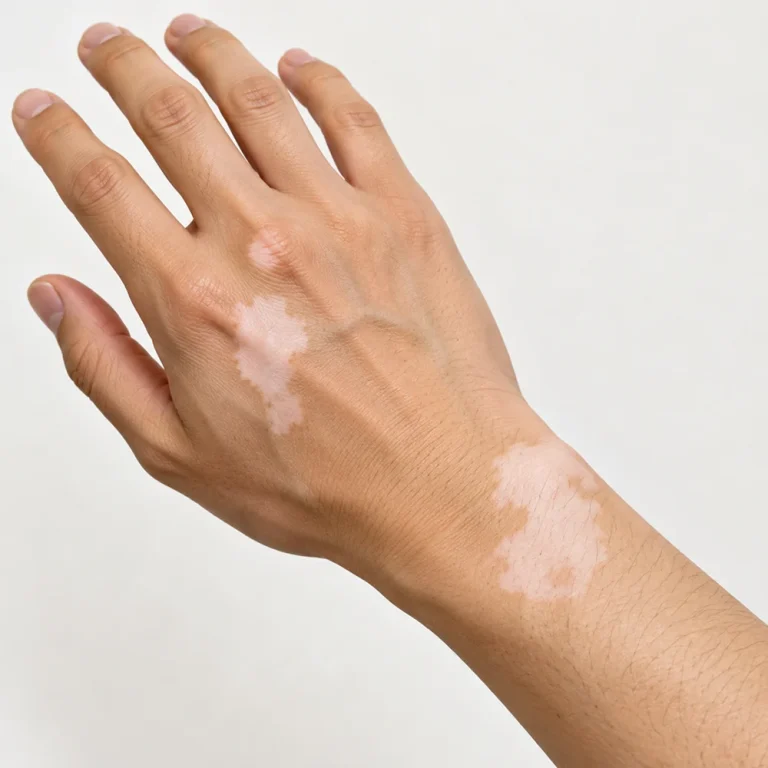
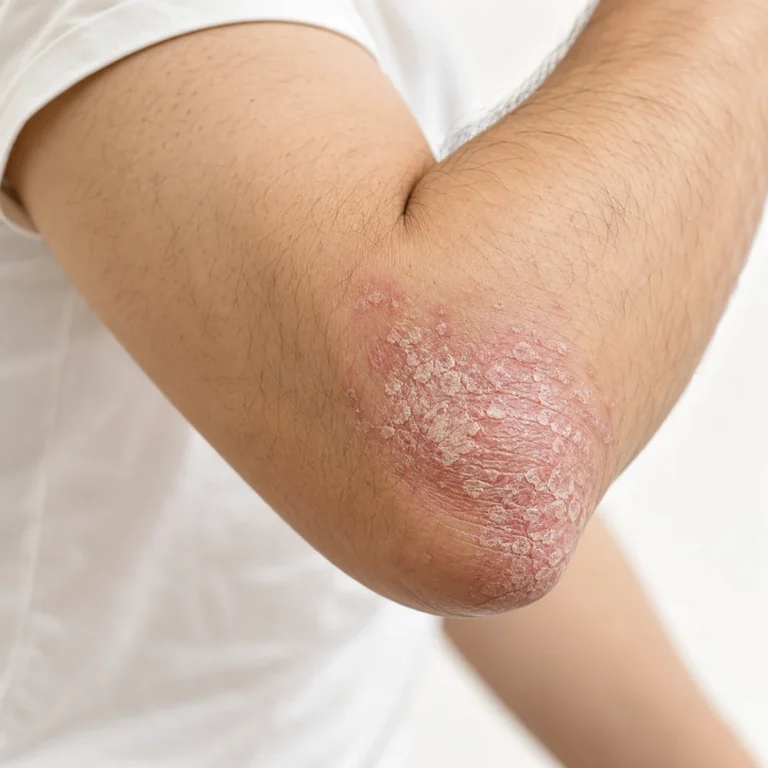
Used for conditions with well-defined localized lesions, such as vitiligo, psoriasis, and alopecia areata. By narrowly delivering 308nm ultraviolet light to the lesion alone, it modulates overactive immune cells and stimulates melanocytes, reducing exposure of normal skin while helping regenerate pigment.
How It Works
How This Equipment Works
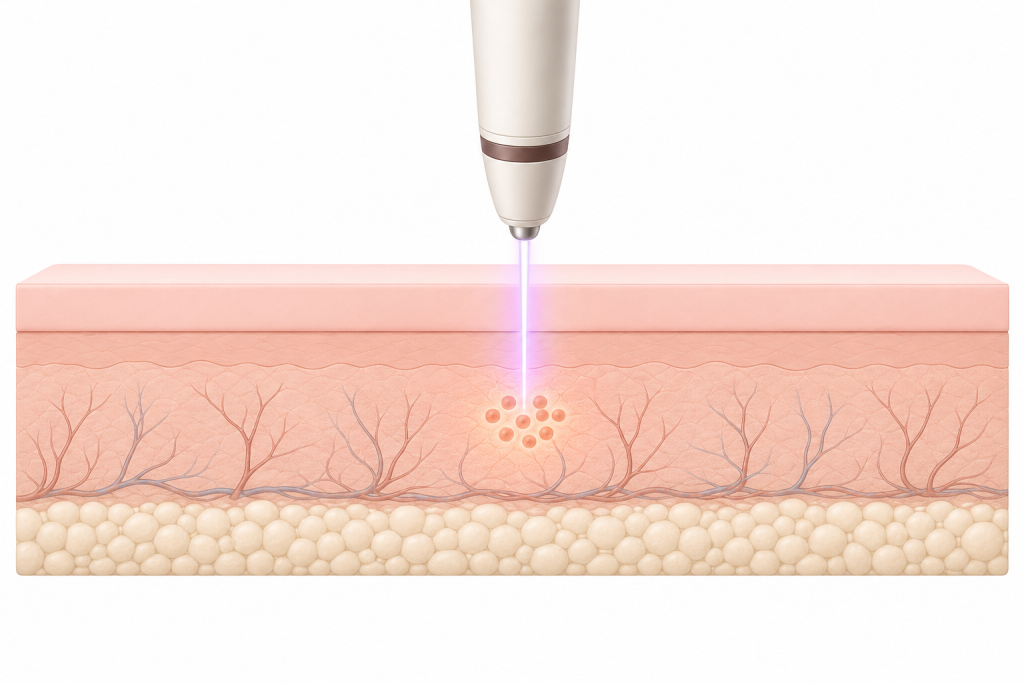
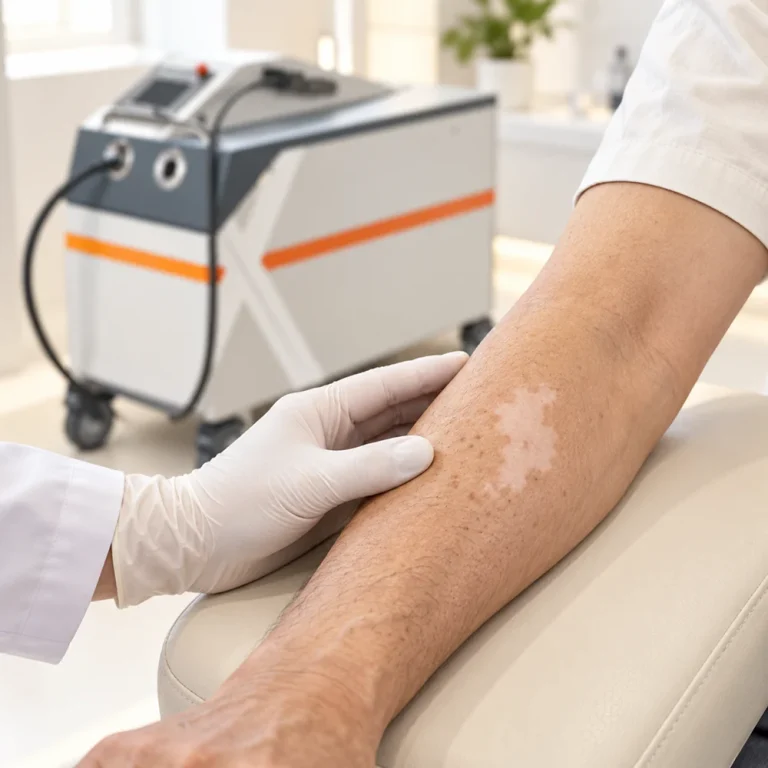
The Velocity Excimer Laser V7 is a targeted phototherapy device that uses xenon-chloride (XeCl) gas as its light source to generate single-wavelength 308nm ultraviolet B and deliver it only to the lesion.
The 308nm light reaches the epidermis and upper dermis, inducing apoptosis of the activated T lymphocytes attacking the skin and modulating the local immune response. At the same time, it stimulates the melanocytes remaining in the outer root sheath of hair follicles and around the lesion margins, promoting the proliferation and migration of pigment cells.
Because the handheld applicator targets only the lesion, unnecessary ultraviolet exposure of the surrounding normal skin is reduced, while a relatively higher dose can be delivered to the lesion in a short time.
Whereas 311nm narrowband UVB irradiates broad areas evenly, 308nm excimer therapy concentrates on small, defined lesions — the two approaches serve different roles.
Effects
Expected Effects
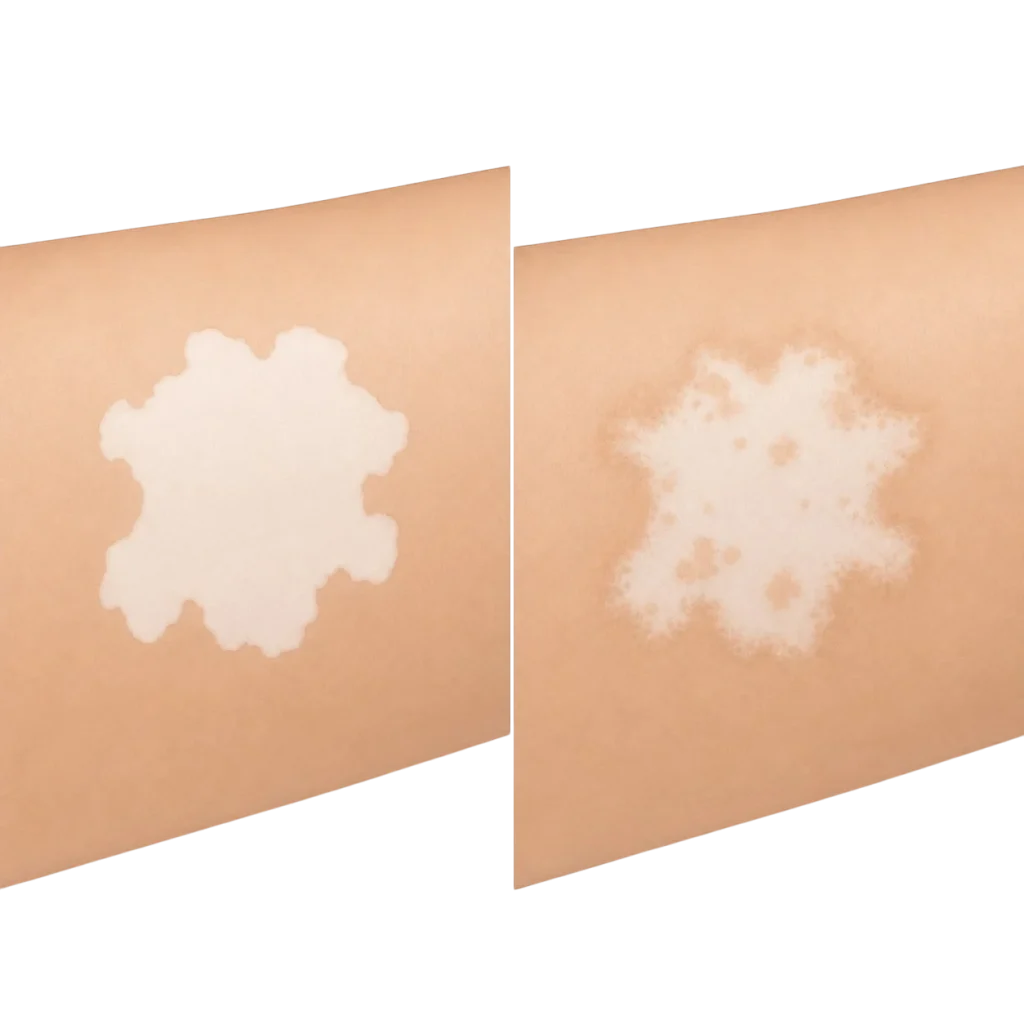
- Helps regenerate pigment in localized vitiligo lesions
- Helps improve the redness and scaling of plaque psoriasis
- Helps improve thick lesions on the elbows, knees, and similar areas
- Helps with hair regrowth in alopecia areata lesions
- Helps relieve itching in localized atopic dermatitis
- Helps reduce ultraviolet exposure of normal skin
FAQ
Frequently Asked Questions
How long does one session take?
Since only the lesion is treated, the irradiation itself is usually finished within 10 minutes. The time varies with the size and number of lesions and the set dose, and even including preparation and protective eyewear, the session remains short.
Is there pain or irritation during treatment?
During irradiation you may feel warmth or slight stinging, and no anesthesia is required. The treated area may redden for a few hours to a day afterward; if the dose is too high, blisters or a burning sensation can occur, so the dose is adjusted while monitoring your response.
How should I care for the skin after treatment?
Daily activities, face washing, and showering are possible immediately after the session, and no separate downtime is needed. Apply moisturizer generously and limit sun exposure on the treated area; if redness persists or blisters form, let us know before your next session.
How often, and how many sessions are needed?
Treatment is generally given 1 to 3 times per week, with response assessed from around the 6th to 8th session. Vitiligo and psoriasis are chronic conditions, so a long-term plan of 20 to 30 or more sessions is needed, and maintenance intervals are adjusted according to response.
Can it be combined with ointments or oral medication?
Combination therapy with topical steroids, calcineurin inhibitors such as tacrolimus, and vitamin D analog ointments is commonly used. Oral medication may also be prescribed when needed; if you are taking any medication that can cause photosensitivity, please let us know at consultation.
※ Treatment results and responses may vary from person to person, and side effects may occur. Please consult us during your visit for details.