CO2 Laser (Carbon Dioxide, 10,600nm)
CO2 Laser
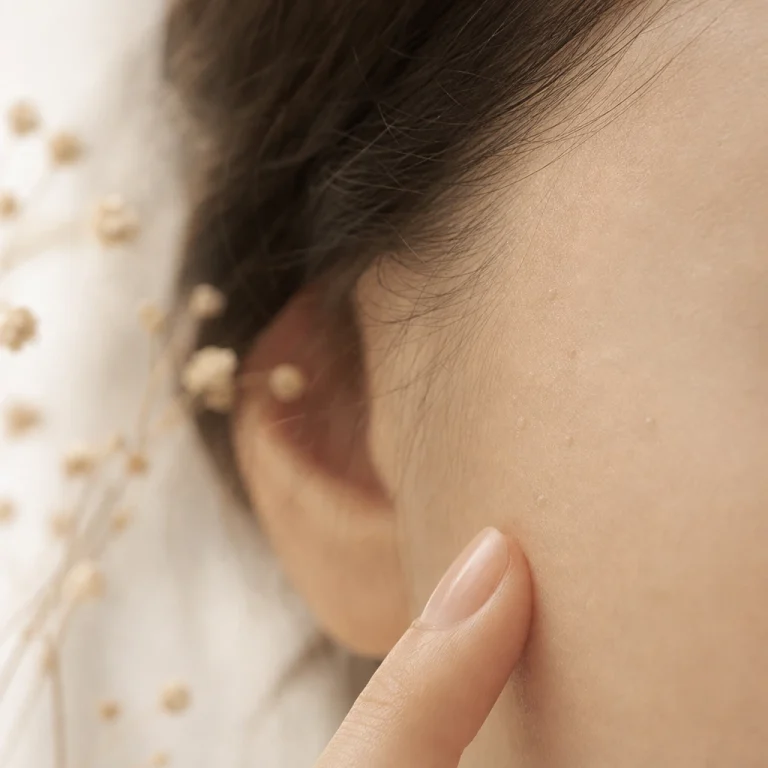
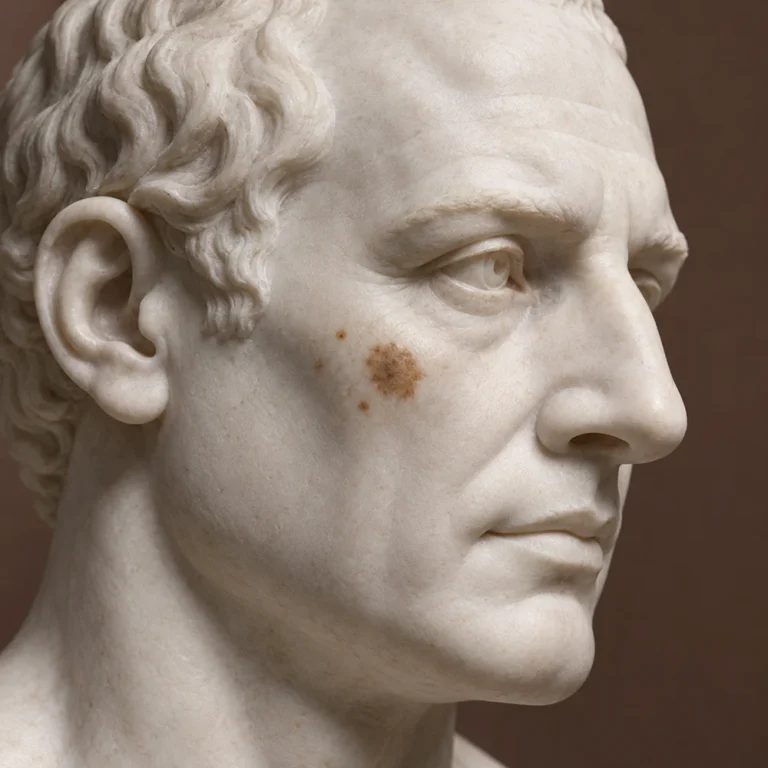
Used for lesions that stand out on the skin surface, such as moles, age spots, flat warts, and milia. The 10,600nm wavelength is absorbed by water within the tissue, vaporizing the lesion in thin layers, which helps clear only the lesion while the depth is precisely controlled.
How It Works
How This Equipment Works
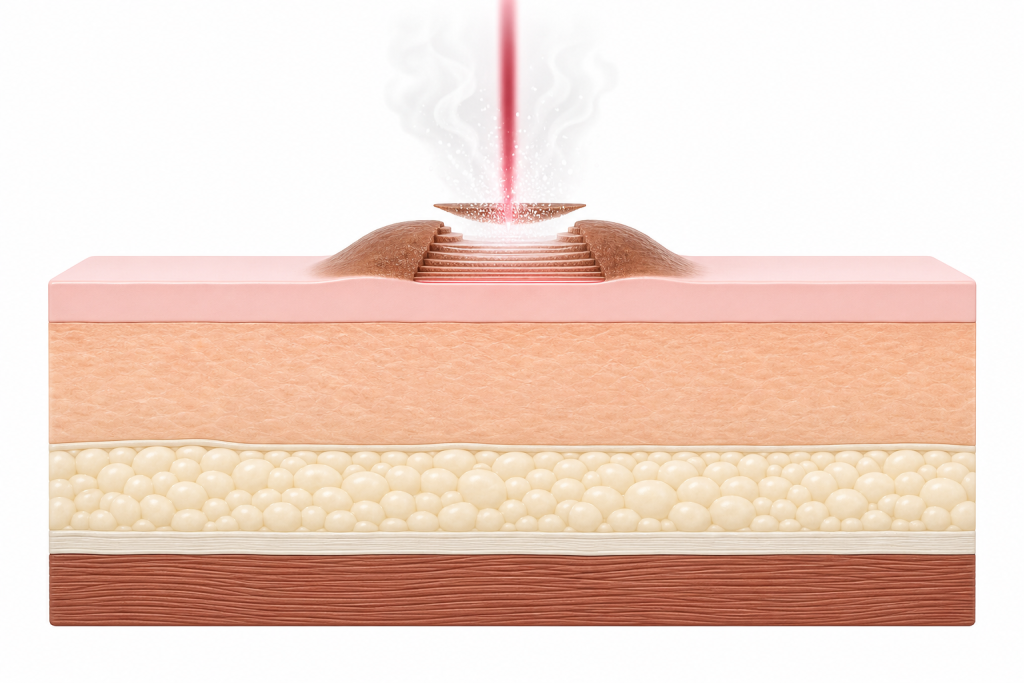
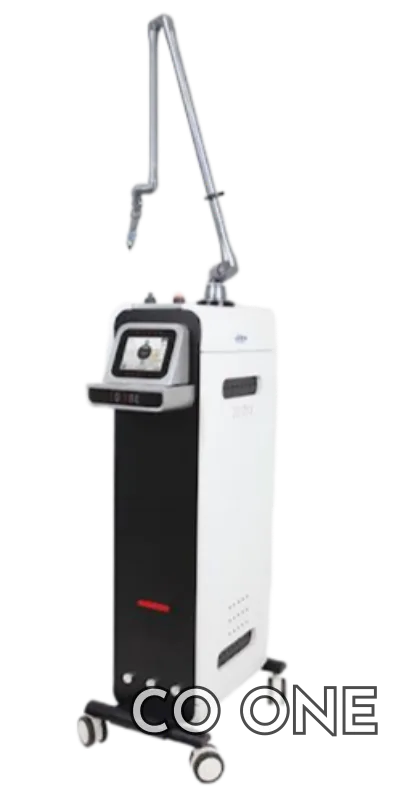
The CO2 laser is an ablative laser that uses a 10,600nm far-infrared wavelength. This wavelength is strongly absorbed by water in the tissue, and as the water in the treated area vaporizes instantly, the lesion tissue is shaved away in thin layers.
Because it targets water rather than melanin or hemoglobin, it can also be applied to lightly colored lesions. The output and exposure time are adjusted to refine the depth step by step, working only as deep as needed to reduce thermal damage to the surrounding tissue.
As the tissue vaporizes, fine blood vessels are coagulated at the same time, so there is little bleeding and the treatment field stays clear. Delivery modes are divided into continuous wave, pulsed, and a fractional mode that fires the beam in fine dots.
Surface lesions such as moles and age spots are treated shallowly, warts and raised lesions are treated while checking the depth, and for scar improvement the fractional mode is used to induce a regenerative response—the uses are divided by purpose.
Effects
Expected Effects
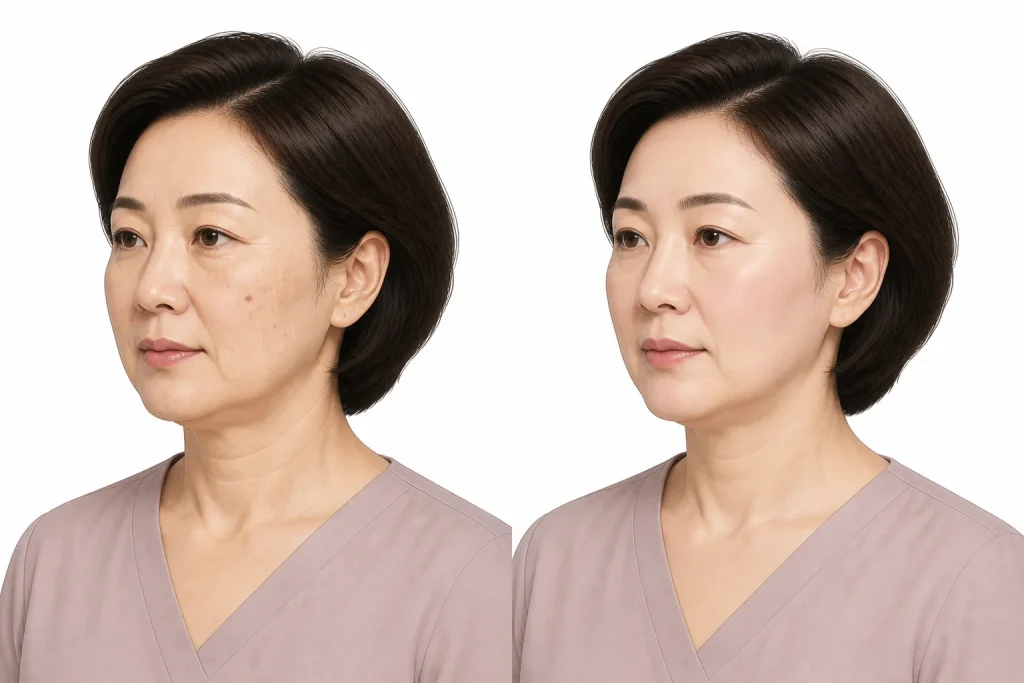
- Helps improve surface pigmented lesions such as moles and age spots
- Helps improve flat warts, milia, and skin tags
- Helps improve raised benign skin lesions
- Helps improve acne scars and depressed scars
- Helps improve uneven skin surface and texture
- Helps improve benign skin growths such as syringomas
FAQ
Frequently Asked Questions
How long does the treatment take?
Removing a few moles takes only about 5 minutes of laser time. Including 20–30 minutes for numbing cream application, plan on about 30–40 minutes in total. If age spots or warts are widely distributed, the laser time will be longer.
Does it hurt? Is anesthesia needed?
Since the treatment ablates the skin, it is performed under anesthesia. Numbing cream is usually applied before the procedure, and local anesthetic injections are added for deep or large lesions. After anesthesia, you feel only warmth or a dull, pressure-like sensation.
What about recovery and daily life?
A dark scab forms on the treated area and usually falls off naturally within 7–10 days. Keep a healing tape on until oozing subsides, change it as little as possible, and do not pick at the scab. After the scab falls off, pink new skin appears; if sun protection is neglected during this period, it can lead to hyperpigmentation, so use sunscreen consistently for 2–3 months.
How many sessions are needed, and at what interval?
Surface moles and age spots are often finished in a single session. For deep moles or frequently recurring warts, additional sessions are planned at 4–8 week intervals after the skin has fully healed. Fractional treatment for scar improvement is repeated over multiple sessions at intervals of 4 weeks or more.
Can it be combined with other treatments?
As a rule, other lasers are not applied to the same area while the scab remains. If hyperpigmentation remains after the wound has healed, it is followed by laser toning or brightening care. Regenerative care and moisturizing/repair ointments are used from right after the procedure to support recovery.
※ Treatment results and responses may vary from person to person, and side effects may occur. Please consult us during your visit for details.