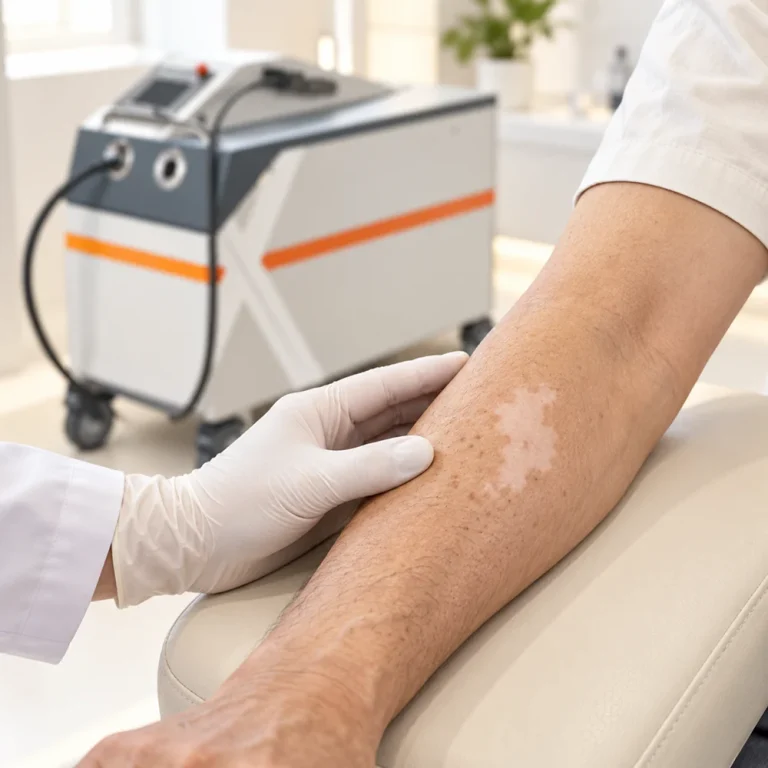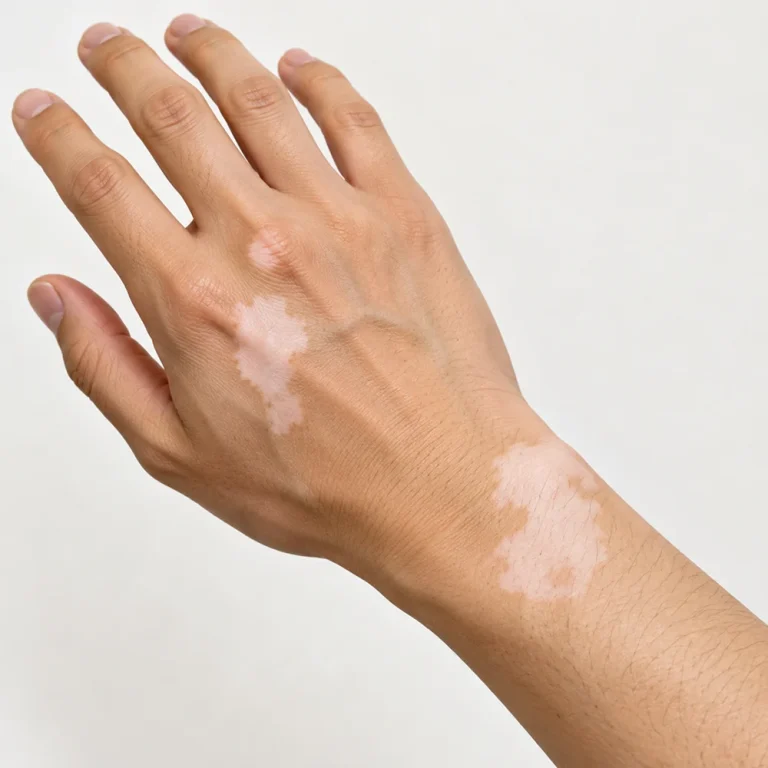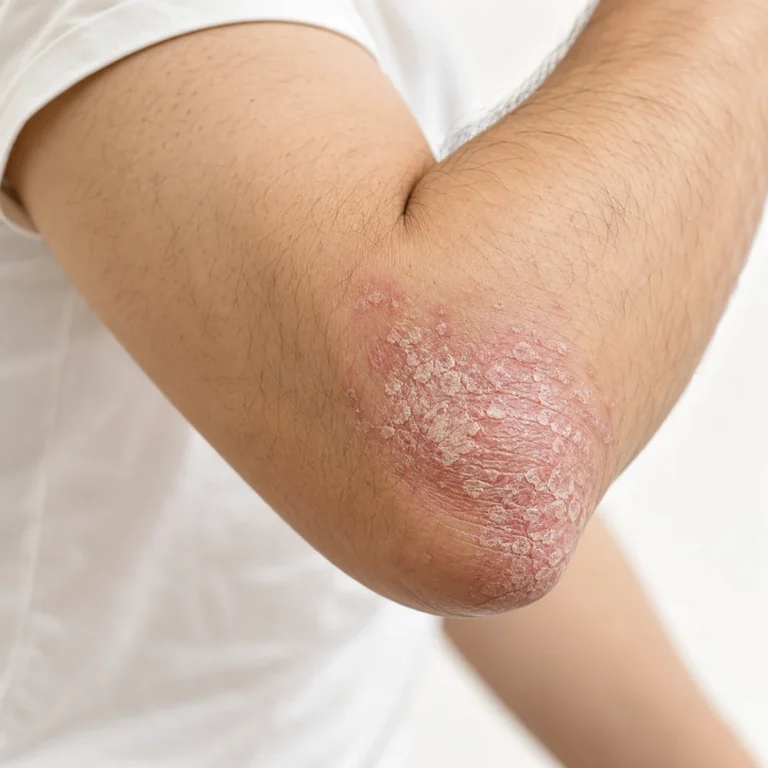
Hand & Foot Narrow-band UVB (311nm) Phototherapy Unit
Hand & Foot UV Phototherapy Unit
Used for concerns confined to limited areas, such as palmoplantar psoriasis, chronic hand eczema, and dyshidrotic eczema. It delivers concentrated 311nm UV light to the thick-skinned hands and feet, modulating the immune response without whole-body exposure, which helps improve cracking and inflammation.
How It Works
How This Equipment Works
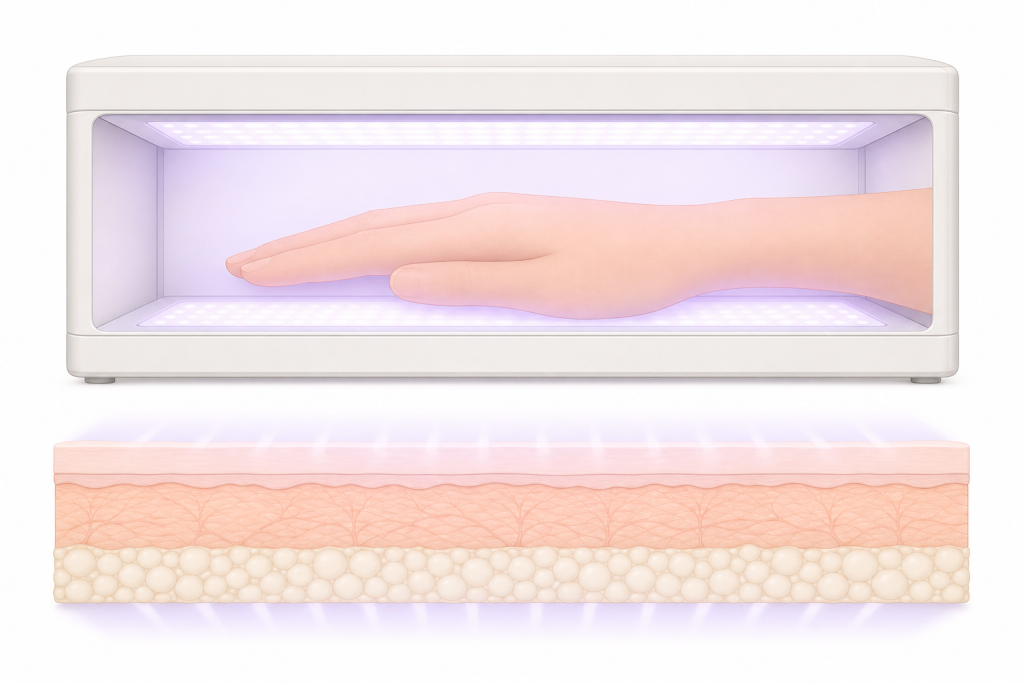
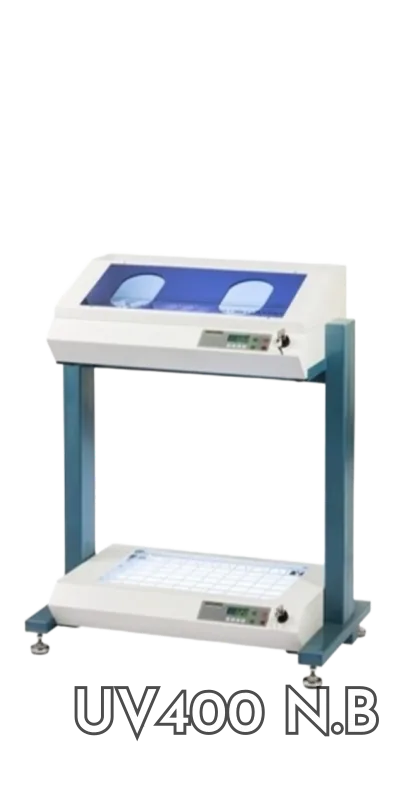
The hand and foot phototherapy unit places 311nm narrow-band UVB lamps in a compact irradiation module on which the hands and feet are placed, treating only confined areas such as the palms, soles, and around the nails.
The 311nm light reaches the epidermis and upper dermis, inducing apoptosis of activated T lymphocytes, reducing inflammatory signals, and moderating the excessive proliferation of keratinocytes. In vitiligo, it stimulates melanocytes to support repigmentation.
Because the hands and feet have a thick stratum corneum that light penetrates only with difficulty, the approach concentrates the light on these areas and adjusts the dose, rather than using a whole-body cabin.
For those hesitant about whole-body irradiation, being able to selectively treat only hand and foot lesions without exposing the entire body to UV light is what distinguishes it from cabin-type whole-body units.
Effects
Expected Effects
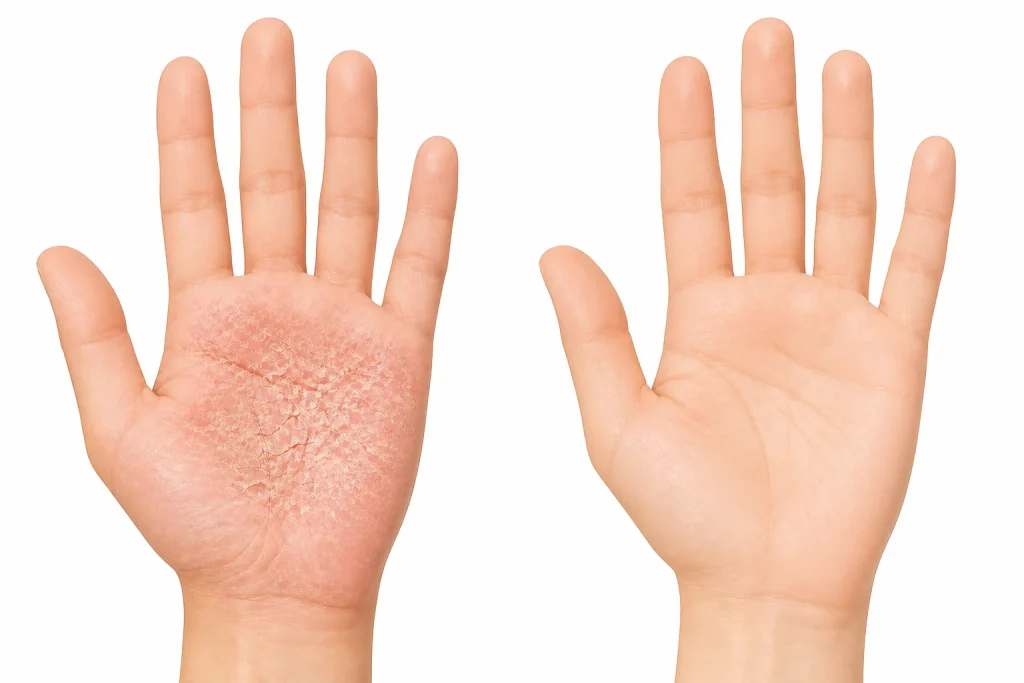
- Helps improve scaling and cracking in palmoplantar psoriasis
- Helps relieve inflammation in chronic hand eczema
- Helps control blistering eczema such as dyshidrotic eczema
- Helps stimulate repigmentation of vitiligo on the hands and feet
- Helps improve itching from atopic dermatitis on the hands and feet
- Helps treat only the hands and feet without whole-body exposure
FAQ
Frequently Asked Questions
How long does one session take?
The hands and feet are placed on the irradiation module, and exposure starts short, within a few minutes at first. The time is then increased little by little based on the response, and you can receive treatment comfortably while seated.
Is there pain or irritation during treatment?
You feel only mild warmth, there is almost no pain, and no anesthesia is needed. The hands and feet may become red or dry after treatment, and cracked areas may sting slightly. If the reaction is strong, the next session is given at a lower dose.
How should I care for my skin after treatment?
You can use your hands and return to daily life immediately after treatment, with no separate downtime. Apply moisturizer or keratolytic agents frequently to reduce cracking, and wear gloves if you often handle detergents or water. If blisters or severe redness appear, let us know at your next visit.
How often and how many sessions are needed?
Treatment is usually given 2–3 times a week on non-consecutive days. Because the thick keratin of the hands and feet makes changes appear slowly, a treatment plan lasting about 12–16 weeks is often set. Hand and foot psoriasis and eczema are chronic conditions that alternate between flares and improvement, so maintenance treatment after improvement is also discussed.
Can it be combined with ointments or oral medication?
Combination therapy with topical steroids, vitamin D analogue ointments, and keratolytic agents is commonly used. Softening thick keratin before irradiation helps the light penetrate. If you are taking oral medication or using drugs that can cause photosensitivity, be sure to tell your doctor.
※ Treatment results and responses may vary from person to person, and side effects may occur. Please consult us during your visit for details.