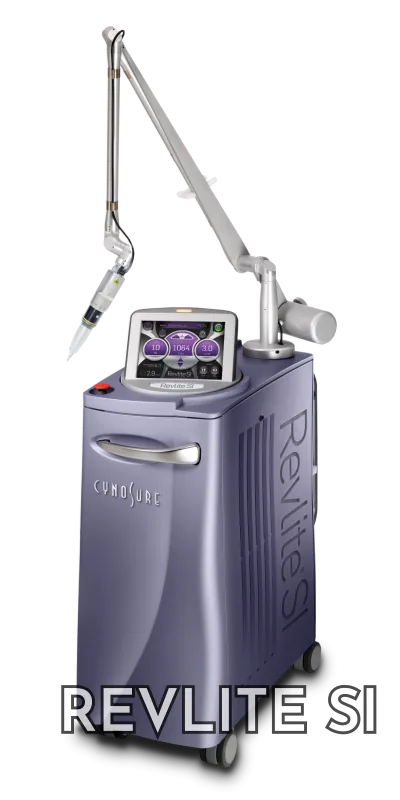
RevLite SI (Q-Switched Nd:YAG) · Cynosure
RevLite
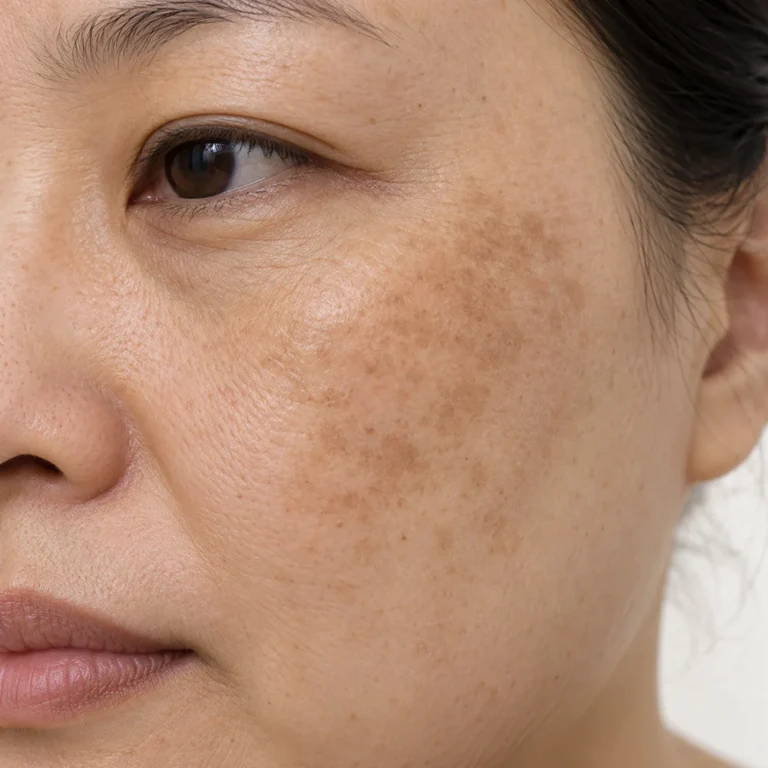
Used for concerns where pigment is mixed through the epidermis and dermis, such as melasma, blemishes, and a dull skin tone. It targets pigment by depth with two wavelengths, 1064nm and 532nm, and helps improve skin tone through a toning approach of multiple low-energy passes.
How It Works
How This Equipment Works
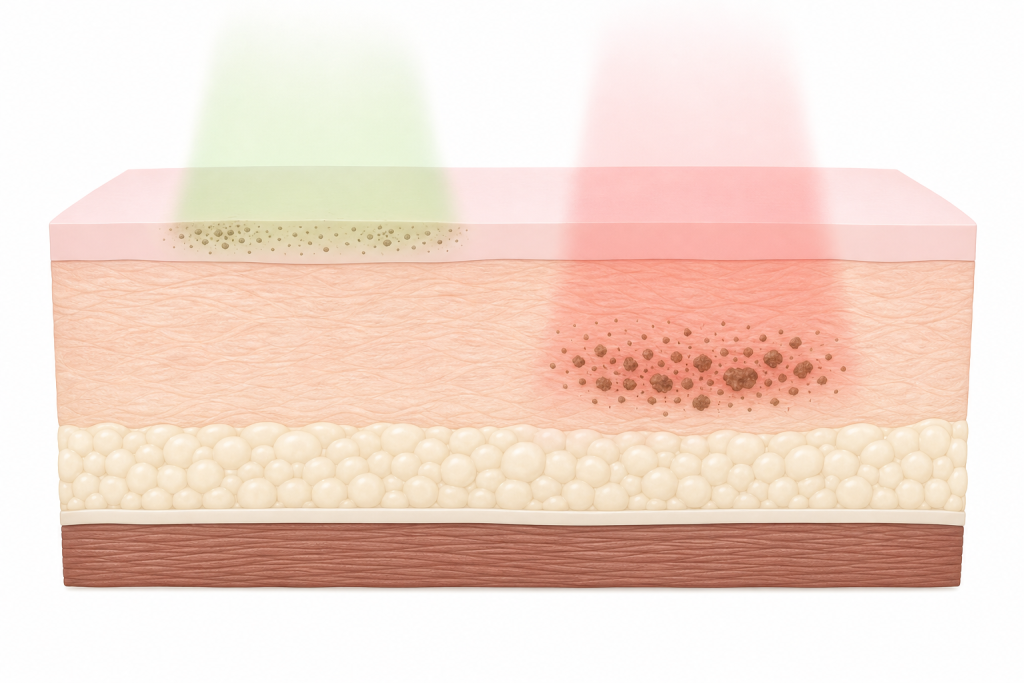
RevLite is a Q-switched Nd:YAG laser that delivers two wavelengths, 1064nm and 532nm, in nanosecond pulses. The 1064nm wavelength reaches deep melanin in the dermis, while 532nm is well absorbed by shallow epidermal blemishes and freckles, targeting only the pigment on the principle of selective photothermolysis.
PTP (PhotoAcoustic Therapy Pulse) mode splits a single pulse into two pulses microseconds apart. By lowering the instantaneous peak load while preserving the photoacoustic effect, it is used to reduce epidermal irritation.
The beam profile is designed to be flat, so energy is delivered evenly across the treatment spot, and the SI handpiece adjusts the spot size in 0.1mm increments.
The laser toning approach — multiple low-energy passes over a wide area — is used to fade pigment gradually while minimizing epidermal damage, and cool-air cooling reduces the heat sensation during treatment.
Effects
Expected Effects
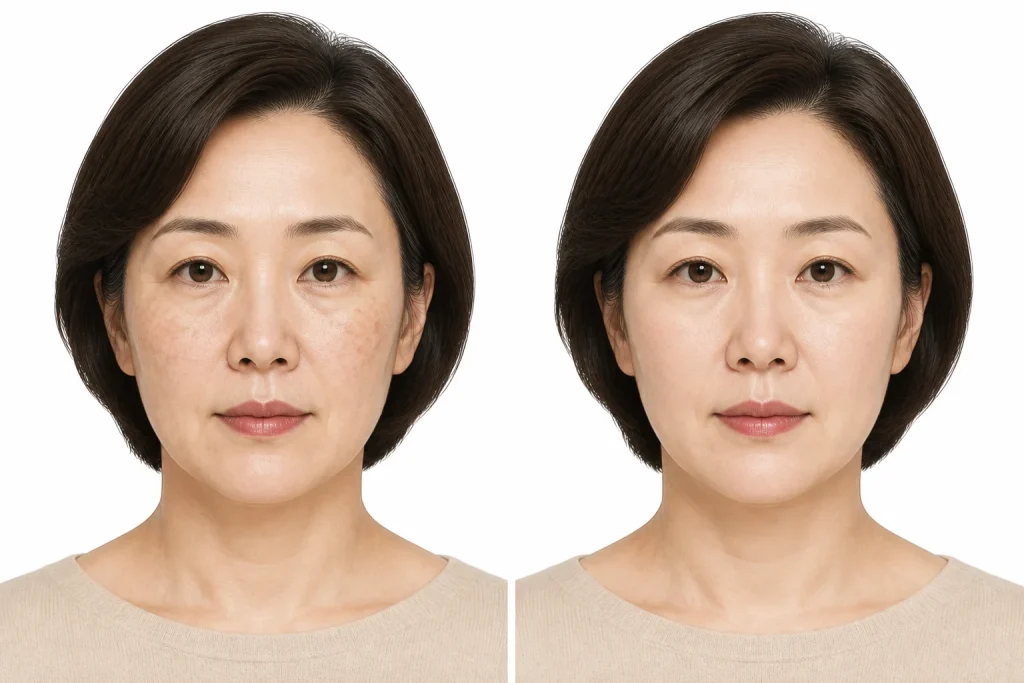
- Helps improve epidermal pigmentation such as melasma, blemishes, and freckles
- Helps improve dermal pigmented lesions such as nevus of Ota
- Helps improve post-inflammatory hyperpigmentation and a dull tone
- Helps even out skin tone over larger areas
- Helps improve skin texture, including pores and fine lines
- Helps improve tattoo and eyebrow-tattoo pigment
FAQ
Frequently Asked Questions
How long does the treatment take?
For full-face laser toning, the irradiation itself takes about 10 to 20 minutes. Including cleansing and calming care, expect around 30 minutes. When only localized pigmented lesions are treated, it finishes even sooner.
Does it hurt? Is anesthesia needed?
Toning feels like a light flick of a rubber band, and most sessions proceed without anesthesia. Cool air is used during the treatment to reduce the heat sensation. When pigmented lesions are treated locally at higher energy, numbing cream is applied for 20 to 30 minutes before starting.
What about recovery and daily activities?
Right after toning there may be mild redness and warmth, but these settle within a few hours, and you can wash your face and wear makeup the same day. Areas treated locally at high energy may form fine scabs; protect them with healing tape or ointment for about 5 to 7 days, and let the scabs fall off naturally without picking.
How many sessions, and at what interval?
Laser toning is offered as a program of 5 to 10 or more sessions at 1-to-2-week intervals. For localized treatment of pigmented lesions, a 3-to-4-week interval is kept to allow scab shedding and regeneration. The number of sessions is adjusted at consultation according to the depth and extent of the pigment.
Can it be combined with other procedures?
Calming or regenerative care and skin boosters often follow on the same day. If redness and vessels are also present, treatment may be alternated with a vascular laser. To reduce pigment recurrence, brightening ointments and sunscreen are used alongside.
※ Treatment results and responses may vary from person to person, and side effects may occur. Please consult us during your visit for details.