
- T-cell overactivation: a normal immune system defends against outside pathogens, but in psoriasis patients, T-cells become excessively activated and attack normal skin cells.
- Rapid skin cell production: the overactivated immune cells abnormally accelerate skin cell turnover, causing excessive scale buildup and reddening of the skin's surface.
Psoriasis Cause & Care
Psoriasis: Its Causes
and How It Is Treated
“My skin suddenly became severely dry, thick flakes keep building up, and the itching is intense.”
“My skin is turning red, with white flakes piling up layer upon layer.”
Among patients who describe symptoms like these, resembling simple dry skin, a considerable number are diagnosed with psoriasis.
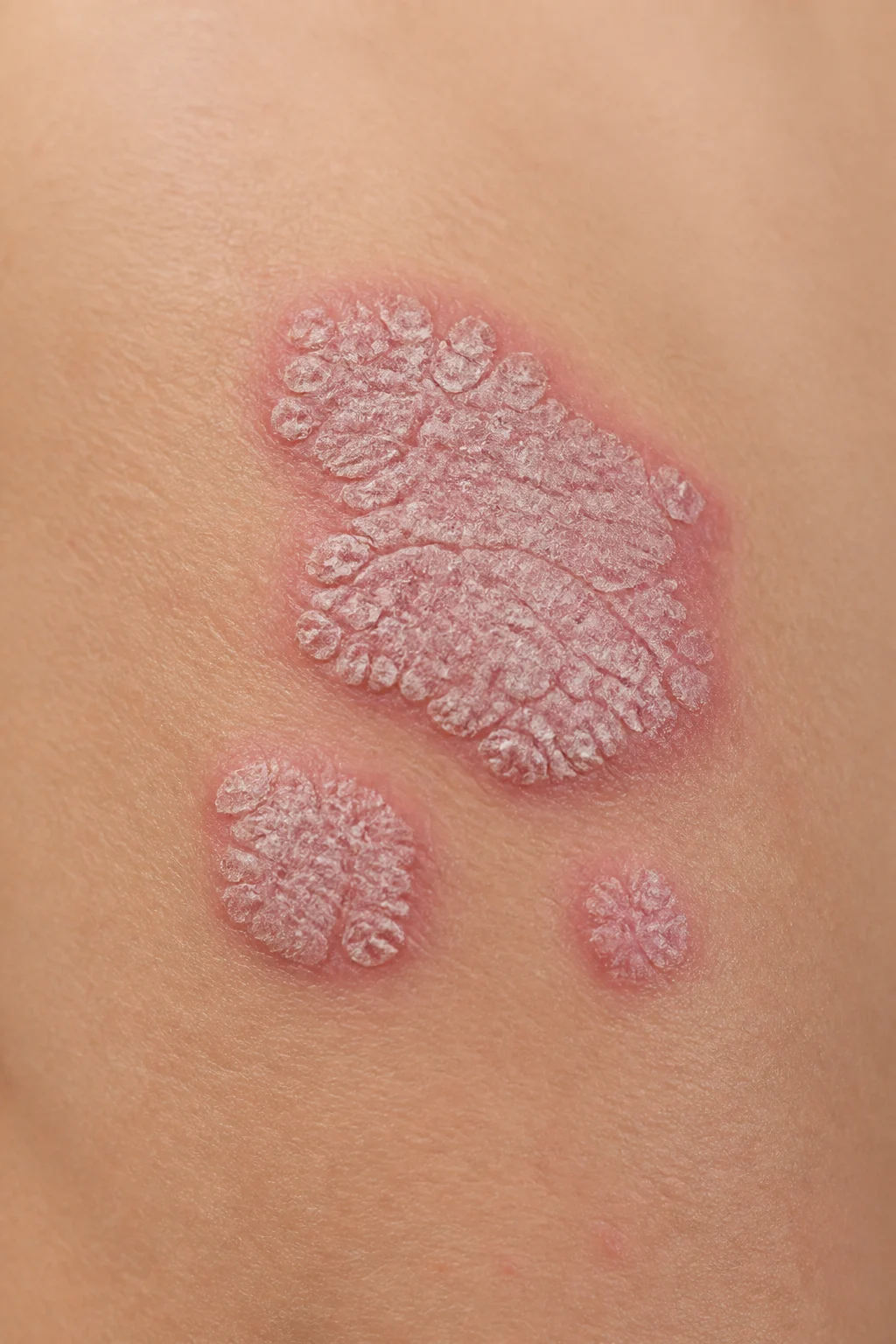
Psoriasis is not simple dry skin: it is a chronic inflammatory skin disease in which an immune system malfunction drives skin cells to multiply abnormally fast. Normal skin cells are produced and shed on a cycle of about 28 days, but in the skin of psoriasis patients, cell turnover accelerates so much that scale accumulates in just 3~5 days.
The result is sharply bordered red patches (erythema) on the skin, layered with white scale, which can be accompanied by itching and pain.

SKIN
EXPERT
EXPERT
Meet Your Specialist
Jiho Choi Medical Director
Board-certified dermatologist · Honorary Professor of Dermatology, Asan Medical Center - in charge of vitiligo · psoriasis care
In its early stages, psoriasis is easily mistaken for simple dryness, but left without proper treatment, symptoms can worsen. Psoriasis care at Lumiin Dermatology is led by Dr. Jiho Choi, Medical Director.
“Harnessing the power of ‘light,’ we provide cosmetic laser and phototherapy treatments tailored to each person's skin concerns.”
- PhD in Medicine, Seoul National University College of Medicine
- Director, Skin Cancer Center, Asan Medical Center
- Chief Professor and Head of Dermatology, Asan Medical Center, University of Ulsan College of Medicine
- President, Korean Dermatological Association · Korean Society for Psoriasis · Korean Society for Skin Immunology
Specialty Vitiligo · Psoriasis
About Psoriasis
What is psoriasis
Psoriasis is a chronic skin disease in which an immune system abnormality makes skin cells multiply faster than normal, producing red rashes layered with scale.
It is not a simple skin complaint but is classified as an autoimmune disease — one that arises from the immune system malfunctioning.
The symptoms of psoriasis
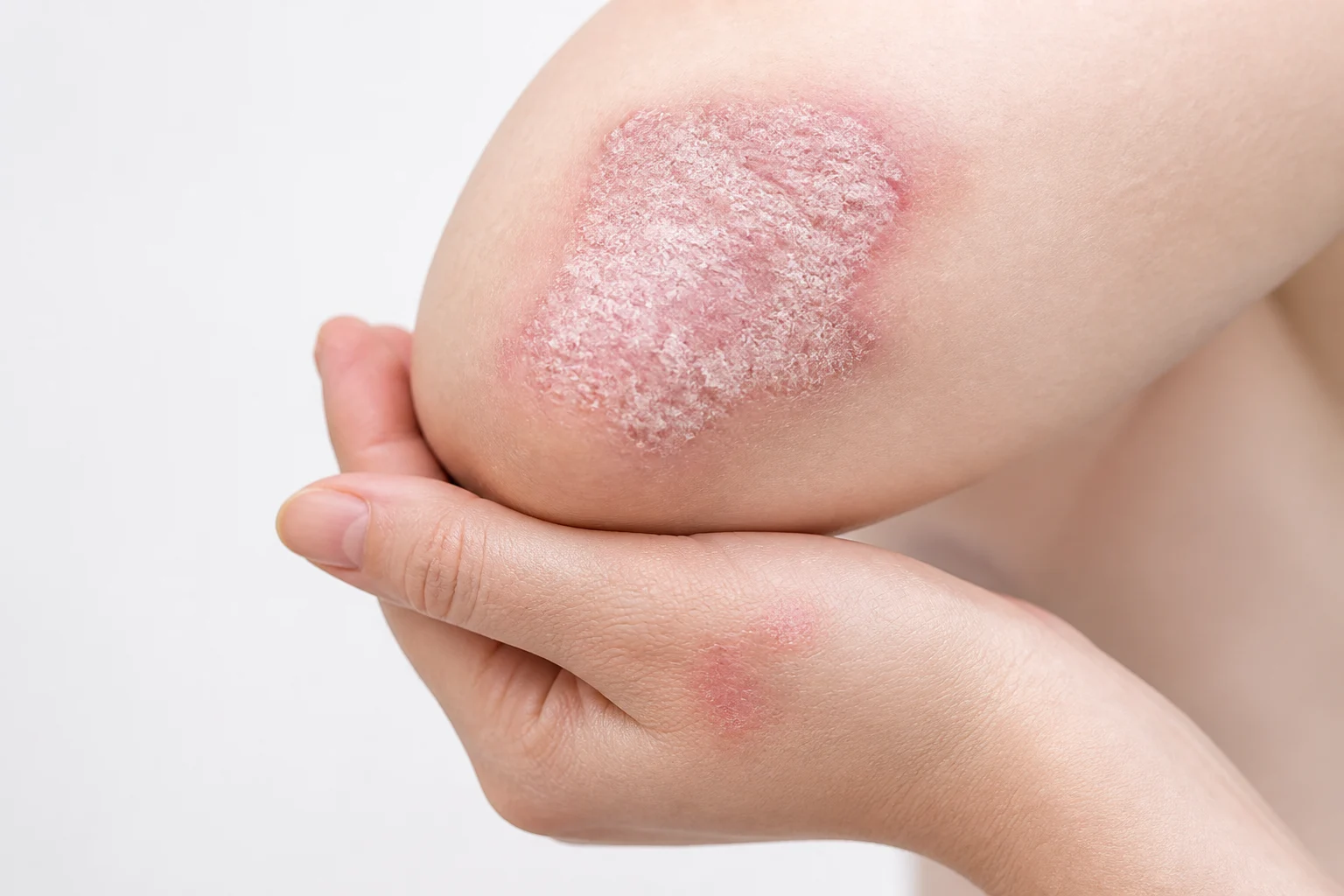
It appears most severely at sites of frequent friction — the elbows, knees, scalp, and lower back — and can be accompanied by intense itching and pain. It can also affect the fingernails and toenails.
- Thick white or silvery scale (plaques) forming over red patches (erythema)
- Itching or stinging
- Dry skin, cracking, and bleeding
- Nail changes (thickening, discoloration, crumbling)
- Joint pain (psoriatic arthritis may accompany it)
Why It Begins
Why did psoriasis
begin to appear?
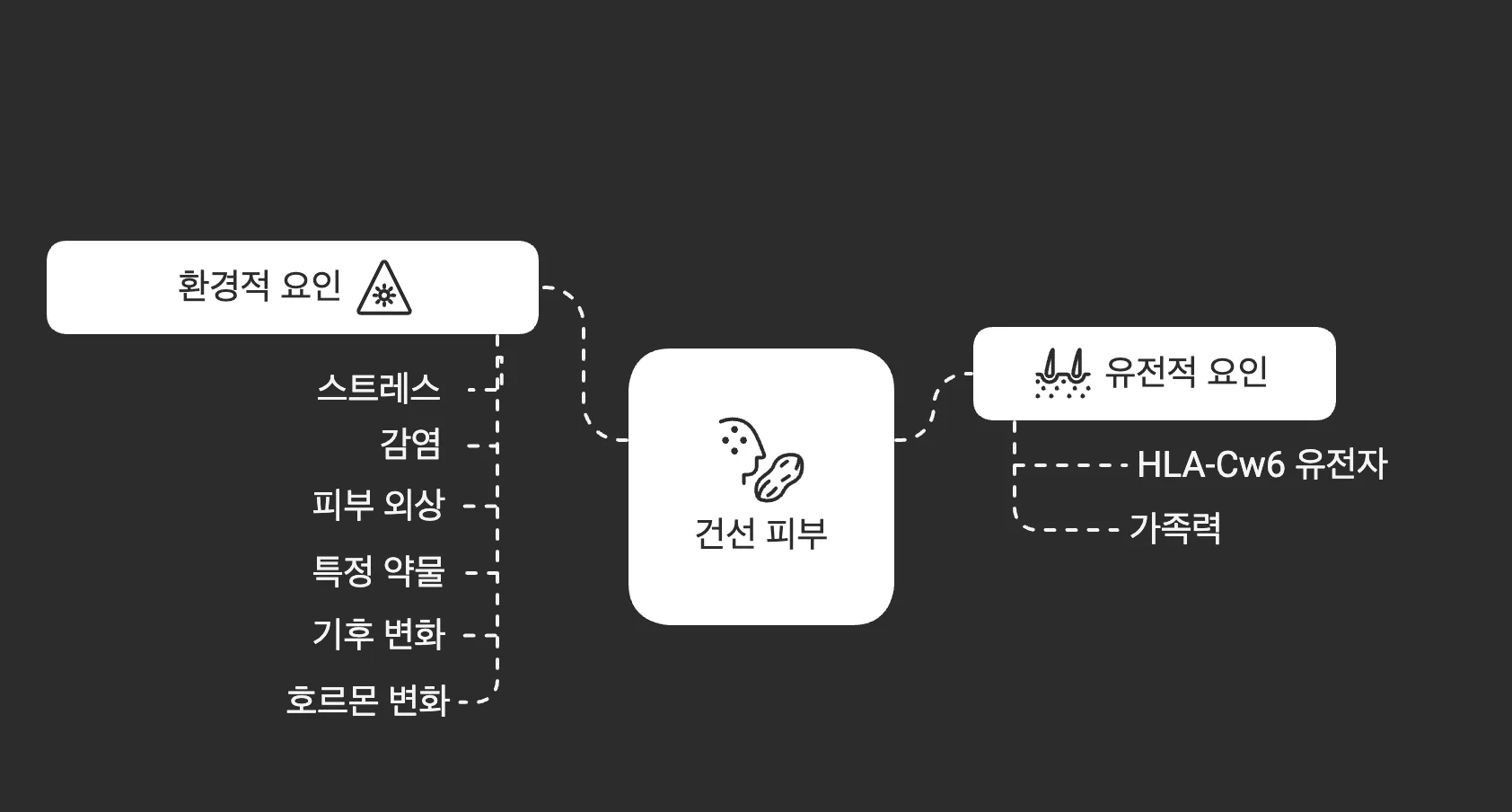
The exact cause of psoriasis has not yet been fully identified, but genetic factors and an abnormal immune response are known to be the main causes. In addition, various environmental factors can trigger or worsen psoriasis.
- Psoriasis is a disease whose risk rises with genetic predisposition.
- If one parent has psoriasis, a child's likelihood of developing it increases by 10~30%; if both parents have it, the likelihood is higher still.
- Research has reported that the HLA-Cw6 gene variant is closely associated with psoriasis.
- Stress: psychological stress affects the immune system and can trigger or worsen psoriasis.
- Infection: psoriasis symptoms often intensify after viral infections such as tonsillitis or influenza.
- Skin injury (Koebner phenomenon): trauma, scratches, burns, and tattoos can trigger psoriasis.
- Medications: some blood pressure drugs (beta blockers), lithium, and antimalarials can trigger or worsen psoriasis.
- Climate changes: psoriasis tends to worsen in dry weather, as in winter.
- Hormonal changes: hormonal shifts during puberty, pregnancy, and menopause can worsen psoriasis symptoms.
- Smoking and alcohol: smoking and excessive drinking stimulate the immune system, raising the incidence of psoriasis and worsening symptoms.
- Obesity: in obesity, secretion of inflammation-promoting cytokines increases, and psoriasis can intensify.
Genes Meet Triggers
When triggers
land on a genetic predisposition and
overlap
Psoriasis does not begin from a single cause. Understanding where inborn predisposition meets everyday triggers is the starting point of managing it.
✓
How it starts
Ultimately, it begins when an environmental factor acts as a trigger on top of an existing genetic predisposition.
✓
If it runs in your family
With a family history, you need to pay all the more careful attention to the triggers.
✓
Even during treatment
Flare-ups can be triggered again at any time, even during treatment, so these factors need continued attention.
Treatment Options
Psoriasis:
how is it
treated?
Depending on the extent and severity of symptoms, topical treatment, phototherapy, and systemic treatment are chosen in stages, with lifestyle management layered on top.
Psoriasis is difficult to cure completely.
The reason is that the genetic factor remains, so there is always a possibility of recurrence triggered by environmental factors.
In the end, the likelihood of recurrence after treatment depends on how well the patient manages their condition.
Topical treatment (ointments, creams)
For mild psoriasis, topical agents (ointments, creams) are used as first-line treatment.
- Steroid ointments: suppress inflammation to relieve symptoms.
- Vitamin D analogues (calcipotriene, calcitriol): inhibit the overproliferation of skin cells.
- Calcineurin inhibitors (tacrolimus, pimecrolimus): modulate the immune response to ease inflammation.
Phototherapy
- NB-UVB therapy: ultraviolet light at a wavelength of 311±3nm is applied to reduce inflammation and suppress the overproliferation of skin cells. (Repeated overproliferation becomes a vicious cycle, and this is the link that must be broken.)
- Excimer laser: a 308nm UVB laser applied directly to psoriasis lesions, effective for treating localized psoriasis.
Systemic Therapy
For moderate or severe psoriasis, systemic treatment may be needed.
- Immunosuppressants (methotrexate, cyclosporine): suppress the immune system to control psoriasis symptoms.
- Biologics: the most innovative recent advance in psoriasis treatment, including interleukin (IL-17, IL-23) inhibitors and TNF-α inhibitors.
Lifestyle management = preventing recurrence
As noted above, the key to psoriasis treatment is preventing recurrence, so ongoing management is essential. Improving lifestyle habits can ease symptoms and help prevent flare-ups.
- Use moisturizer: symptoms worsen when skin gets dry, so apply moisturizer often to protect the skin barrier.
- Manage stress: regular exercise, meditation, and sufficient sleep help with psoriasis management.
- Eat a balanced diet: cut back on processed foods, alcohol, and high-fat foods, and eat fresh vegetables, fruit, and omega-3-rich fish.
- Quit smoking and limit alcohol: smoking and drinking are linked to psoriasis onset, so they are best avoided.
- Shower with lukewarm water: water that is too hot dries out the skin and should be avoided.
308nm Excimer
For psoriasis · vitiligo treatment,
why the
308nm laser
?
Different wavelengths reach different depths and regulate different responses. The essence of phototherapy is delivering only the light the lesion needs, selectively.
1️⃣ Reaches the epidermal basal layer precisely
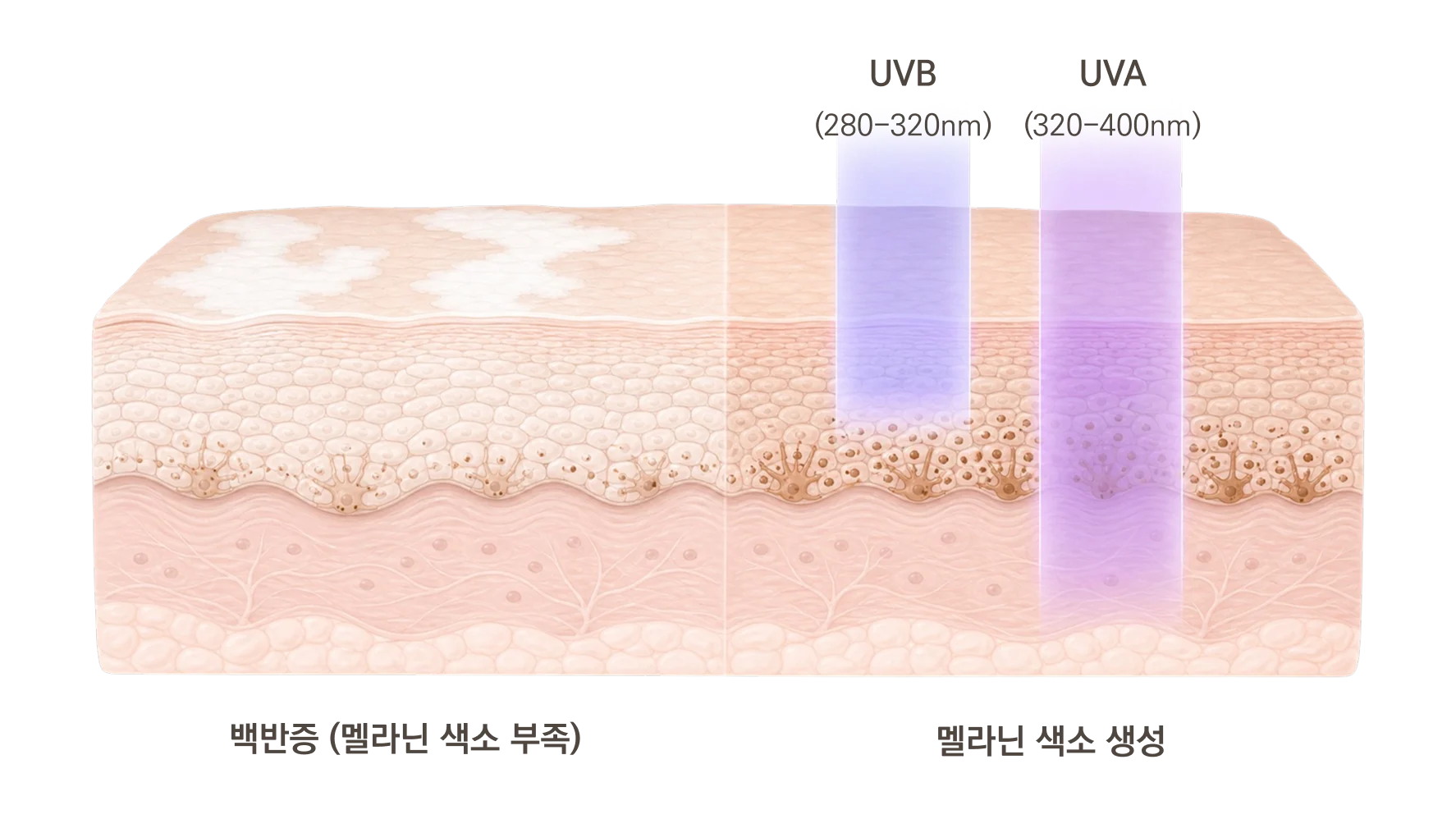
- Vitiligo arises in the epidermal basal layer, where melanocytes reside
- The 308nm wavelength is optimized for the depth where melanocytes sit (50~150μm)
2️⃣ Stimulates melanocyte activity
- Selectively delivers a specific wavelength within the UVB range
- Stimulates melanocytes to activate melanin production
3️⃣ Immune-modulating effect
- Vitiligo is associated with autoimmune disease
- The excimer laser modulates immune cells (T-cells) to help suppress the progression of vitiligo
High-end Treatment Equipment
The
devices
used in psoriasis phototherapy
Depending on the extent and location of the lesions, we use targeted excimer devices for localized treatment and dedicated whole-body and hand-and-foot phototherapy units.
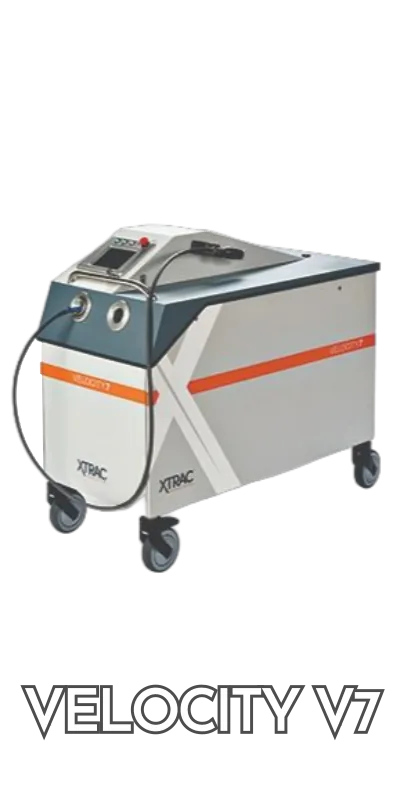
01 / EXCIMER LASER
Velocity Excimer Laser V7
The Velocity excimer laser is a specialized laser device that uses 308nm ultraviolet light to treat vitiligo, psoriasis, alopecia areata, and other conditions. It works by selectively delivering ultraviolet light only to the lesion, modulating the skin's immune response and promoting pigment regeneration. Using higher energy than conventional phototherapy, it enables effective treatment in a short time, and because it does not affect the surrounding normal skin, it offers a high level of safety. Especially for vitiligo and psoriasis, faster results can be expected than with conventional treatment, and continued treatment can bring stable improvement in the skin's condition.
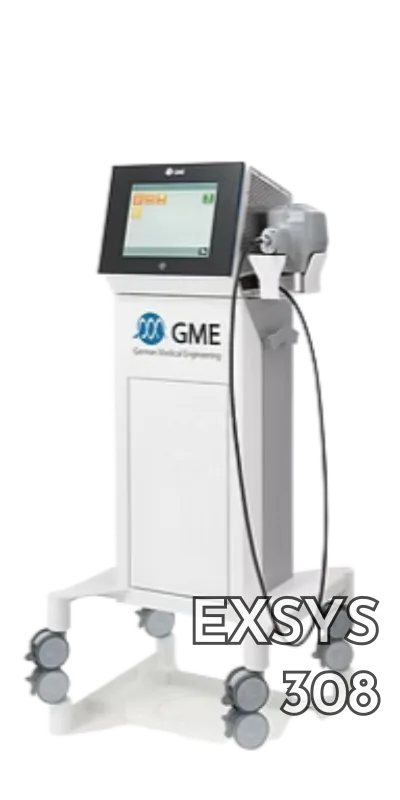
02 / EXCIMER LIGHT
Excimer Light
The excimer light is a portable phototherapy device using 308nm ultraviolet light, used mainly to treat vitiligo, psoriasis, and alopecia areata. It works by directing light only at localized lesions, inducing immune modulation in the skin and promoting pigment regeneration. Because it can be applied directly to the lesion, precise treatment is possible, and it has the advantage of costing less than a conventional excimer laser. Results can be expected with 2~3 treatments per week, and continued treatment can drive improvement in symptoms.
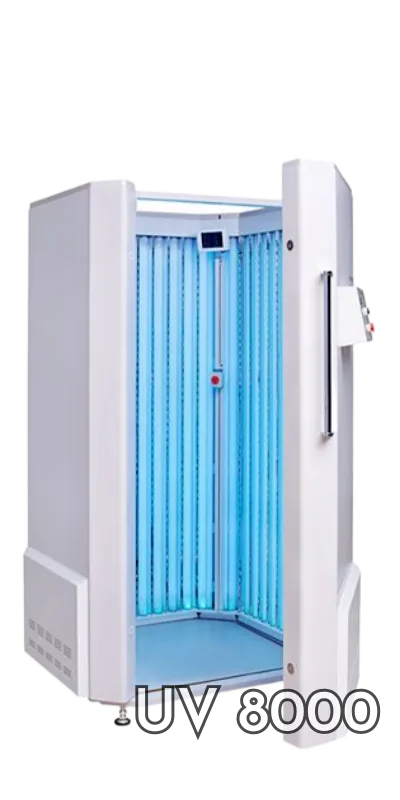
03 / NB-UVB BOOTH
Whole-Body UV Phototherapy Unit (UV 8000 N.B)
The UV 8000 N.B is a medical phototherapy device that uses narrowband 311nm UVB light to treat immune-related skin diseases such as vitiligo, psoriasis, and atopic dermatitis. It modulates the immune response to ease inflammation and promotes recovery of the skin's cells. Because it allows whole-body treatment, it is well suited to patients whose symptoms extend over large areas, and repeated sessions can bring relief. It causes fewer side effects than other phototherapy methods, and it helps skin stay healthy after treatment. The skin may redden slightly during the course of treatment, but it recovers naturally with time.
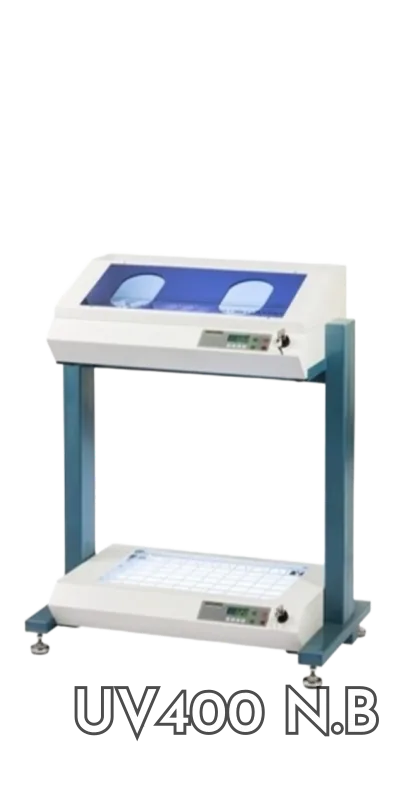
04 / HAND & FOOT UVB
Hand & Foot UV Phototherapy Unit
The hand and foot ultraviolet unit is a specialized phototherapy device used mainly to treat psoriasis, eczema, and similar conditions on the hands and feet. Using 311nm UVB light, it modulates the skin's immune response, eases inflammation, and promotes skin recovery. The hands and feet are often harder to treat than other areas, but this device makes it possible to improve symptoms effectively. The skin may redden slightly during treatment, but it recovers naturally over time. Regular treatment allows symptoms to be managed effectively.
Psoriasis vs Vitiligo
Vitiligo and psoriasis compared
Both diseases are related to autoimmunity, but they differ in how they appear on the skin and where they tend to occur.
| Item | Psoriasis | Vitiligo |
|---|---|---|
| Definition | Chronic inflammatory skin disease | Depigmentation disease caused by loss of pigment cells (melanocytes) |
| Main symptoms | White scale over red patches (silvery-white scale) | Sharply bordered white patches |
| Causes | Autoimmune response, genetic factors, stress, etc. | Autoimmune response, genetic factors, trauma, etc. |
| Common sites | Friction areas such as the scalp, elbows, knees, and lower back | Various areas including the face, hands, arms, legs, and genitals |
| Disease characteristics | Skin thickens and flakes like scales | Only the skin color is lost; texture remains normal |
| In common | Autoimmune diseases, possible genetic factors, and both can benefit from sunlight (phototherapy) | |
Frequently Asked
Psoriasis:
frequently asked
questions and answers
The cause of psoriasis has not been precisely identified, but an overactive immune system and genetic factors are the main causes. Stress, infection, certain medications (beta blockers, lithium, etc.), skin injury, smoking, and alcohol can also worsen symptoms.
No. Psoriasis is not contagious. It is not caused by viruses or bacteria but arises from an abnormality of the immune system.
About 30% of psoriasis patients may also develop psoriatic arthritis (PsA). It causes inflammation of the joints and can bring pain, stiffness, and swelling. Early treatment can minimize joint damage.
Yes, psoriasis has a genetic component. If one parent has psoriasis, a child's likelihood of having it increases. However, environmental factors also have a major influence.
- Psoriasis: marked by thick silvery-white scale and erythema. Occurs mainly on the elbows, knees, and scalp
- Atopic dermatitis: marked by dry, itchy rashes. Occurs mainly in the folds (inner elbows, backs of the knees)
It often worsens in the cold of winter. Dry conditions irritate the skin, and the lack of sunlight (ultraviolet) makes immune regulation harder. Conversely, sunlight exposure in summer can actually help.
Psoriasis itself does not directly affect pregnancy, but some medications (e.g., methotrexate, acitretin) can be dangerous to the fetus, so if you are planning a pregnancy, be sure to consult a specialist.
Begin Your Skin Journey
Psoriasis — start from the cause
and build a management plan
Through one-on-one consultations, we identify your skin concerns precisely and propose solutions tailored to you.
02-565-8273 Book a Consultation ↗
3F SH Tower, 324 Seolleung-ro, Gangnam-gu, Seoul · 3 min from Hanti Station · 6 min from Seolleung Station
Weekdays
10:00–20:00
(lunch 13:00–14:00) · Sat
09:30–15:30
open through lunch
Closed Sundays · public holidays
Equipment
이 진료에 함께 쓰는 장비

Velocity Excimer Laser
Used for conditions with well-defined localized lesions, such as vitiligo, psoriasis, and alopecia areata. By narrowly delivering 308nm ultraviolet light to the lesion alone, it modulates overactive immune cells and stimulates melanocytes, reducing exposure of normal skin while helping regenerate pigment.

Excimer Light
Used for vitiligo and psoriasis in small, contoured areas such as the face, scalp, and backs of the hands. A lamp delivers 308nm light directly onto the lesion only, reducing UV exposure of the surrounding normal skin while helping control inflammation and stimulate repigmentation.

Whole-body UV Phototherapy Unit (UV 8000 N.B)
Used for conditions that are difficult to manage with ointments alone, such as psoriasis, vitiligo, and atopic dermatitis spread widely over the body. It selectively delivers only 311nm narrow-band UV light evenly across the whole body to modulate an overactive immune response, which helps improve inflammation and pigmentation over large areas.

Hand & Foot UV Phototherapy Unit
Used for concerns confined to limited areas, such as palmoplantar psoriasis, chronic hand eczema, and dyshidrotic eczema. It delivers concentrated 311nm UV light to the thick-skinned hands and feet, modulating the immune response without whole-body exposure, which helps improve cracking and inflammation.