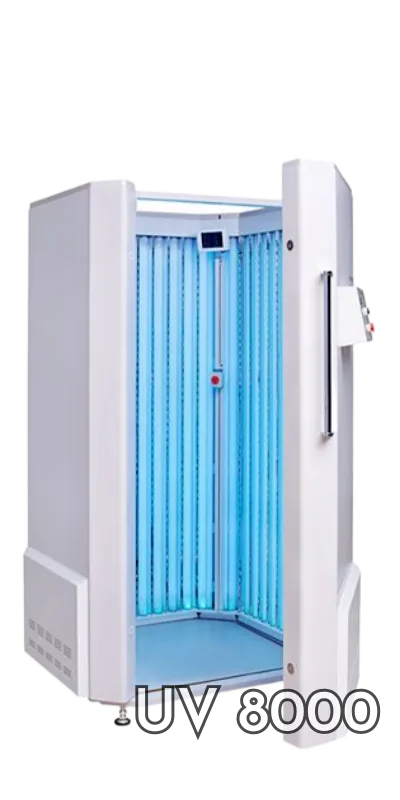
UV 8000 N.B · Narrow-band UVB (311nm) Whole-body Phototherapy Unit
Whole-body UV Phototherapy Unit (UV 8000 N.B)
Used for conditions that are difficult to manage with ointments alone, such as psoriasis, vitiligo, and atopic dermatitis spread widely over the body. It selectively delivers only 311nm narrow-band UV light evenly across the whole body to modulate an overactive immune response, which helps improve inflammation and pigmentation over large areas.
How It Works
How This Equipment Works
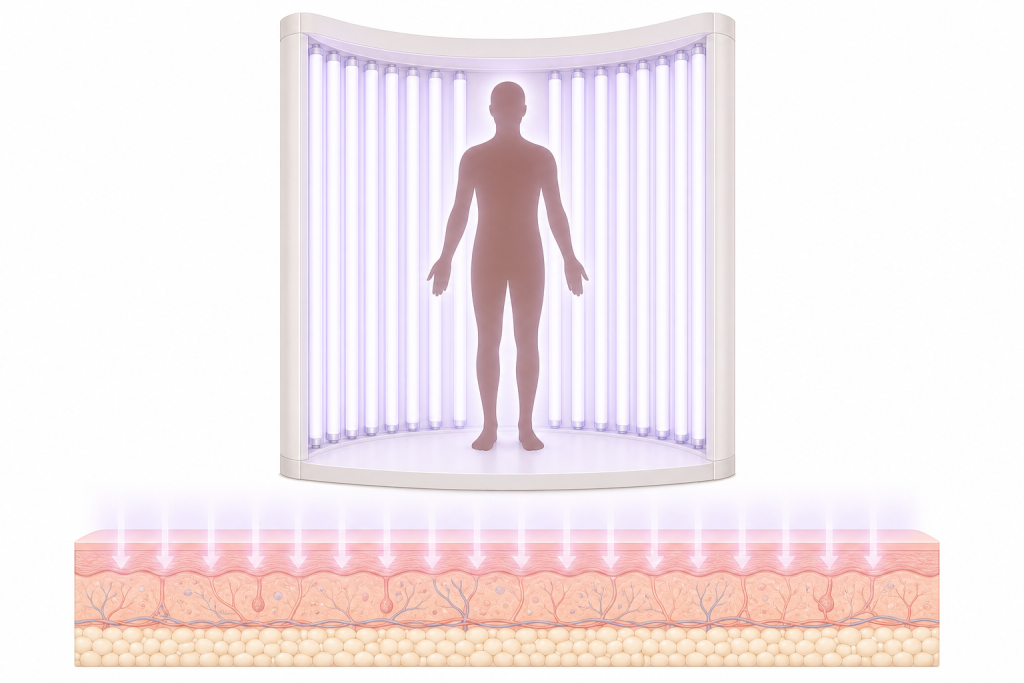
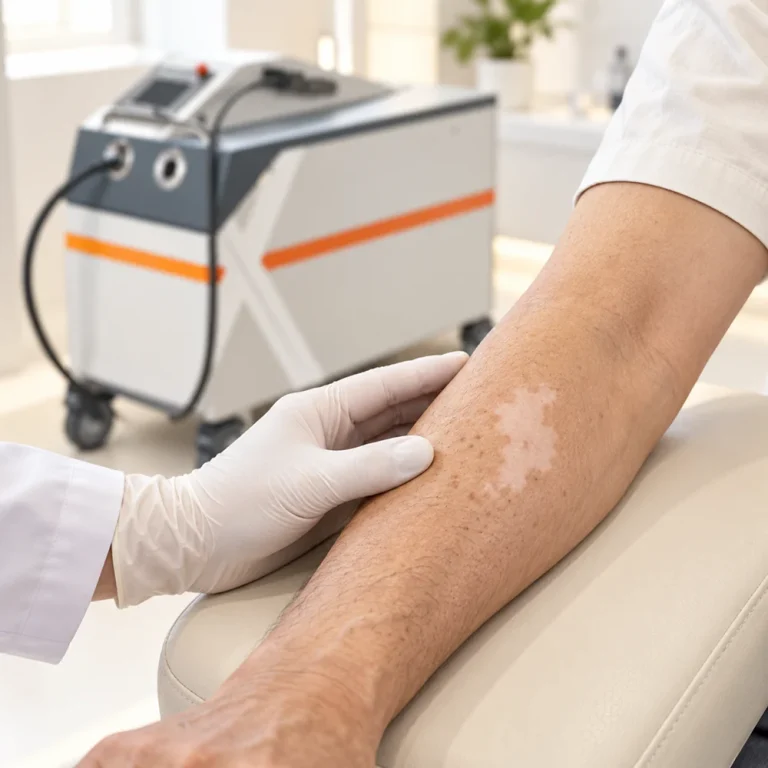
The UV 8000 N.B is a whole-body phototherapy unit in which fluorescent lamps emitting only narrow-band UVB around 311nm are arranged in a cabin, evenly irradiating the entire body while the patient stands inside.
Narrow-band 311nm UVB acts on the epidermis and upper dermis, inducing apoptosis of activated T lymphocytes and reducing the production of inflammatory cytokines, thereby modulating the skin's immune response. In vitiligo, it stimulates melanocytes to support repigmentation.
Compared with broadband UVB, it reduces the wavelength range that causes erythema and concentrates on the therapeutic wavelengths needed. The starting dose is set based on the minimal erythema dose and increased step by step according to the response.
Unlike the 308nm excimer, which targets individual lesions, it treats the whole body at once, making it suitable when lesions are widely distributed.
Effects
Expected Effects
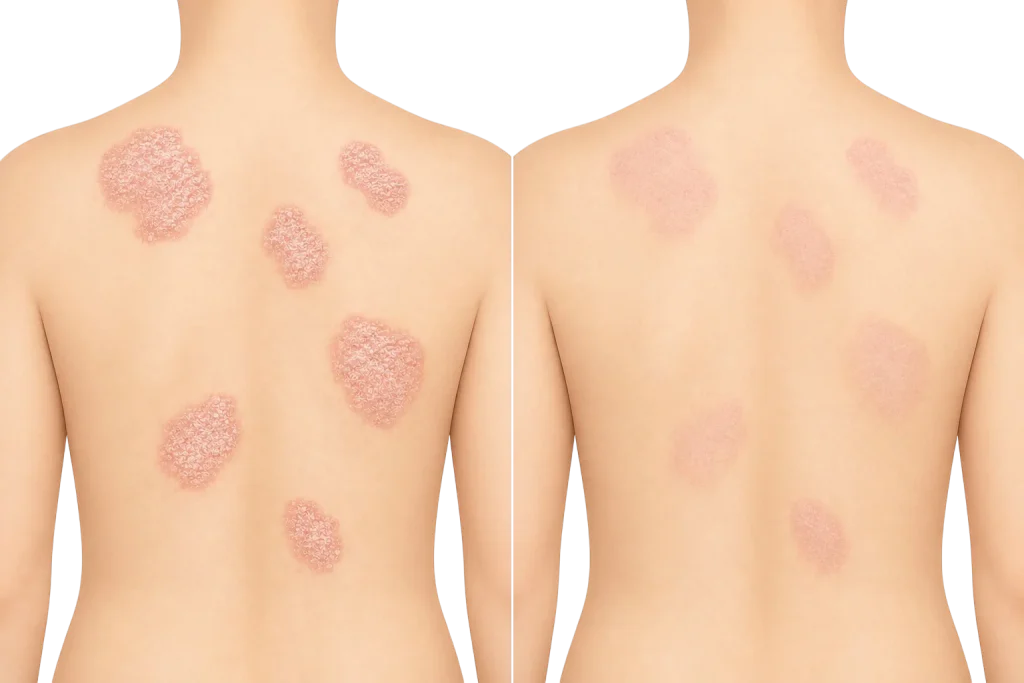
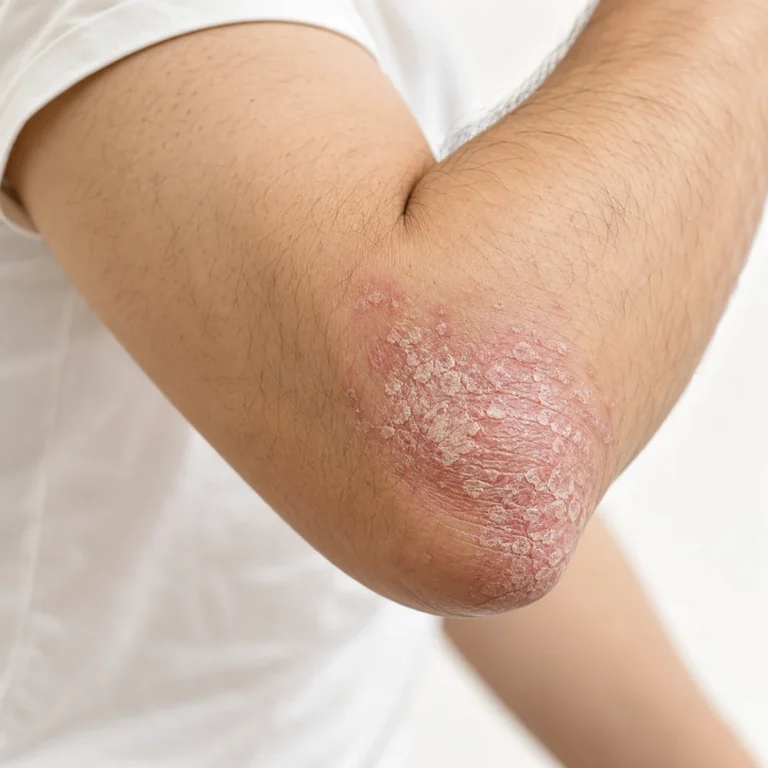
- Helps improve plaque psoriasis spread across the body
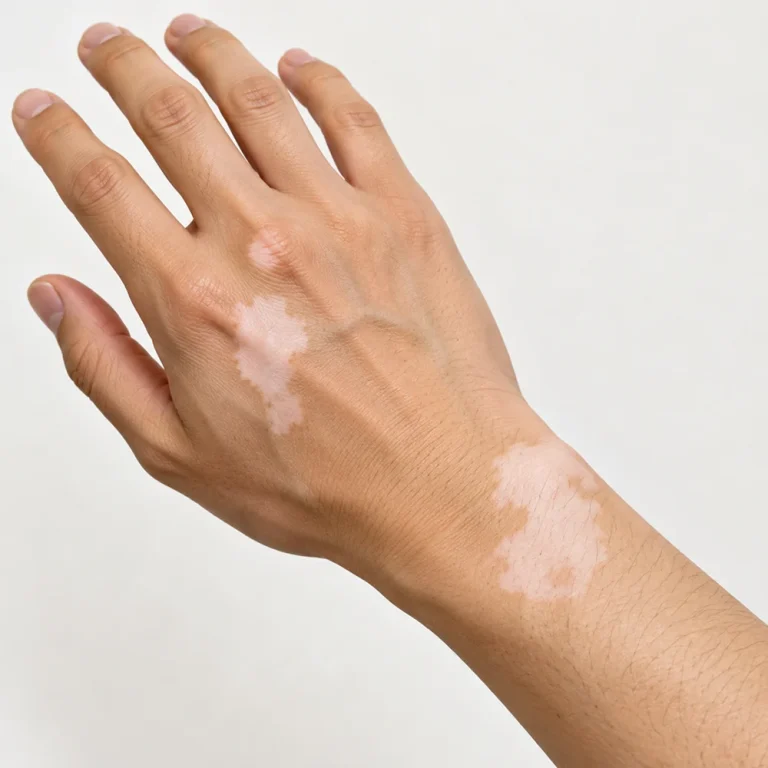
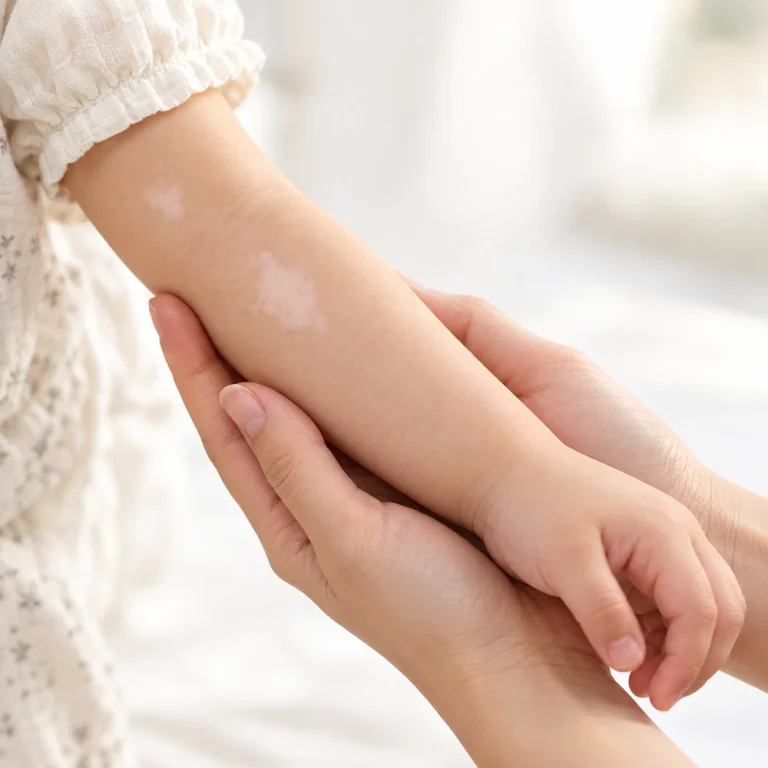
- Helps stimulate repigmentation in widespread vitiligo
- Helps relieve inflammation in moderate atopic dermatitis
- Helps control chronic eczema and itching
- Helps with inflammatory skin diseases such as lichen planus
- Helps manage large areas that are difficult to cover with ointments
FAQ
Frequently Asked Questions
How long does one session take?
Irradiation starts short, from tens of seconds to a few minutes in the early stages. The dose and time are then increased gradually while monitoring the skin's response, and even including time to change clothes, each visit does not take long.
Is there pain or irritation during treatment?
During irradiation you feel only mild warmth, with almost no pain, and no anesthesia is needed. The skin may become slightly red or dry after treatment, which usually settles within a day. Sensitive areas such as the eyes and genitals are covered with protective gear during the session.
How should I care for my skin after treatment?
There is no separate downtime, so you can return to daily life immediately after treatment. Apply a full-body moisturizer generously and avoid outdoor sun exposure and tanning on the day of treatment. If redness is severe or stinging persists, the next dose is lowered and adjusted.
How often and how many sessions are needed?
Treatment is generally given 2–3 times a week, at least one day apart. Because changes appear as the cumulative dose builds up, a plan of usually 20–30 or more sessions over about 3 months is set. Psoriasis and vitiligo follow a chronic course, so maintenance treatment after improvement is also discussed.
Can it be combined with ointments or oral medication?
Combination therapy with moisturizers, topical steroids, and vitamin D analogue ointments is common. Depending on the condition, oral medication or targeted excimer therapy may also be included. Be sure to tell your doctor if you are taking medication that can cause photosensitivity, have a history of skin cancer, or may be pregnant.
※ Treatment results and responses may vary from person to person, and side effects may occur. Please consult us during your visit for details.