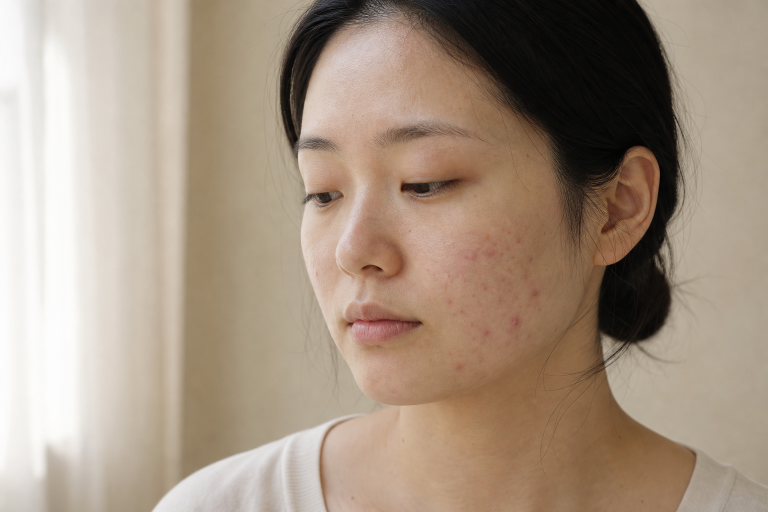
First we bring active acne under control. As long as new inflammation keeps forming, marks keep multiplying too.
Post-Acne Marks
Post-Acne Marks: How We Treat Them
“The acne has calmed down, but the marks are still there”
Redness and brown marks left where the inflammation faded, and depressed scars. Many people wait, thinking “it will fade with time,” and miss the right window.
Post-acne marks differ in cause and treatment depending on their type. Use a pigment laser on red marks, or a vascular laser on depressed scars, and no matter how many sessions you add, change is hard to see.
Identifying exactly which kind of mark your skin is left with — that is where treatment begins.

SKIN
EXPERT
EXPERT
Meet Your Specialist
Jisun Yoon Medical Director
Board-certified dermatologist
Post-acne marks call for different approaches depending on their type. Dr. Jisun Yoon leads the care that distinguishes redness, pigment, and indentation, and sets the order of treatment.
“We are always striving so that every patient who visits us can experience ‘natural beauty and the skin's own inherent glow.’”
- Graduated first in class, Ajou University College of Medicine
- Master of Medicine, Ajou University Graduate School of Medicine
- Dermatology residency, Ajou University Hospital
- Best Resident Award, Ajou University Hospital
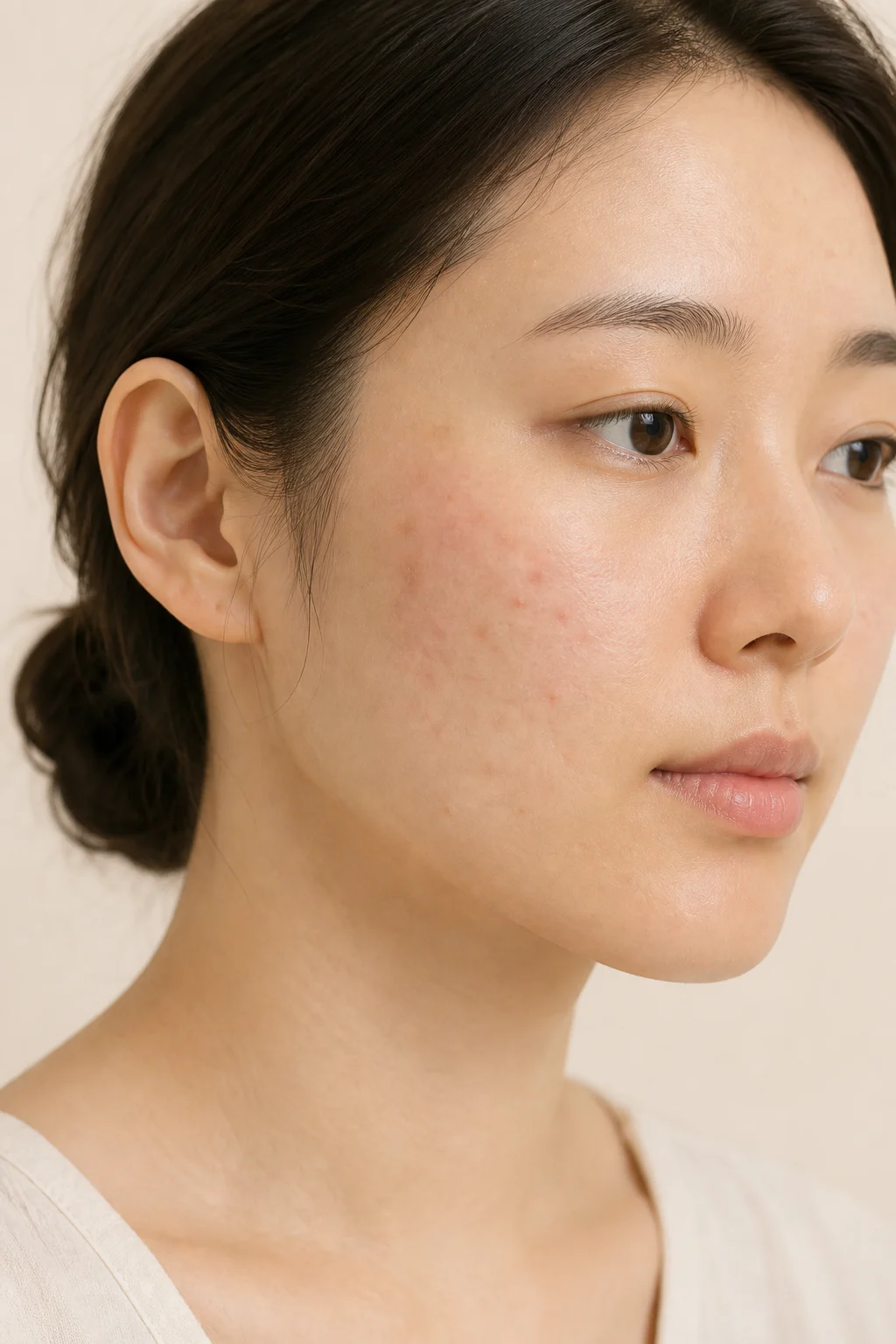
Why It Stays
The depth of the mark is decided by
the depth of the inflammation
Acne is inflammation that begins inside the pore.
If the inflammation ends near the epidermis, it leaves redness or pigment; if it reaches the dermis and breaks down tissue, it becomes a depressed scar. This is why the same acne can leave different traces depending on how deep it went and how long it lasted.
It is also why squeezing with your fingers is especially dangerous. The pressure spreads the inflammation into surrounding tissue, pushing what would have ended at the surface down into the dermis.
The surest way to avoid marks is not to leave acne untreated for long. If marks have already formed, the earlier you start — before they set — the faster the recovery.
Three Types
They may all look like ‘marks,’
but these
three
are different
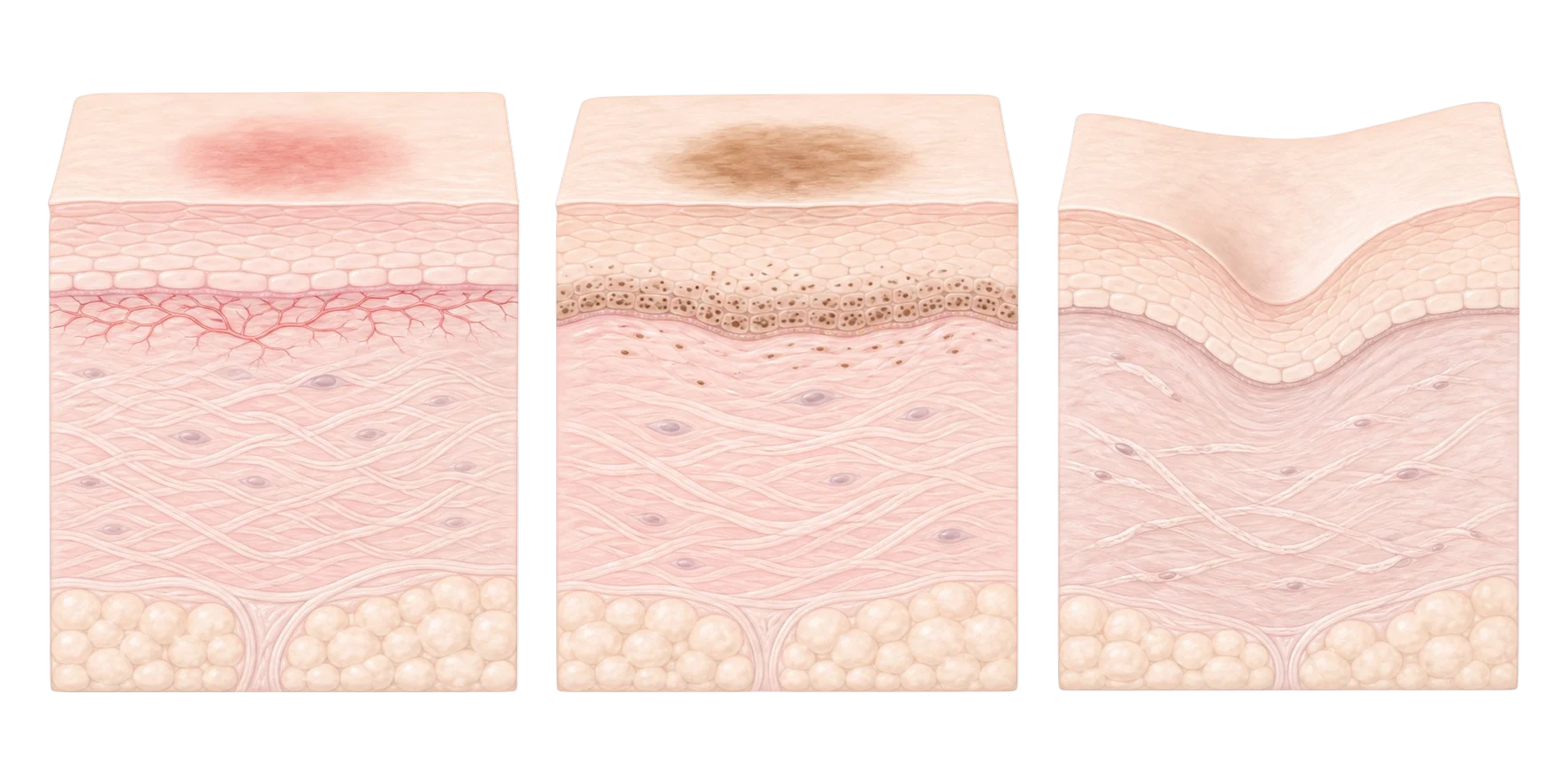
The traces acne leaves behind fall broadly into three types. They may look similar to the eye, but the changes inside the skin differ — and so do the treatments, completely.
Telling post-acne marks apart
Is it a problem of color, or of contour?
Red marks and brown marks are problems of ‘color,’ so they can be handled with light; depressed marks are a problem of ‘contour,’ so the tissue has to be rebuilt. In the consultation, we examine the surface with magnification and lighting to determine which it is — or whether the two are mixed — first.
Red marks (Post-inflammatory erythema)
Fine blood vessels remain dilated where the inflammation was, making the area look red. The surface is smooth and pressing causes no pain. Left alone, it can set into permanently dilated capillaries.
Brown marks (Post-inflammatory hyperpigmentation)
Pigmentation left brown where inflammation stimulated increased melanin production. UV exposure makes it darker and slows recovery. The darker the skin tone and the longer the inflammation lasted, the more likely it is to remain.
Depressed marks (Atrophic scar)
The skin sinks in where inflammation reached the dermis and collagen was lost. Because it is a problem of contour rather than color, it does not fill in on its own over time — regenerative treatment is needed.
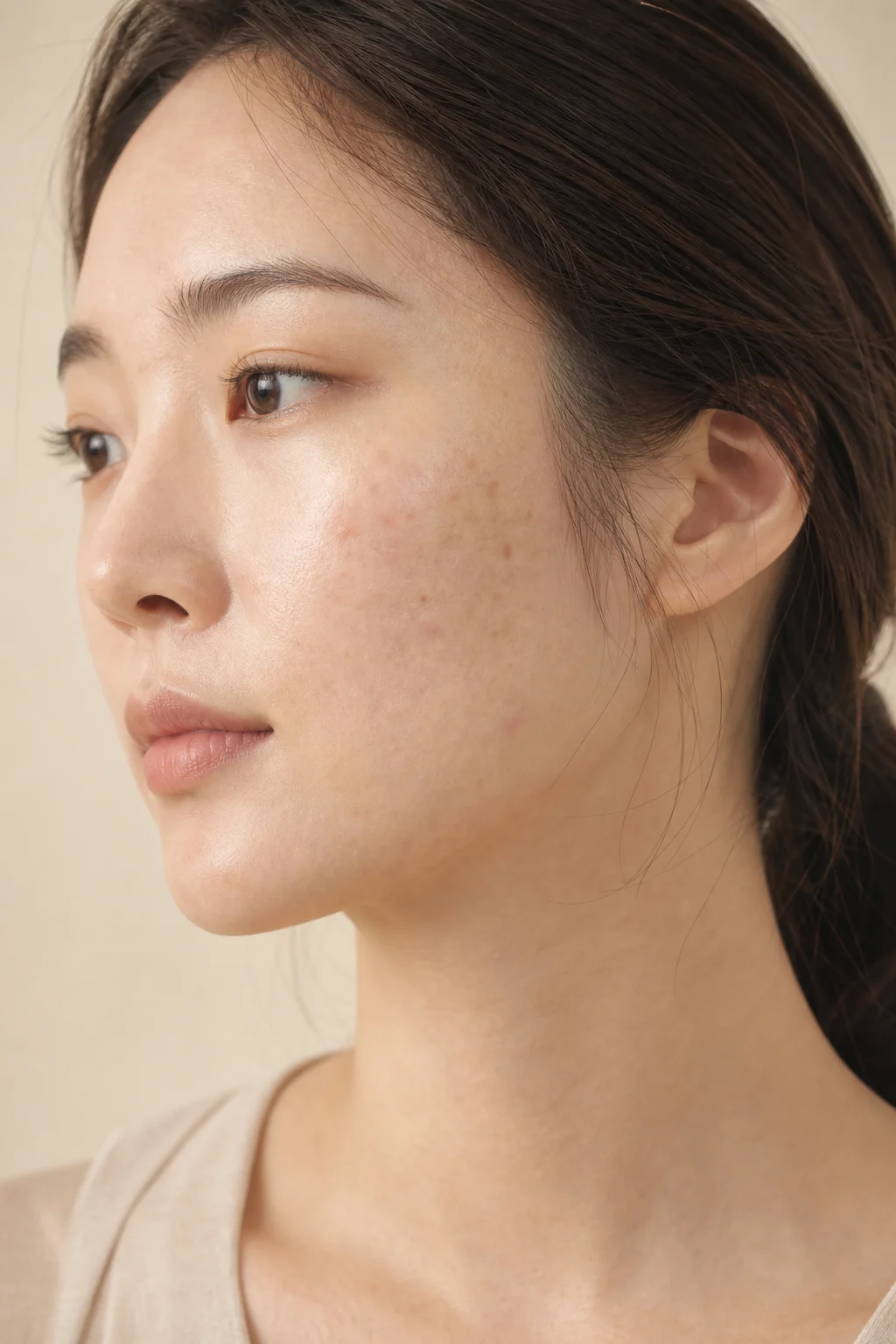
Who Needs This Care
We recommend
mark treatment
for people like these
Depending on the type of mark, both the right starting point and the number of sessions differ. If any of the following applies to you, it is worth having your skin assessed in a consultation.
✓
Your acne has healed, but redness remains
The surface is smooth, yet the spot still shows through red. Treated before it sets, this is the stage when recovery is fastest.
✓
Brown blotches have stayed unchanged for months
Pigmentation darkens with every UV exposure. While you wait for it to fade, it often deepens instead.
✓
Indentations stand out under lighting
If they are hard to see straight on but cast shadows when light hits from the side, depressed marks are the likely cause.
✓
Squeezing has left you with more marks
Skin layered with repeated extraction marks carries a mix of redness, pigment, and indentation, and needs treatment in a set order.
✓
Makeup no longer covers them
The more base you layer on, the thicker it gets — clogging pores and easily feeding a cycle where acne returns.
Right Timing & Devices
Mark treatment follows an order
Rushing into mark treatment while inflammation remains only adds irritation. The right order is to calm the acne first, then address the marks.
Once the inflammation subsides, we address the red marks and pigment left on the surface. Before the marks set is when recovery comes fastest.
If depressed marks remain, we move on to regenerative treatment. It proceeds over multiple sessions, with intervals adjusted as we monitor progress.
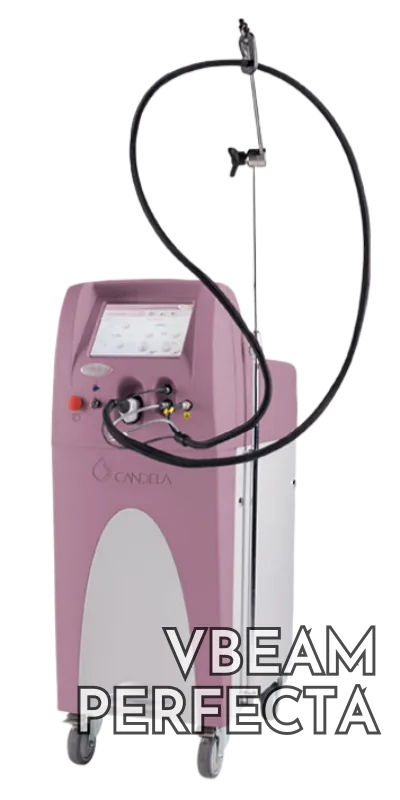
- Vbeam Perfecta - the 595nm wavelength is absorbed by hemoglobin, coagulating only the dilated microvessels
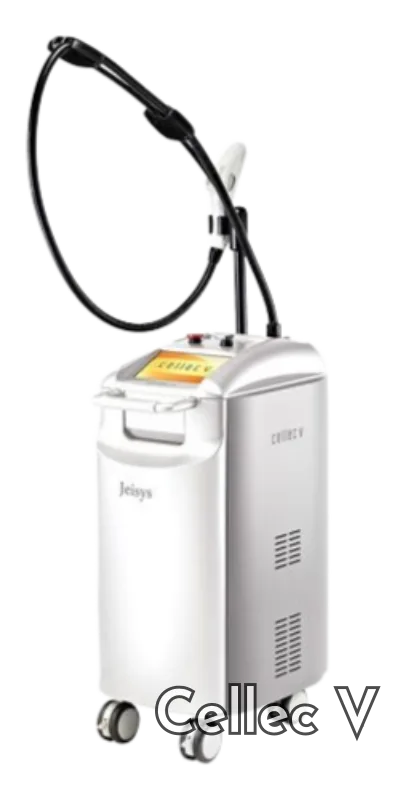
- Cellec V - when redness and pigment are mixed, filters are switched to address both together
- Cooling is applied alongside, so it can be used even on thin, sensitive skin
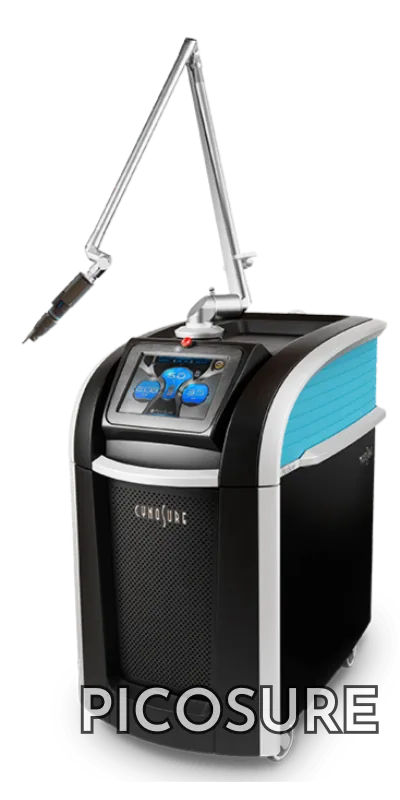
- PicoSure - picosecond pressure waves shatter pigment into fine particles, reducing residual heat load
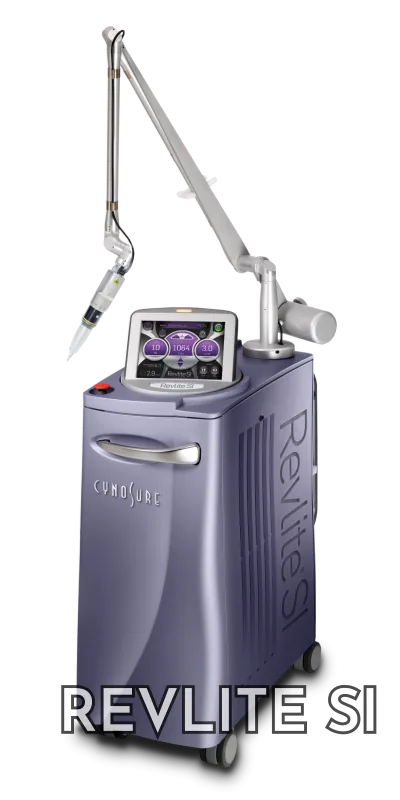
- RevLite - two wavelengths divide the depths, proceeding as toning over multiple sessions
- Avoiding a single strong pass is what reduces pigment rebound and irritation
- Potenza - radiofrequency heat is delivered only at the microneedle tips, giving the dermis a regenerative stimulus
- CO2 laser - fractional channels are created so new collagen fills in
- Depth and power are adjusted to the scar shape - boxcar, rolling, and others
- When redness, pigment, and indentation coexist, we clear the surface first, then move on to regeneration
- Rather than stacking multiple devices in one day, sessions are separated to reduce irritation
- Progress is reviewed at every session to adjust the intensity and interval of the next
Treatment Device Library
The devices behind mark treatment, one by one
Depending on the type and depth of the marks, the devices below are applied selectively and combined when needed.
Equipment 01
Vbeam Perfecta
Vbeam Perfecta is a 595nm pulsed-dye laser, a device for treating the red marks left where acne has subsided. This wavelength is selectively absorbed by hemoglobin in the blood, coagulating only the dilated microvessels while passing over surrounding tissue. A cryogen spray cools the epidermis just before each pulse, so it can be used even on thin, sensitive skin. As the redness fades, it helps even out the skin tone.
Equipment 02
Cellec V
Cellec V is an IPL device that divides the 420~700nm wavelength range across 9 filters. By switching filters, it can respond to marks where redness and brown pigment are mixed, addressing vessels and pigment together in a single session. Because it passes evenly over broad areas, it helps refine the tone of the entire face.
Equipment 03
PicoSure
PicoSure is a laser that delivers its 755nm wavelength in picosecond (one-trillionth of a second) pulses. It shatters pigment with instantaneous pressure waves rather than heat, leaving little residual heat in surrounding tissue. Beyond lightening the brown pigment left after acne, its focus lens can deliver fine regenerative stimulation to the dermis, helping smooth the texture of depressed marks as well.
Equipment 04
RevLite
RevLite is a Q-switched laser using two wavelengths, 1064nm and 532nm. It targets pigment by depth using the two wavelengths, and proceeds as toning — multiple low-power passes spread over several sessions. Because it never fires a single strong pass, it helps lighten brown marks step by step while reducing pigment rebound and irritation.
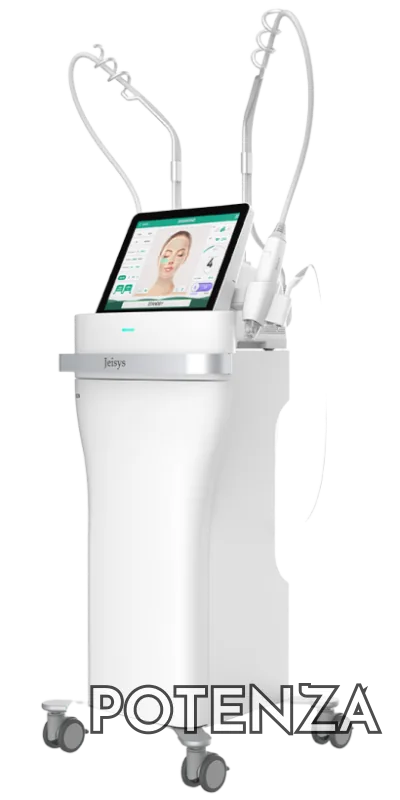
Equipment 05
Potenza
Potenza is a device that delivers radiofrequency heat only at the tips of its microneedles. The needles reach into the dermis, leaving thermal stimulation at a precise depth while sparing the epidermis, so it is used to refill areas that have sunk where collagen was lost. Needle depth and power can be adjusted to the scar's shape, helping with depressed marks of differing forms — boxcar, rolling, and more.
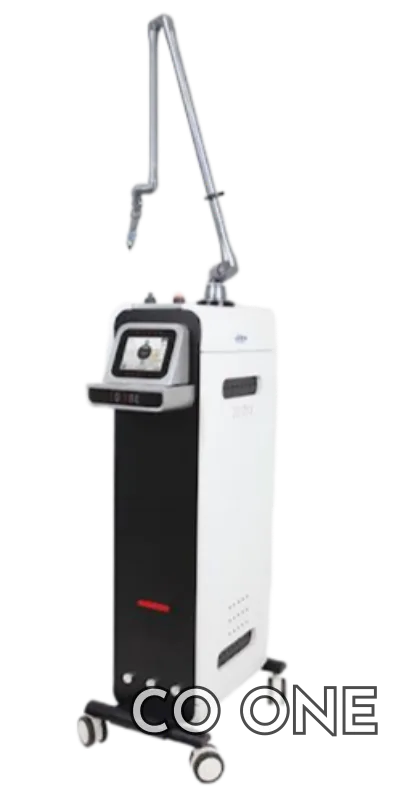
Equipment 06
CO2 Laser
The CO2 laser makes use of the way its 10,600nm wavelength is absorbed by water within tissue. When fine regenerative channels are created in the skin fractionally, new collagen forms around them and the sunken areas fill in. Because the treatment depth can be finely controlled, it helps smooth deeply depressed scars and scars with sharply defined edges.
Care Guidelines
Daily habits that protect
your treatment results
With mark treatment, the care between visits shapes the outcome as much as the procedures themselves.
UV rays deepen pigmentation and slow recovery. Applying sunscreen even on cloudy days and indoors is the single most important habit in mark treatment.
Squeezing spreads inflammation deeper and wider, leading to depressed scars. If extraction is needed, it is better done safely at the clinic.
When the skin barrier breaks down, even minor irritation can reignite inflammation. Protect the barrier with a gentle, low-irritant moisturizer.
Shortening the intervals out of eagerness to heal faster only accumulates irritation. Results are better when you keep to the schedule you were given.
Related
Related care guides worth reading
Adult acne treatment for your 20s-40s
A guide to the causes of recurring adult acne and its treatment, stage by stage.
Teen acne treatment (ages 14-30)An acne treatment approach tailored to growing skin, and what to watch out for.
Inflammatory acne: Agnes treatmentHow pustular acne that recurs in the same spot is treated at the level of the sebaceous gland.
Pico toning · laser toning for pigmentHow toning treatment for brown marks and pigment works, and how it proceeds.
※ Treatment plans and session counts vary with the type and depth of the marks and the condition of your skin. Side effects can occur with any procedure, so please consult a physician for an accurate treatment plan.
Consulting Cases
Post-acne mark consultation cases
Find your answer through a one-on-one consultation at our clinic, backed by extensive consultation and treatment experience.
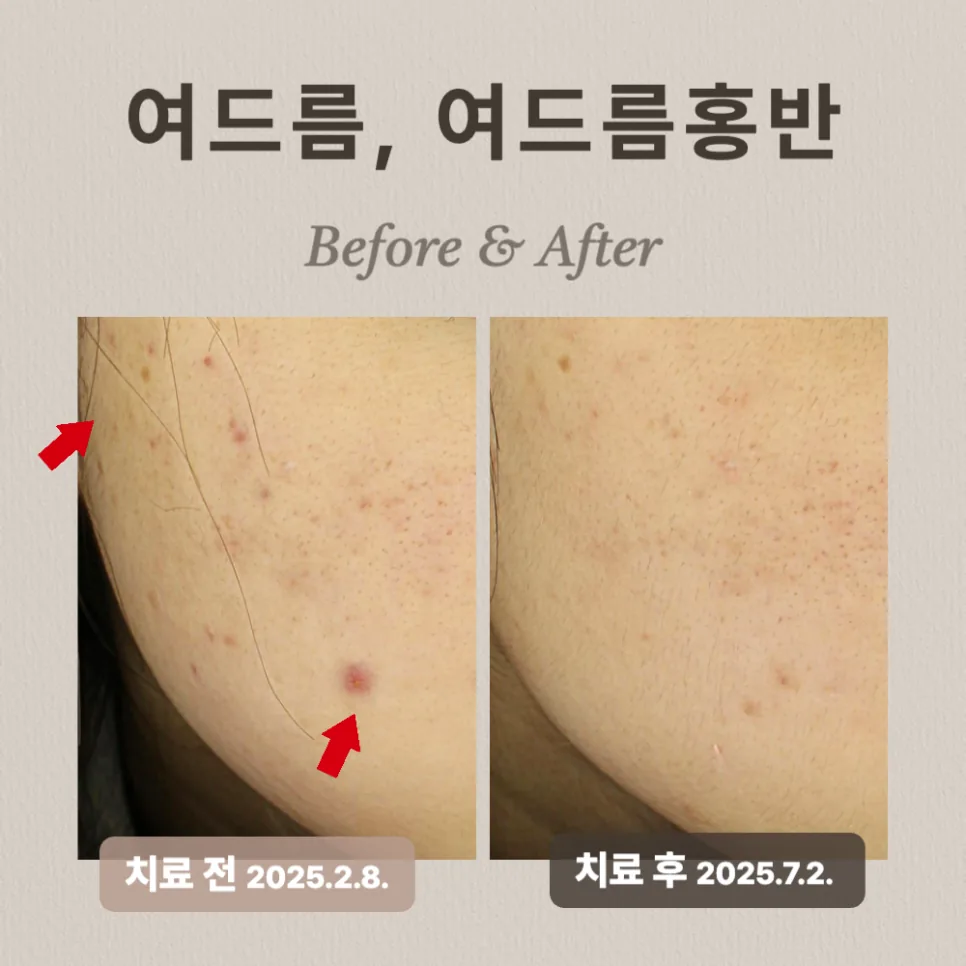 Red post-acne marks in a patient in their 20s - Vbeam treatment review and results
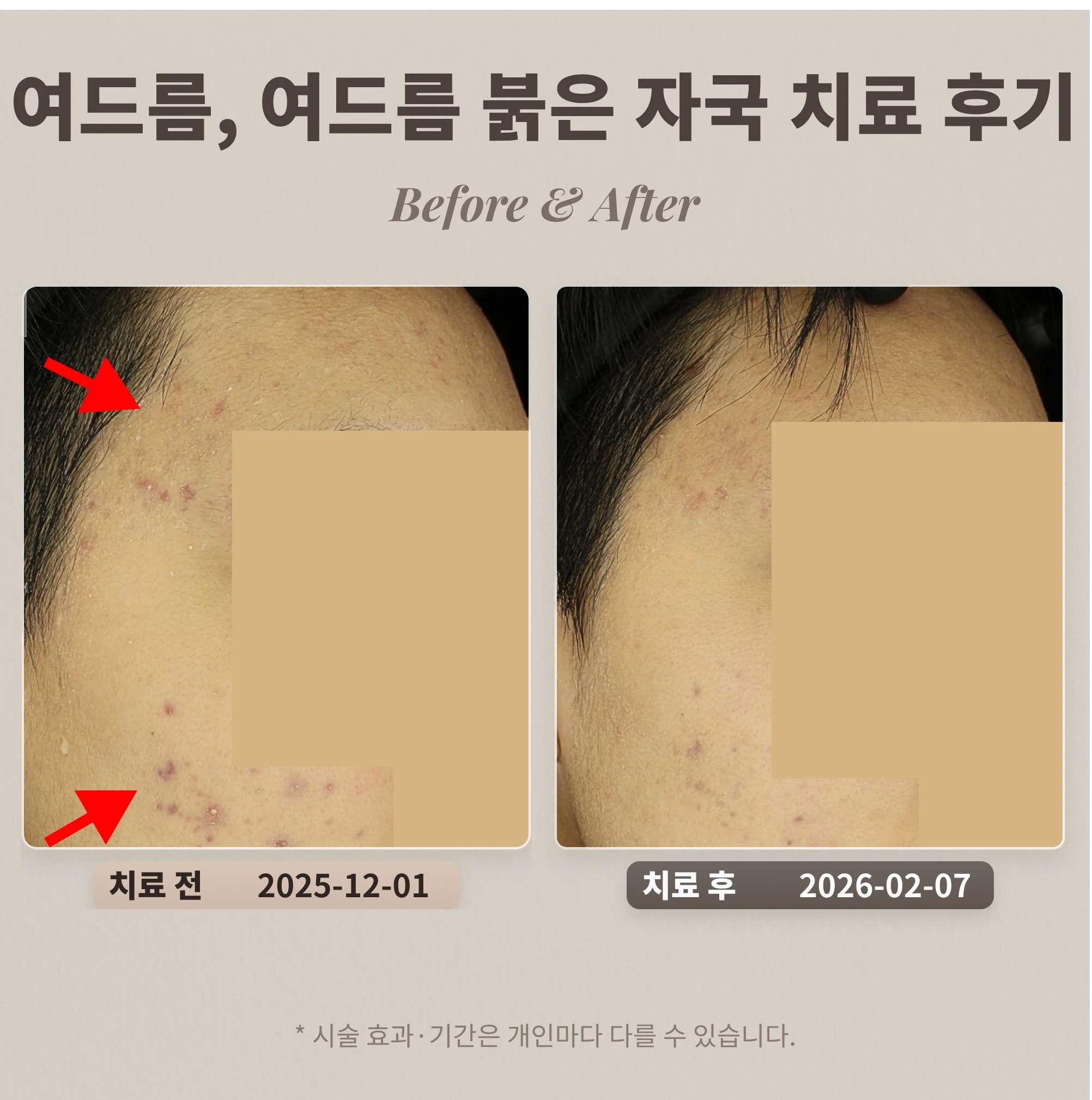 Temple and cheek acne with red post-acne marks in a patient in their 20s - treatment review
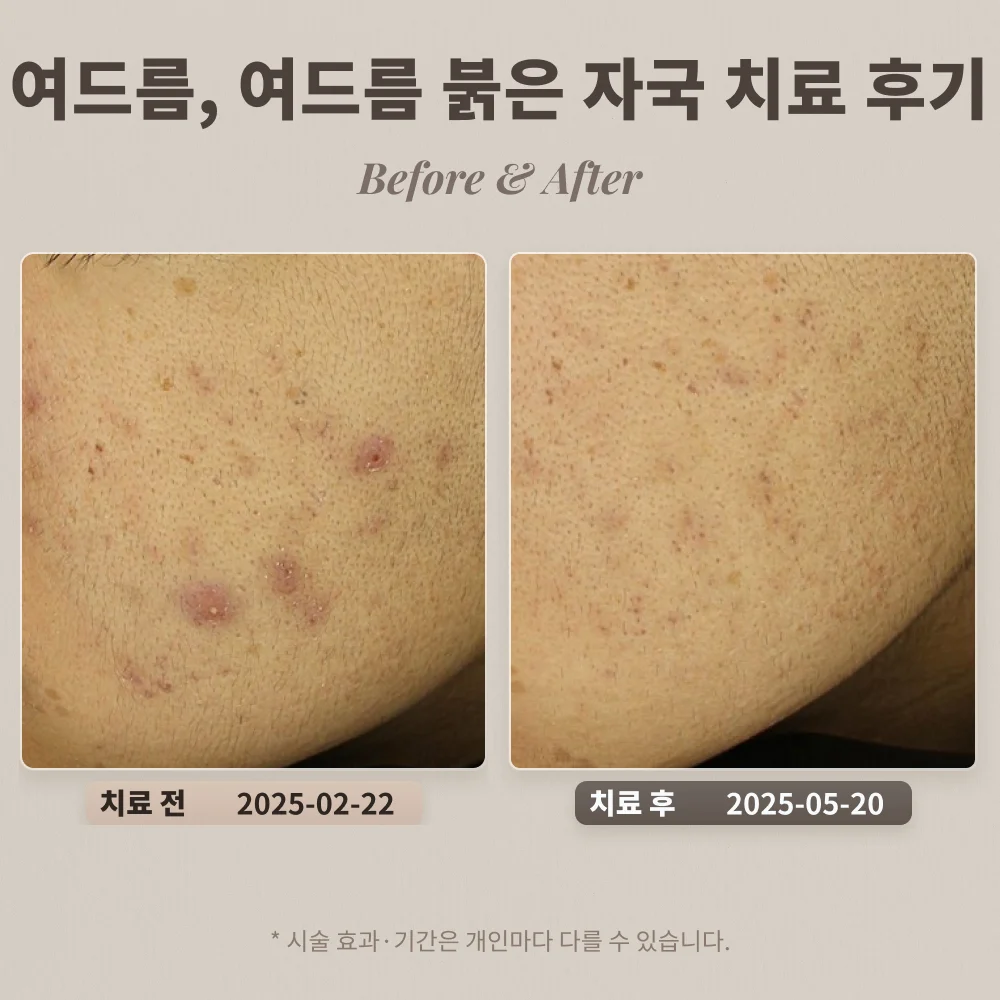 Teenage acne and red post-acne marks - treatment review
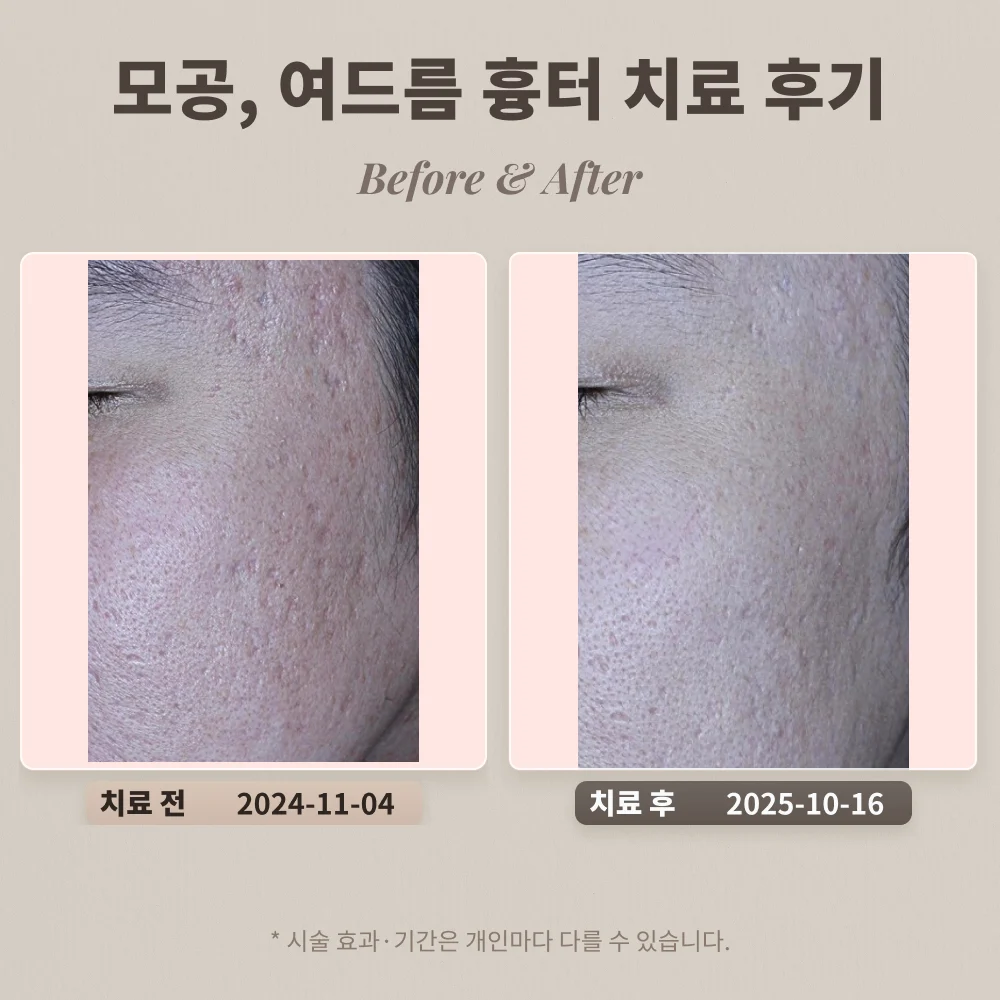 Pore and acne scar treatment review #a treatment course for porcelain skin
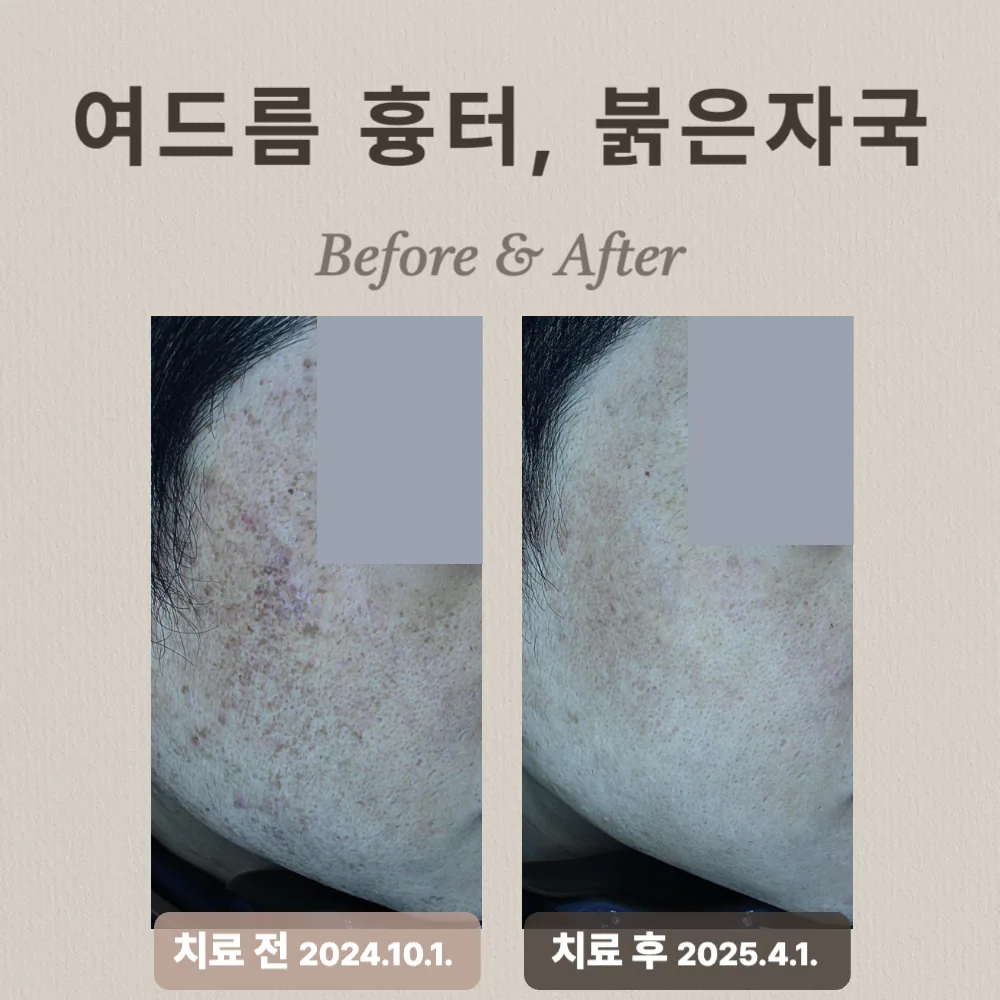 Acne scars and complex skin conditions in a man in his 20s - treatment review
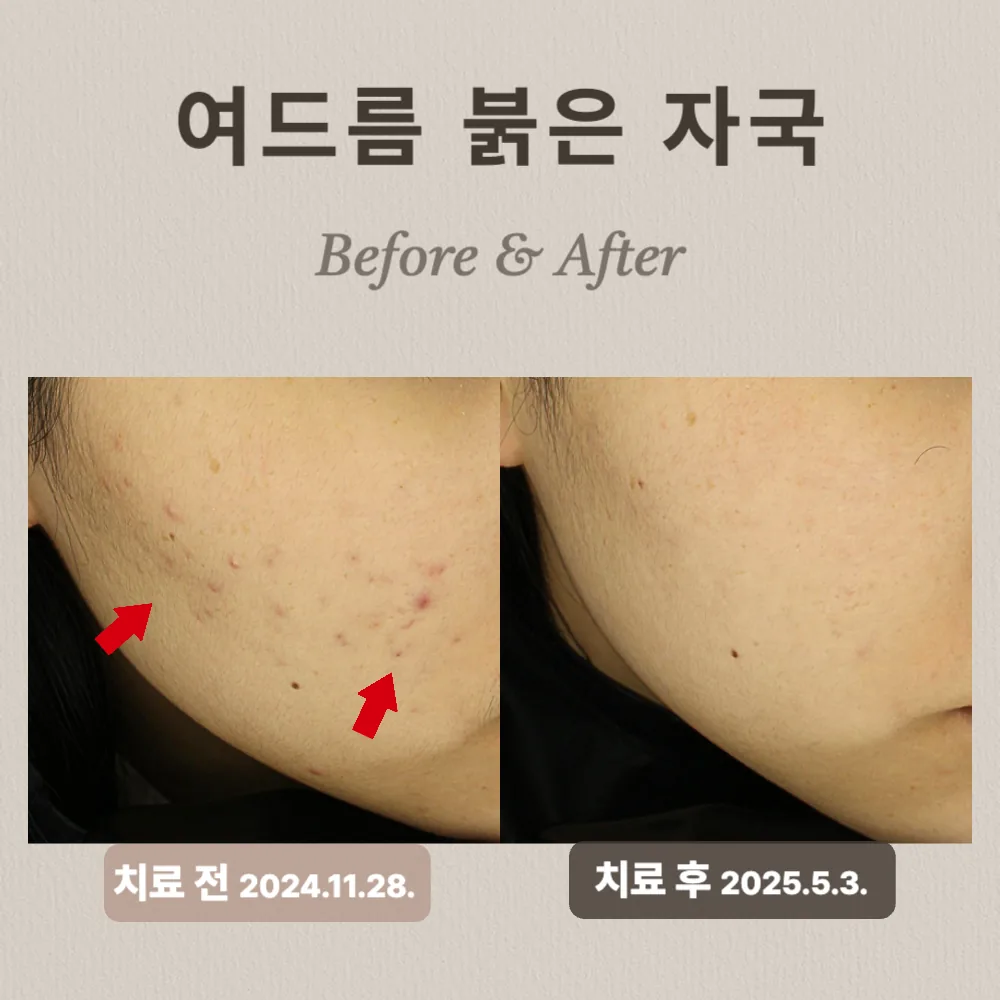 Acne and acne erythema in a woman in her 20s - treatment review
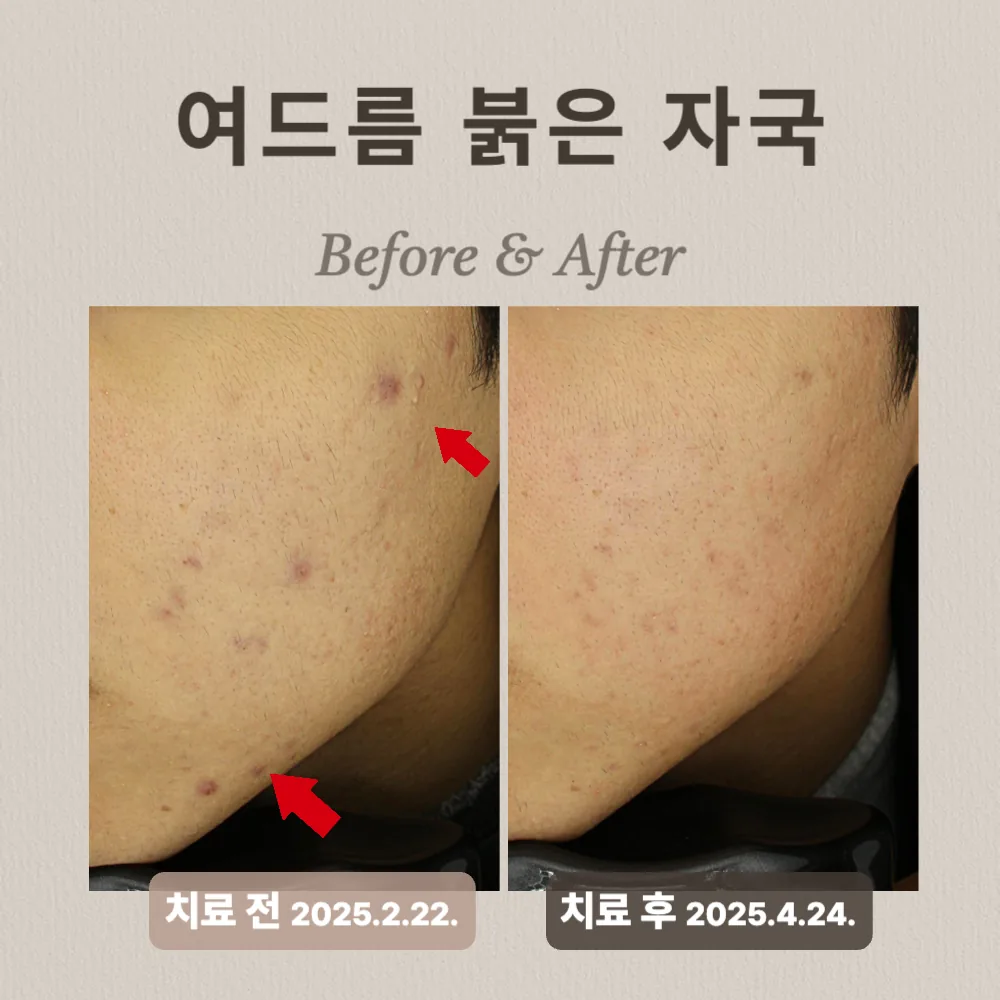 Acne and acne erythema in a man in his 20s - treatment review
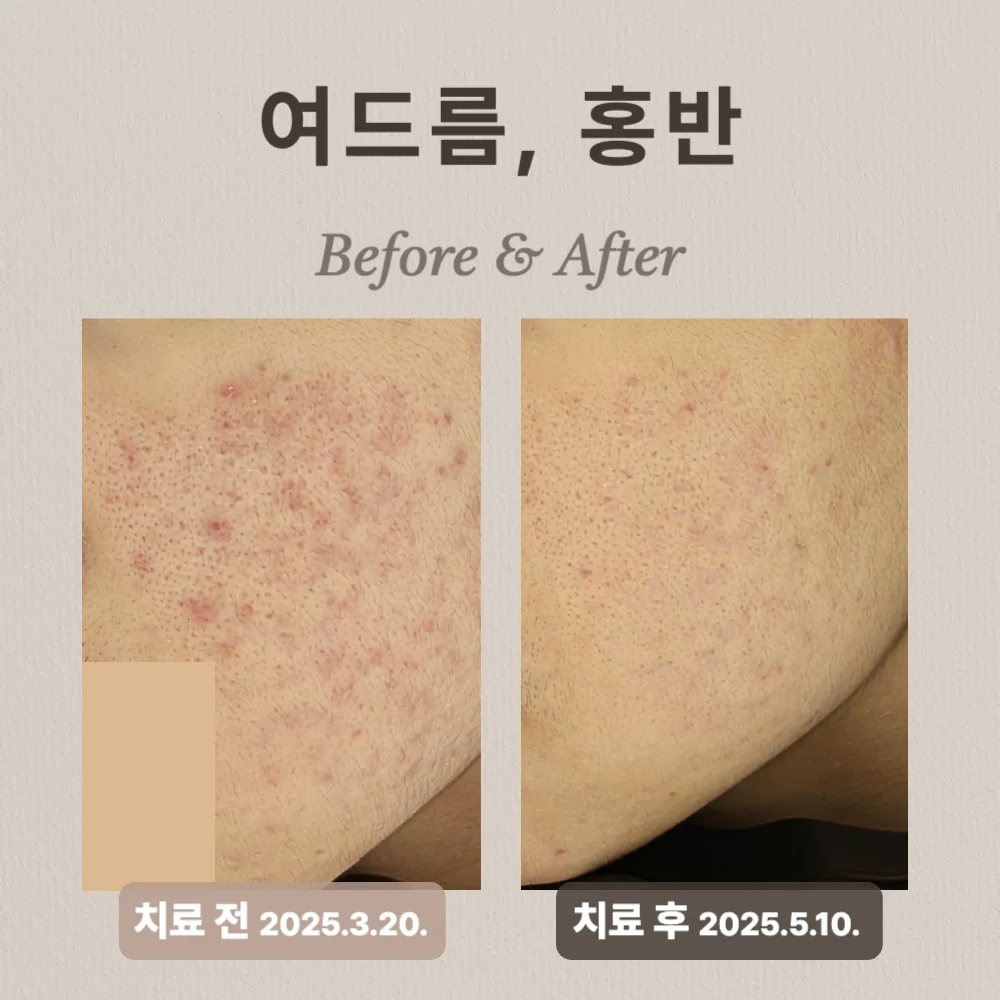 Acne and acne erythema in a teenage boy - treatment review
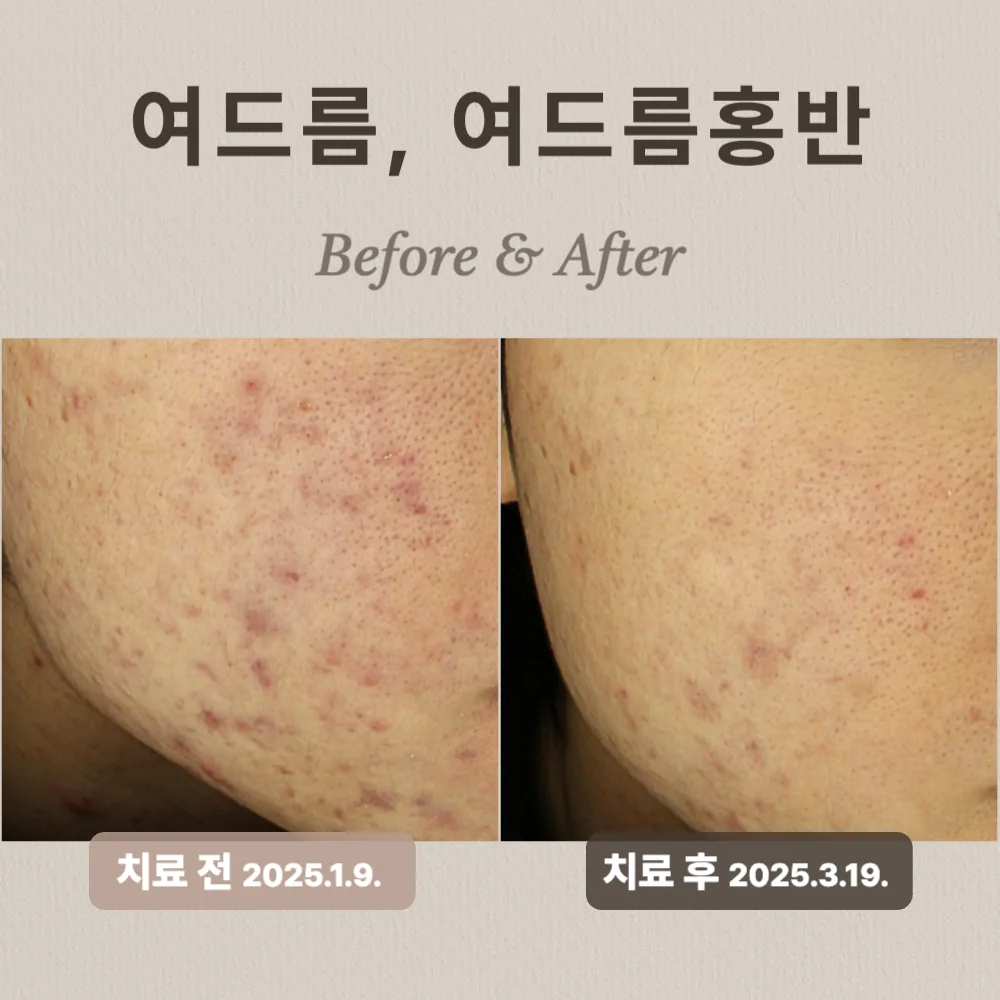 Acne and acne erythema in a man in his 20s - treatment review
Begin Your Skin Journey
The marks that remain —
find out what kind they are first
The treatment differs with the type and depth of the marks. We identify them precisely through a one-on-one consultation.
02-565-8273 Book a Consultation ↗
3F SH Tower, 324 Seolleung-ro, Gangnam-gu, Seoul · 3 min from Hanti Station · 6 min from Seolleung Station
Weekdays
10:00–20:00
(lunch 13:00–14:00) · Sat
09:30–15:30
open through lunch
Closed Sundays · public holidays
Equipment
이 진료에 함께 쓰는 장비
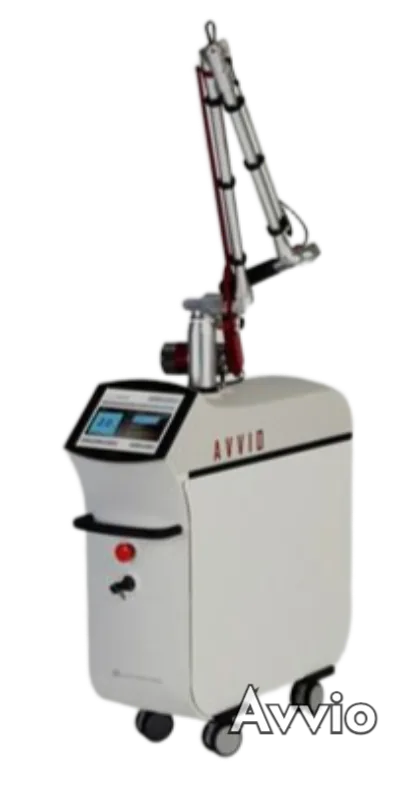
AVVIO
Used for uneven surface concerns such as depressed acne scars, enlarged pores, and thickened dead skin. The 2940nm wavelength is absorbed in the shallow layers, finely ablating the stratum corneum without leaving residual heat, and fractional channels induce regeneration to help with improvement.

Potenza
Used for uneven surface concerns such as enlarged pores, depressed acne scars, and rough skin texture. Microneedles reach into the dermis and deliver radiofrequency heat only at the needle tips, which helps improve skin texture and scars while reducing the burden on the epidermis.

PicoSure
Used for settled pigment concerns such as melasma, blemishes, and age spots, as well as acne scars. It fires a 755nm wavelength in picosecond pulses, shattering pigment with instantaneous pressure waves rather than heat, which helps improve pigmentation while reducing the burden on the epidermis.

Vbeam Perfecta
Used for concerns where vessels show through and the skin looks red, such as facial flushing, dilated capillaries, and red post-acne marks. The 595nm wavelength is absorbed by hemoglobin, coagulating only the dilated vessels, while cryogen spray protects the epidermis as it helps improve redness.