
Lumiin Dermatology · Column by a Board-Certified Dermatologist · Based on Vbeam Perfecta
Vbeam Laser Results:Why They Differ for Facial Redness, Nasal Thread Veins,and Red Acne Marks
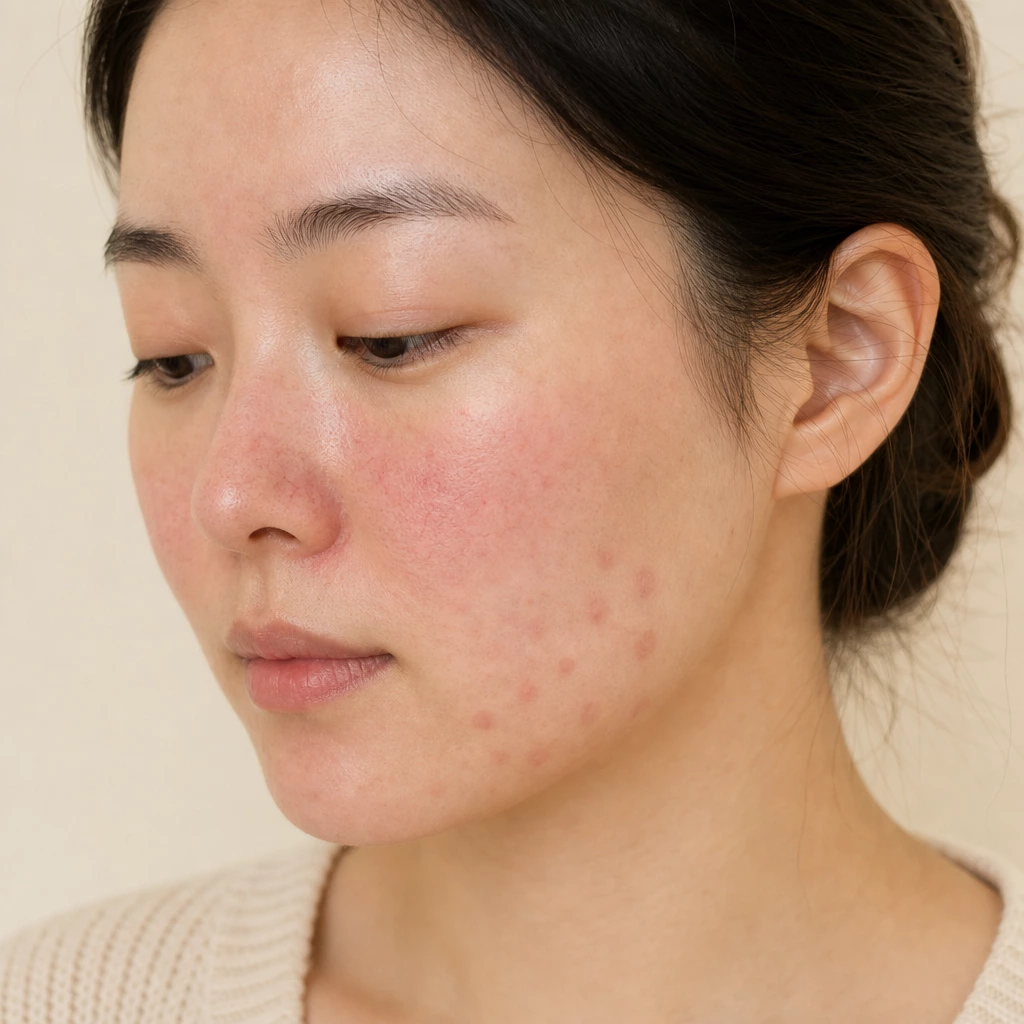
Hello. This is Dr. Choi Jaewon of Lumiin Dermatology.
“My friend says she improved a lot after three Vbeam sessions, so why am I still the same?” This is a question I often hear in the consultation room. Two people receive the same Vbeam, yet one notices a change quickly while the other says the difference came only after several sessions. It is not because the device was different; it is very likely that the redness the two were treating was of different kinds.
Today, using the Vbeam Perfecta that Lumiin works with as the reference, I will explain how the effect of the Vbeam laser appears differently in facial flushing, thread veins on the nose and cheeks, and red acne marks. Along with a recently treated redness case, I have also added the venous lake of the lip, which is not redness but is treated on the same principle. How Vbeam acts on blood vessels was covered in detail in a previous column, so this time I will focus on the differences between symptoms.
The three kinds of redness differ, starting with the shape of the vessels in the skin
Vbeam is a laser in which 595nm light is absorbed by hemoglobin in the blood and delivers heat to dilated vessels. Up to this point it is the same for any symptom. What changes is the thickness of the vessels receiving the light and the pattern in which they are spread. Depending on whether the vessels are thin and widely spread, whether one or two thick strands run like lines, or whether they are gathered in a small area, the way the laser is applied and the speed at which change appears are different.
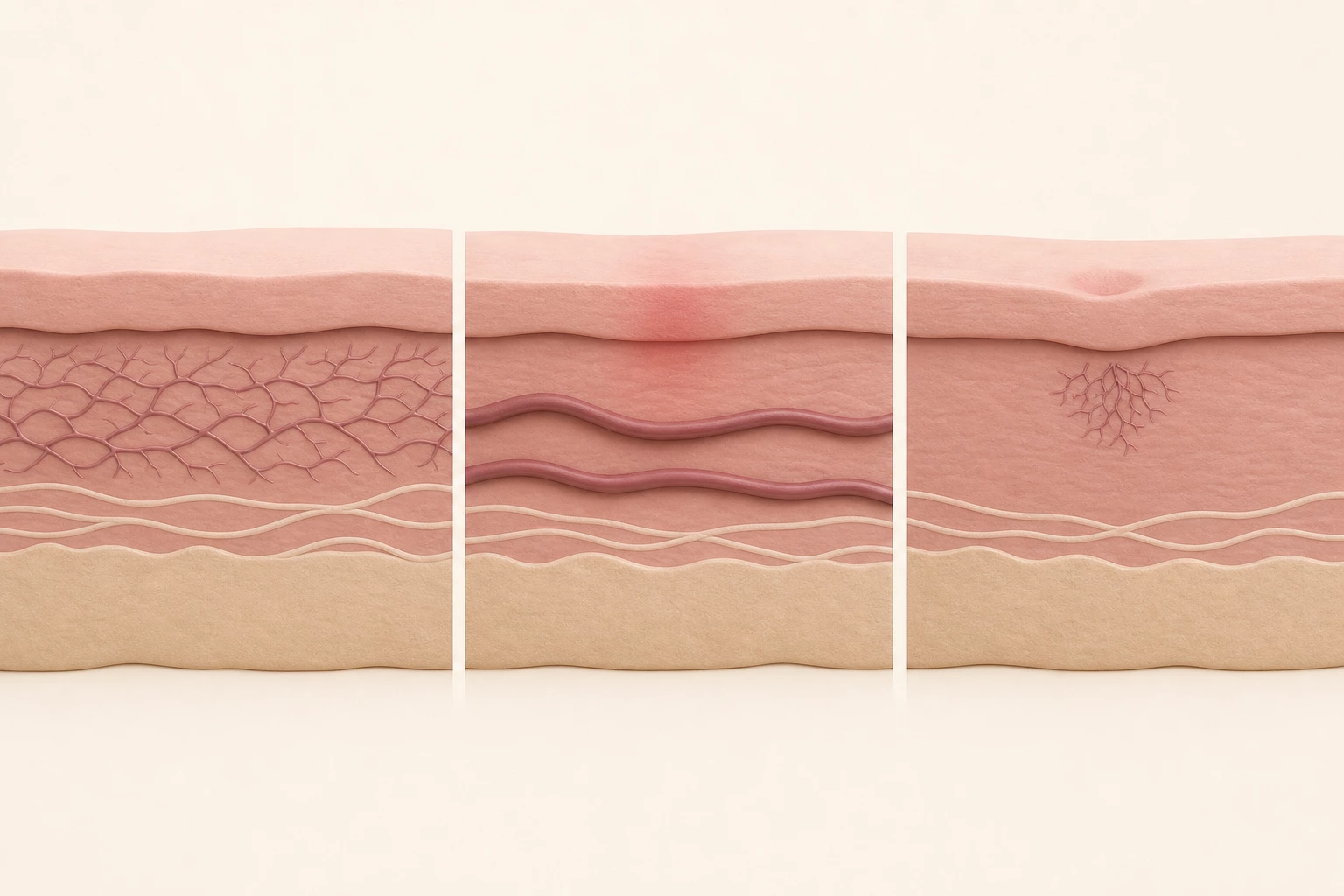
Very fine vessels are spread widely across the cheeks and the center of the face, so it appears as diffuse redness with no clear border.
Relatively thick vessels show up as lines. They are commonly seen beside the nostrils and on the cheeks.
Small vessels that dilated after inflammation passed are gathered beneath each individual mark.
Lumiin's Vbeam is the Perfecta
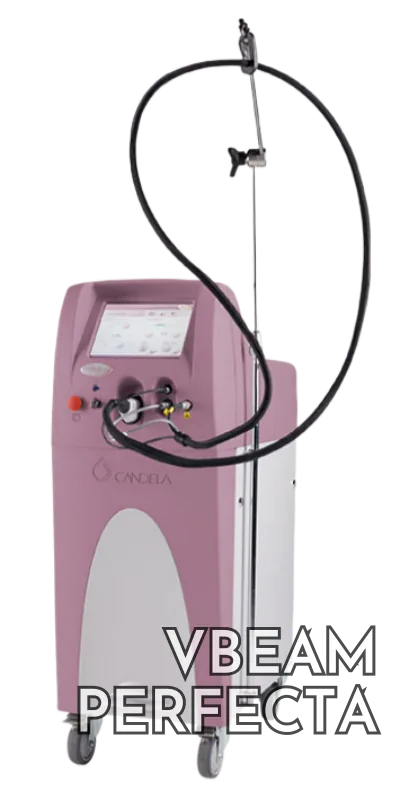
If you search for Vbeam, the names Perfecta and Prima come up together. Both are 595nm pulsed dye lasers made by Candela, and the Prima is a model of the same line released after the Perfecta. Since many people are curious about the model name, let me say first that Lumiin Dermatology treats with the Vbeam Perfecta.
It is the settings that make the difference between symptoms
With the Perfecta, the pulse duration (the time over which light is emitted), the spot size, and the energy can be changed to suit the symptom. The DCD cooling device, which sprays cryogen just before each pulse, cools the epidermis and protects the skin surface. [1]
Actual results depend less on the generation of the device and more on which vessels are treated with which settings. That is why I begin by sorting out the type of redness before the procedure.
Facial flushing is treated broadly and faded over several sessions
This is when the whole cheek is faintly red and flushes more when you go somewhere warm or feel nervous. The vessels here are so fine that they cannot be seen as lines, and they are spread widely. Rather than treating one area intensely, the usual approach is to irradiate evenly across the whole face, at an intensity that does not cause bruising, divided over several sessions. The international rosacea expert consensus also lists the pulsed dye laser as a treatment option for persistent facial erythema. [2] [3]
So with facial flushing, rather than a dramatic change in one session, the red background fades gradually as sessions accumulate. We plan one cycle as 3–5 sessions at 3–4 week intervals and adjust the number of sessions according to the extent of the redness and the response. To be frank, the reaction itself of the face flushing with alcohol or temperature changes does not disappear entirely with the laser alone. The results last longer only when aggravating factors in daily life are managed as well.
If your skin stings just from washing, or bumps keep recurring, we first check for the inflammation of rosacea and the condition of the skin barrier. I have summarized this in the column on skin barrier treatment.
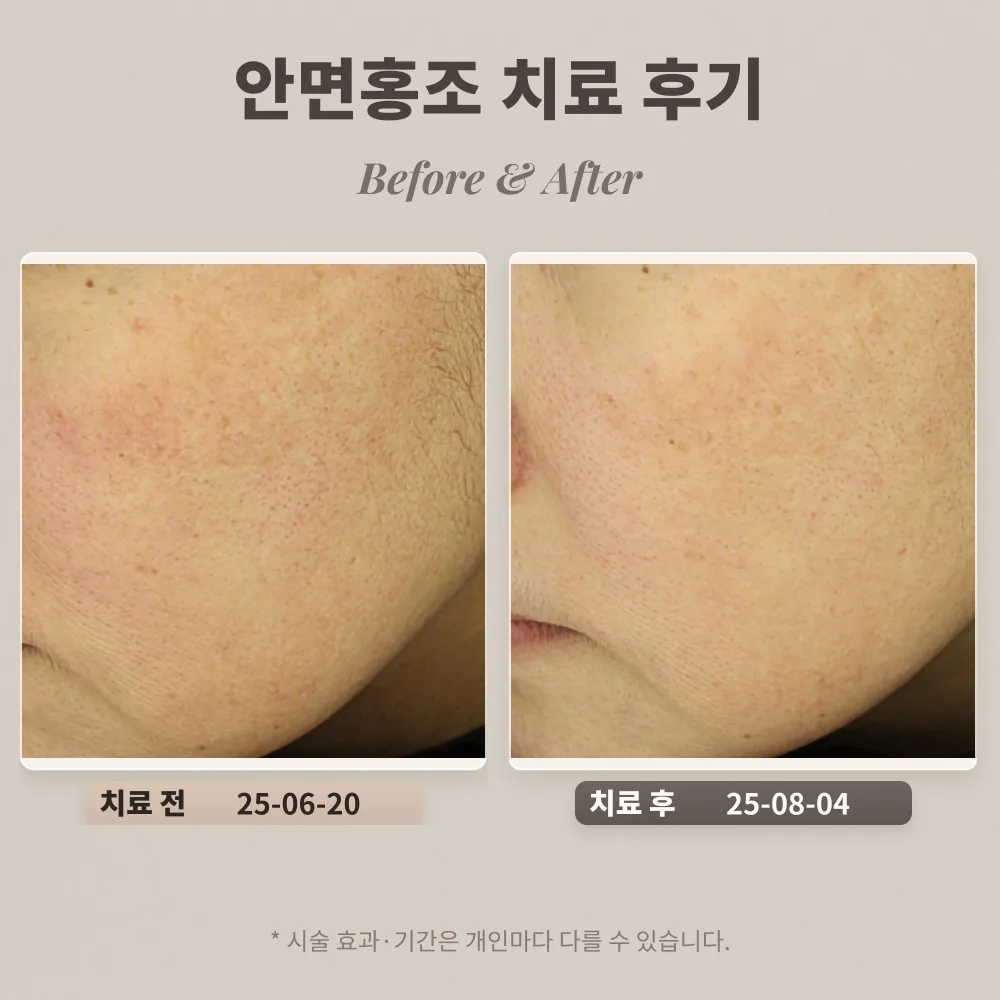
Below is the course of a woman in her 20s, recently presented as a case review. On a background of redness, small red papules kept rising and subsiding, leaving red marks scattered over the whole cheek, and her concern was that her face always looked flushed. She was treated with the Vbeam Perfecta, and the photos were taken one year apart with the same skin analysis device in the same polarized mode.
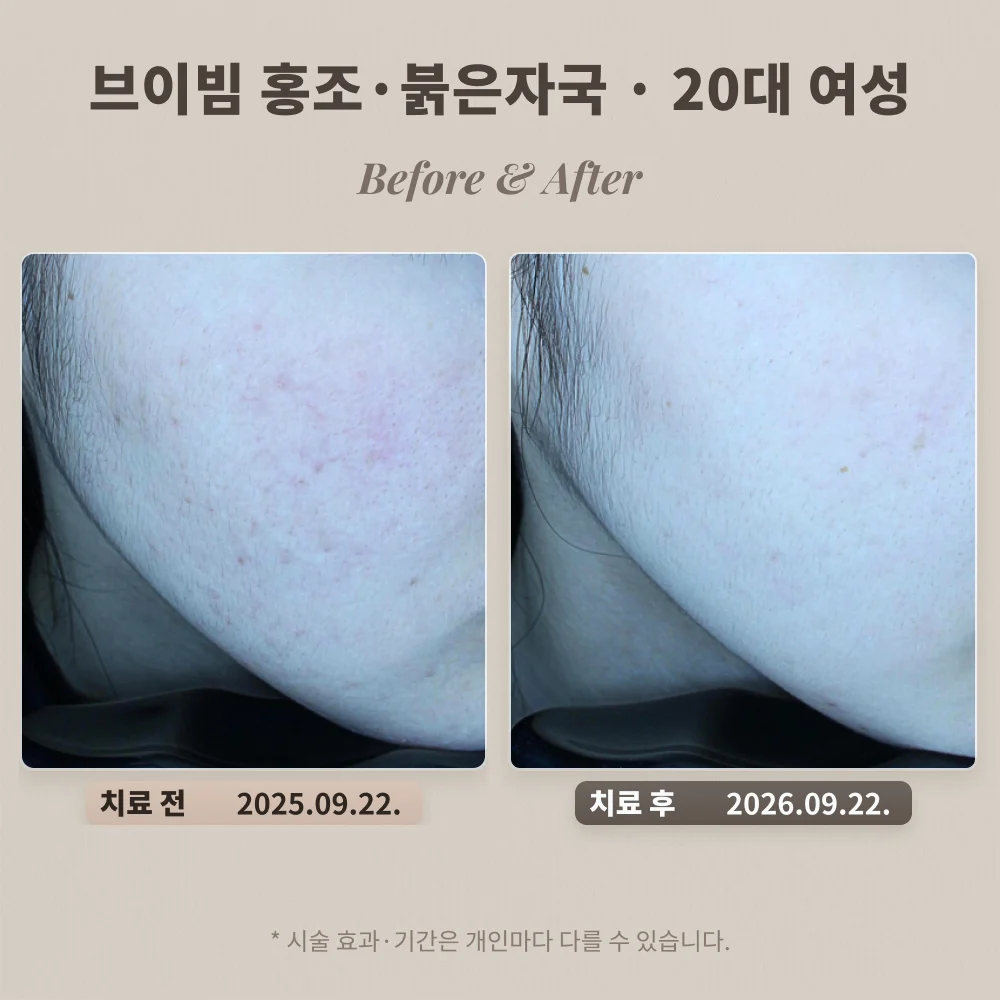
This is the treatment course of an individual patient and does not guarantee the same result. Facial redness and rosacea can flare up again depending on lifestyle habits and irritation, so care that reduces skin irritation is needed alongside treatment.
Thread veins on the nose and cheeks are treated by following the vessel
This is when fine red lines show through beside the nostrils or on the cheeks. The vessels are thicker and more distinct than in flushing, so instead of applying the laser broadly, we irradiate along the visible vessels. The thicker the vessel, the longer we set the time over which light is emitted, so that heat reaches the entire vessel wall. Thin and thick vessels take up heat differently, so a single setting will suit only one of them.
Thread veins on the nose in particular tend to be thicker and deeper than those on the cheeks, so treatment may feel slow. There are even separate studies dealing with nasal thread veins that do not respond well to treatment. [4] For such vessels we raise the energy slightly, and accordingly purple spots (bruising) may remain on the treated area for a few days. Whether to divide the treatment into more sessions at an intensity that does not cause spots, or to accept the spots and reduce the number of sessions, is decided together after asking about your schedule and daily life. [5]
Below is the case of a woman in her 40s, presented on our clinic's website. Along with facial flushing, fine vessels showed through on her cheeks, and she received 5 sessions of Vbeam laser together with soothing care.
This is the treatment course of an individual patient and does not guarantee the same result. The public record does not include detailed settings, and redness may look different depending on photography conditions.

“Vbeam is a single device, but flushing, thread veins, and acne marks each mean treating different vessels. That is why, before telling you how many sessions you need, I first tell you what kind of redness it is.”
Choi Jaewon · Director · Board-Certified DermatologistRed acne marks are treated after the inflammation has settled
Sometimes an area stays red for months even after the acne has gone down. This is a state in which the small surrounding vessels dilated as the inflammation passed, and fine vessels are gathered beneath each individual mark. Vbeam helps fade red marks by reducing these vessels. Studies using the 595nm pulsed dye laser on red acne marks have also reported improvement in the redness of the marks. [6] [7] [9]
However, as for evidence that Vbeam stops newly erupting acne itself, results differ from study to study. [8] So while inflammatory acne keeps appearing, the usual order is to bring the inflammation under control first with extraction, scaling, and medication, and to add Vbeam at the stage when red marks remain. In the case below as well, Vbeam was combined with acne treatment.
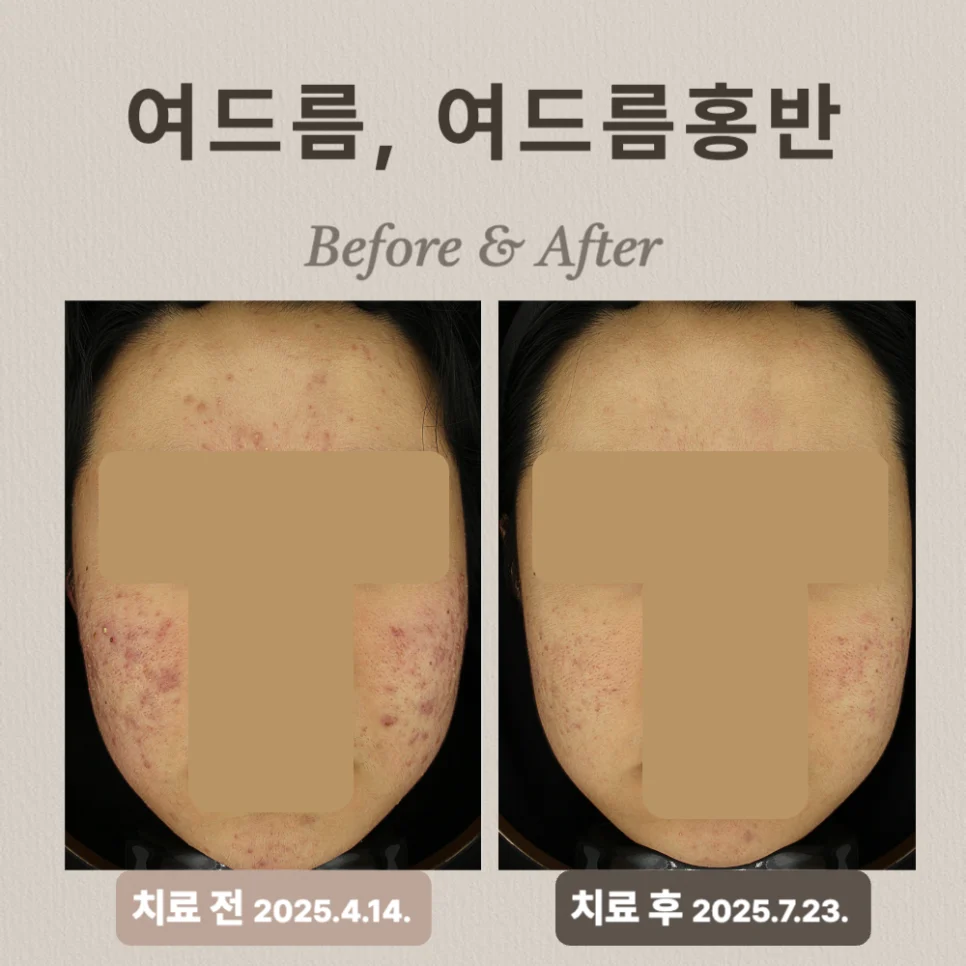
There is one distinction to keep in mind. If an acne mark is brown rather than red, what remains is pigment, not vessels, so it is not a target for Vbeam. If the red color briefly disappears and then returns when you press the mark lightly with a finger, it is likely a vascular mark. Many people have a mix of red and brown marks, and in such cases we plan pigment treatment alongside.
The purple spot on the lip, a venous lake, is treated on the same principle
There is one more vascular lesion, slightly different from redness, that we often treat with Vbeam. It is the venous lake, a dark purple or bluish-black spot that forms at the border of the lip. It arises when a small vein in the shallow part of the skin dilates and blood pools inside it, and it is mainly seen on the lips, face, and ears of people in their 50s and older who have had sun exposure over many years. [10] [12]
Because the color is dark, many people live with it for a long time believing it to be a mole or discoloration. A venous lake is soft, and when pressed gently the pooled blood is pushed out and the color fades, then returns when you release your finger. However, among bluish-black lesions of the lip there are, rarely, cases that need to be distinguished from pigmented lesions, so I do not judge by pressing alone; I first examine it under magnification and then decide on treatment.
The treatment principle is the same as for thread veins. Hemoglobin in the pooled blood absorbs the 595nm light, and the heat closes the dilated vessel. Because a venous lake has a thicker vessel and more pooled blood than flushing or thread veins, we focus on the lesion and use a long pulse duration, and for deeper lesions we sometimes consider a laser of another wavelength as well. A study in which the 595nm pulsed dye laser and the 1064nm Nd:YAG laser were applied in sequence reported that 38 of 39 lesions disappeared completely. [11] The lip is a thin, sensitive area, but treatment is possible because the cryogen cools the epidermis just before each pulse.
Below is the case of a woman in her 60s, newly presented as a case review. She had a dark purple lesion at the border of the upper lip near the corner of the mouth, which was noticeable when she spoke or smiled and could not be covered with makeup. She was treated with the Vbeam Perfecta, and before treatment a photo with a ruler was also taken to record the size.
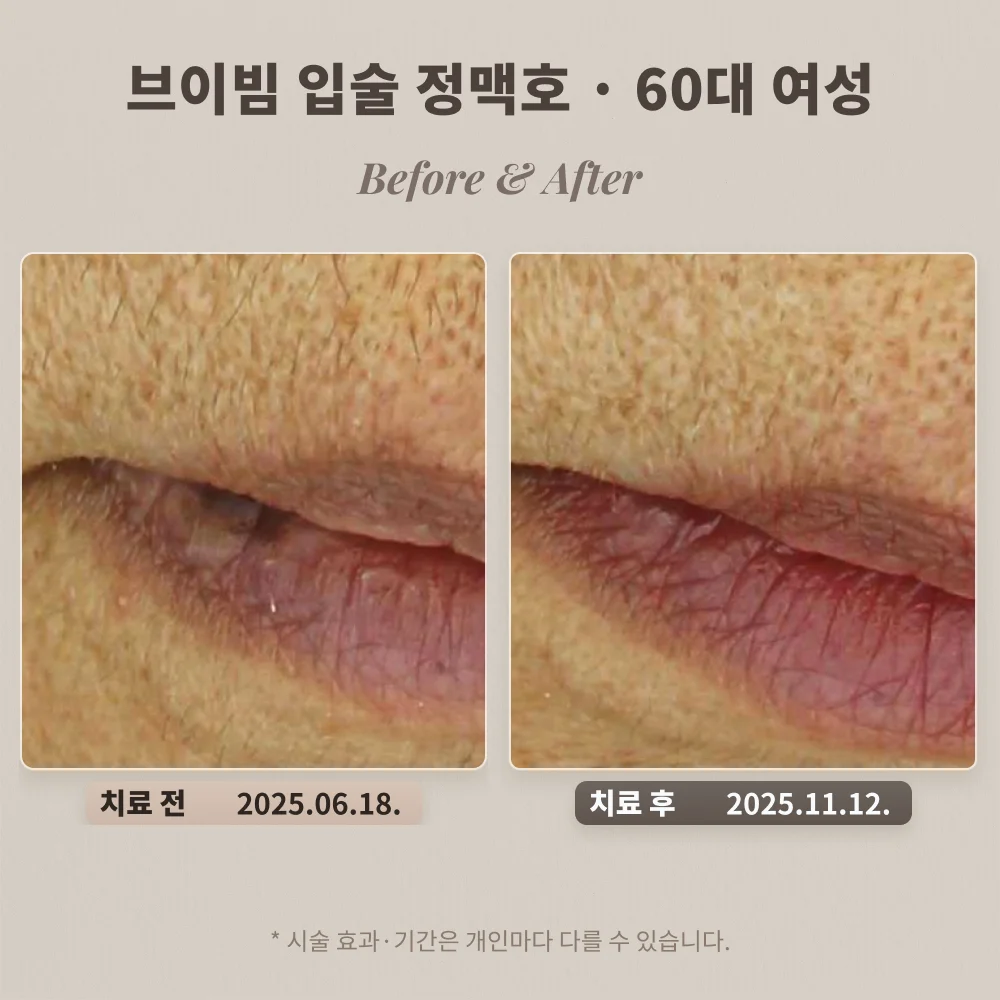
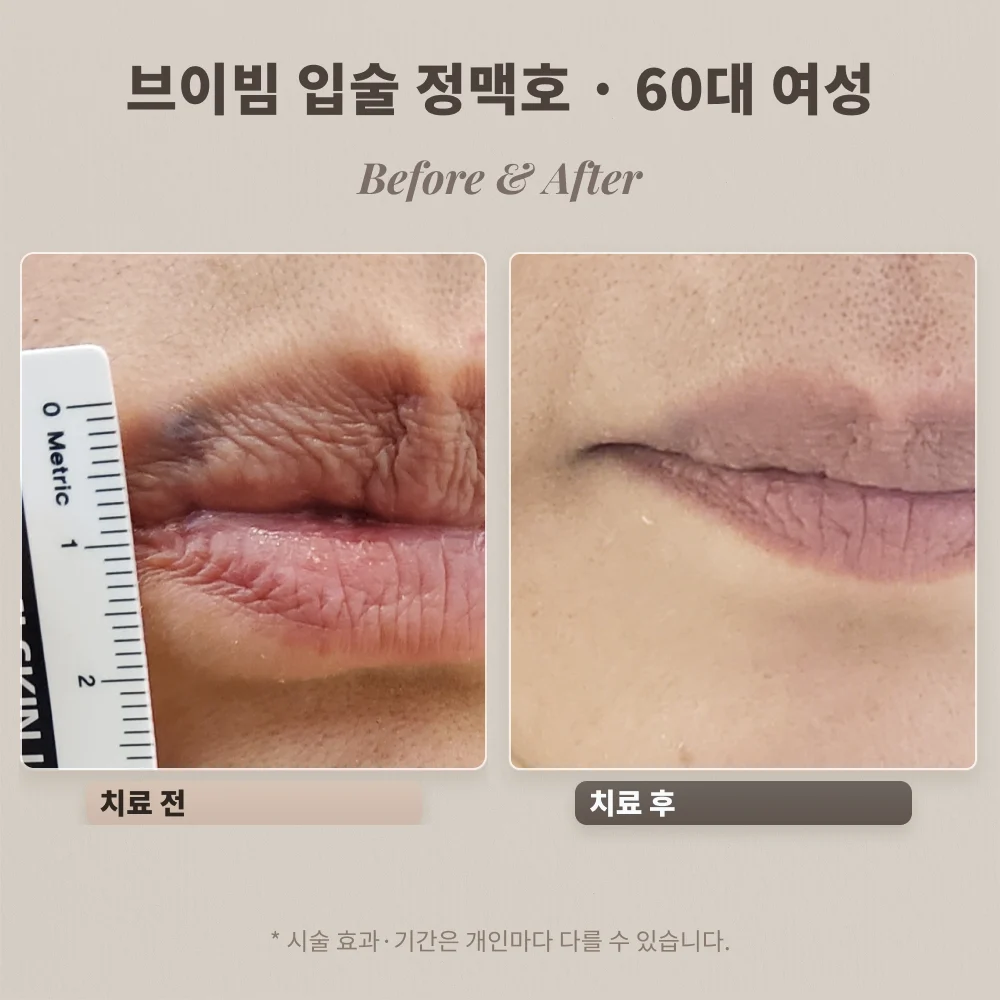
This is the treatment course of an individual patient and does not guarantee the same result. The number of treatments needed and the course may vary with the size and depth of the venous lake.
The differences between symptoms at a glance
| Symptom | Vessel pattern | How the laser is applied | How the change appears | What we check alongside |
|---|---|---|---|---|
| Facial flushing | Fine and widely spread | Evenly over the whole face, several sessions at an intensity without bruising | The red background fades gradually with each session | Rosacea inflammation, skin barrier, aggravating factors in daily life |
| Thread veins on the nose and cheeks | Thick vessels in a linear pattern | Irradiated along the vessel, pulse duration adjusted to thickness | Lines grow fainter or look broken; the nose tends to be slower | Possibility of purple spots, and your schedule |
| Red acne marks | Small vessels gathered beneath the mark | Centered on the marks, after inflammation has settled | Red spots come closer to the skin color | Treatment of new acne, whether brown marks (pigment) are present |
| Venous lake of the lip | Blood pooled in a dilated small vein | Focused on the lesion, irradiated with a long pulse duration | The dark purple fades and comes closer to the lip color | Distinction from pigmented lesions, depth of the lesion |
This table summarizes general tendencies; actual settings and number of sessions are decided according to the skin condition after consultation.
Reactions like these may occur after the procedure
After the procedure, redness and mild swelling may continue for about a day, and you can wash your face the same day. Purple spots may remain for a few days on areas where thicker vessels, such as thread veins or a venous lake, were treated. Most subside with time, so you need not worry too much.
- While spots or redness remain, avoid saunas, alcohol, and strenuous exercise.
- Apply sunscreen every day and do not rub the treated area. If your lips were treated, please use a lip balm that contains sun protection.
- If you have recently had a lot of sun exposure and tanned, be sure to tell us before the procedure. We will adjust the settings or postpone the appointment.
- If blisters, oozing, or pain develop, do not apply ointment on your own; please contact the clinic.
Redness cases treated with Vbeam at Lumiin
We have gathered cases of facial redness and red acne marks not presented in the main text. Click a photo to go to each case review.
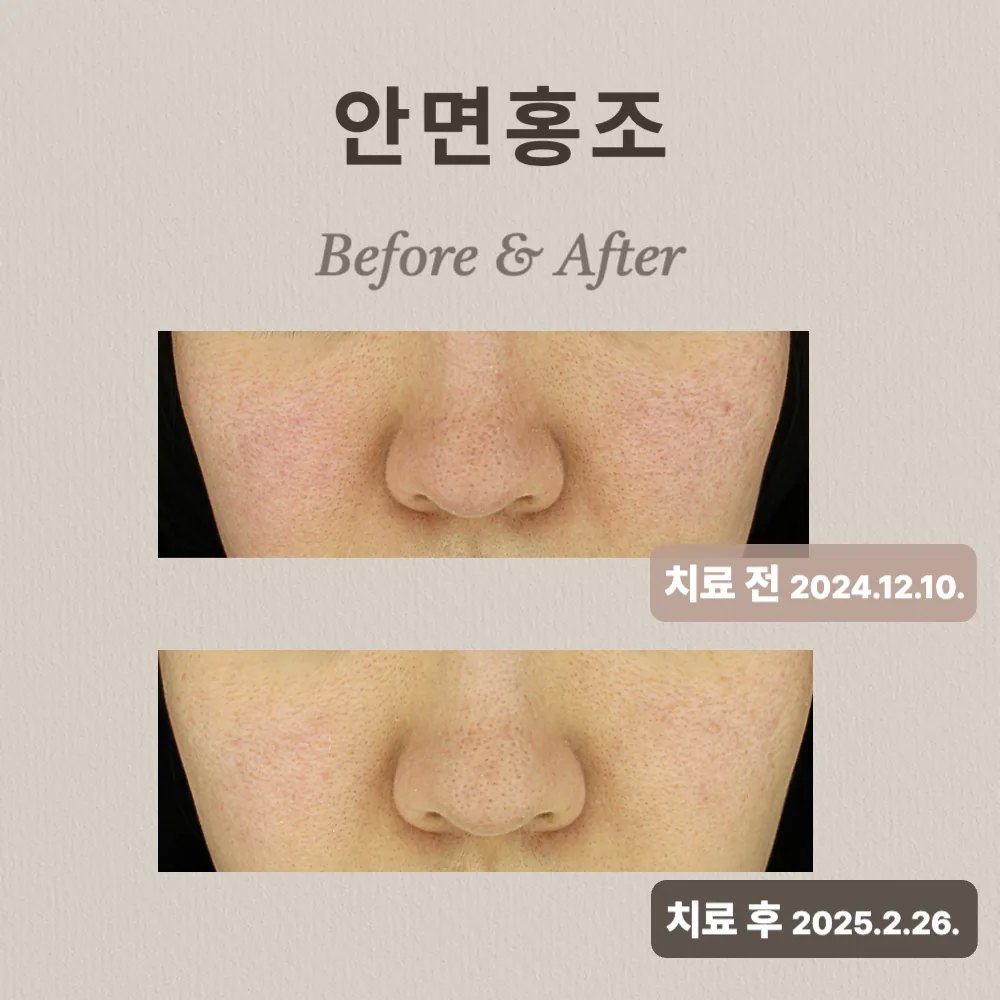 Facial flushing and rosacea on both cheeks20s · Female
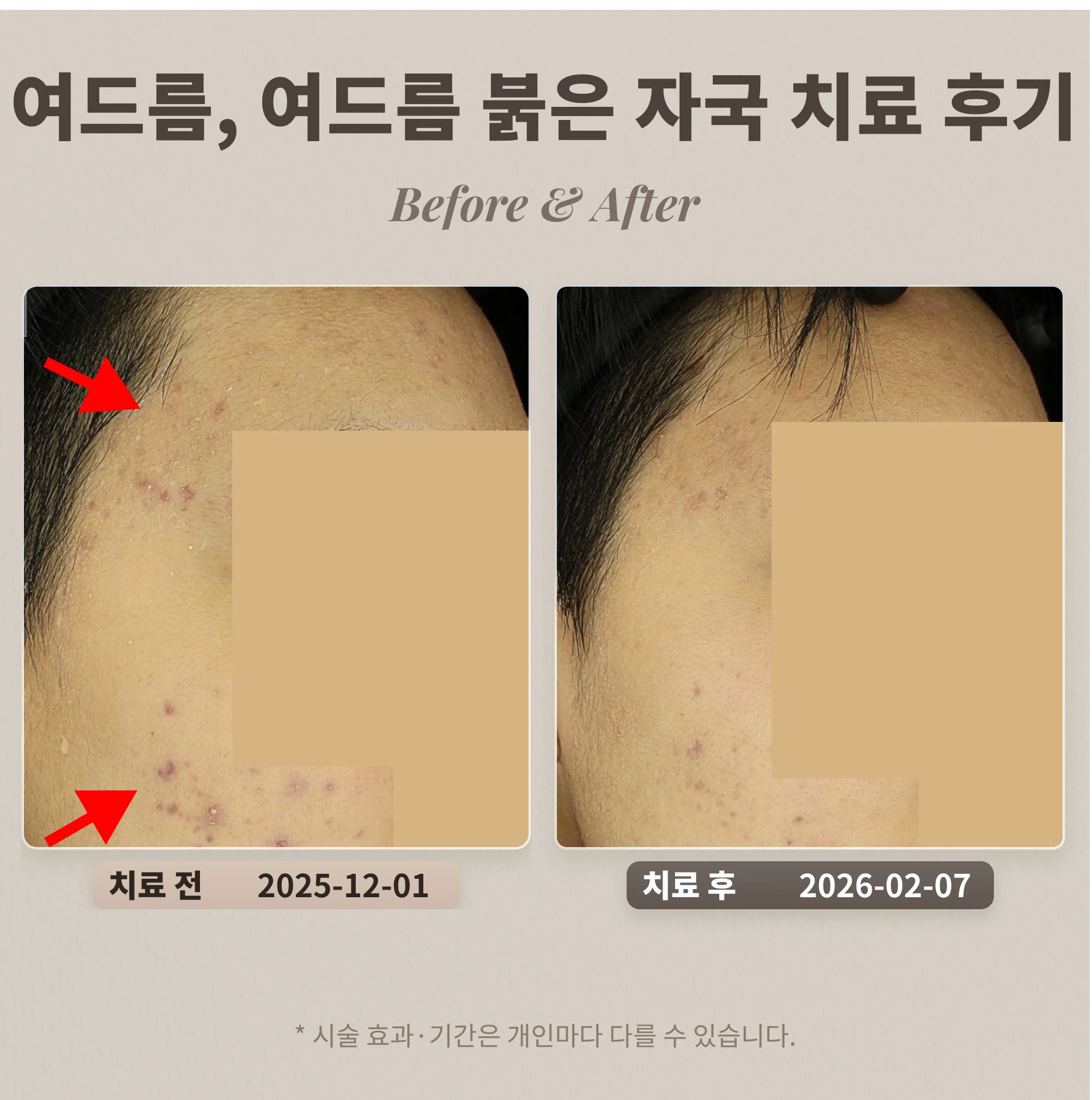 Red acne marks on the temples and cheeks20s · Male
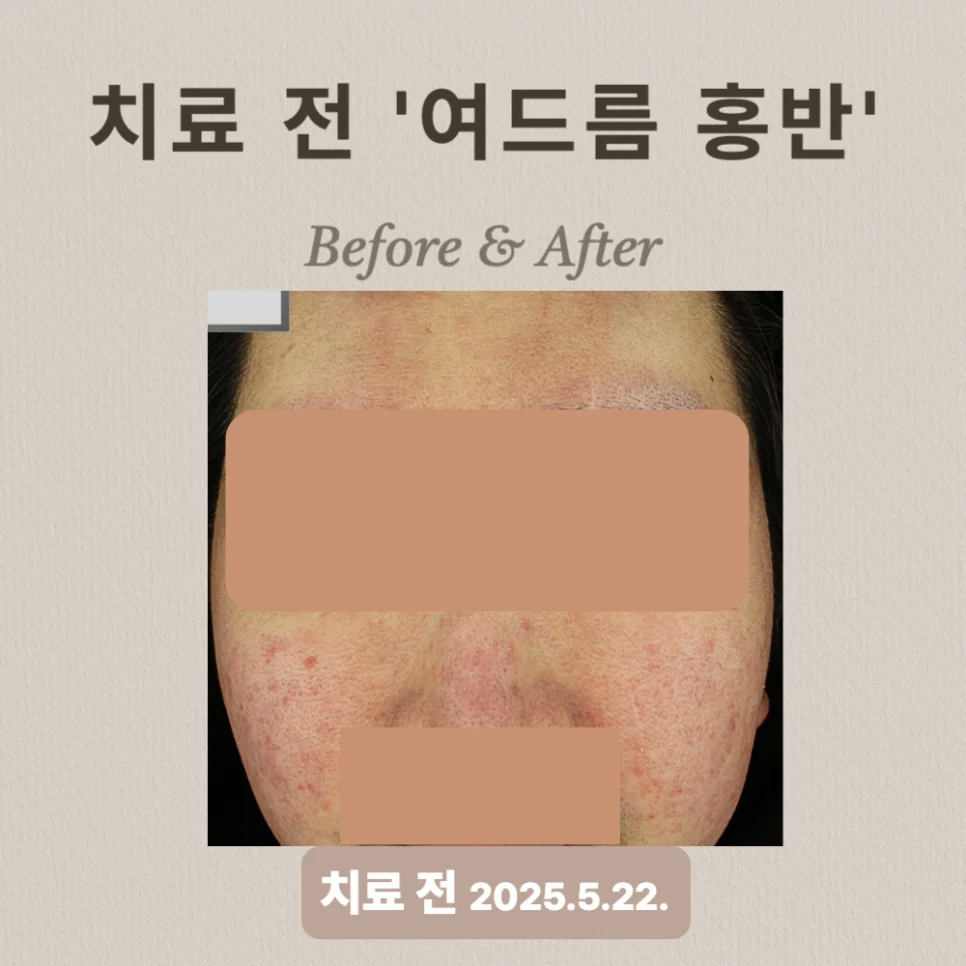 Post-acne erythema over the whole face20s · Male
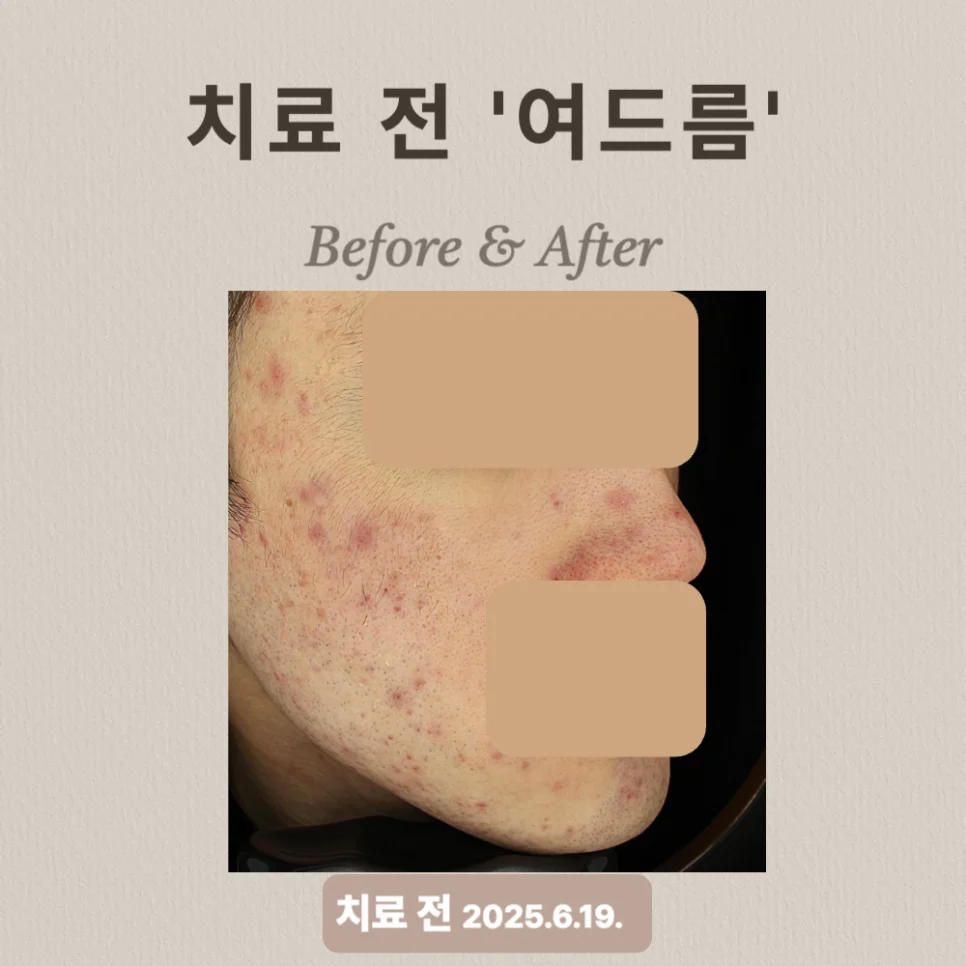 Cheek acne and red marks20s · Male
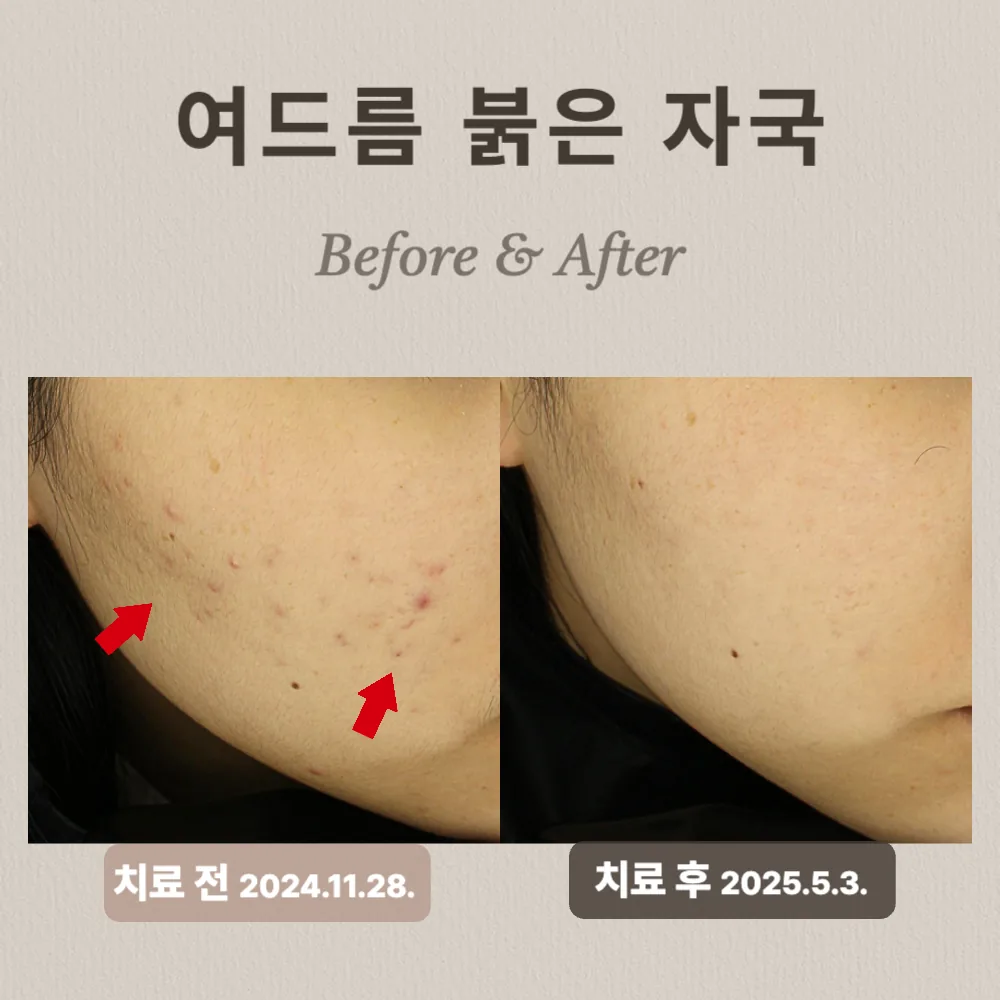 Post-acne erythema on the forehead and cheeks20s · Female
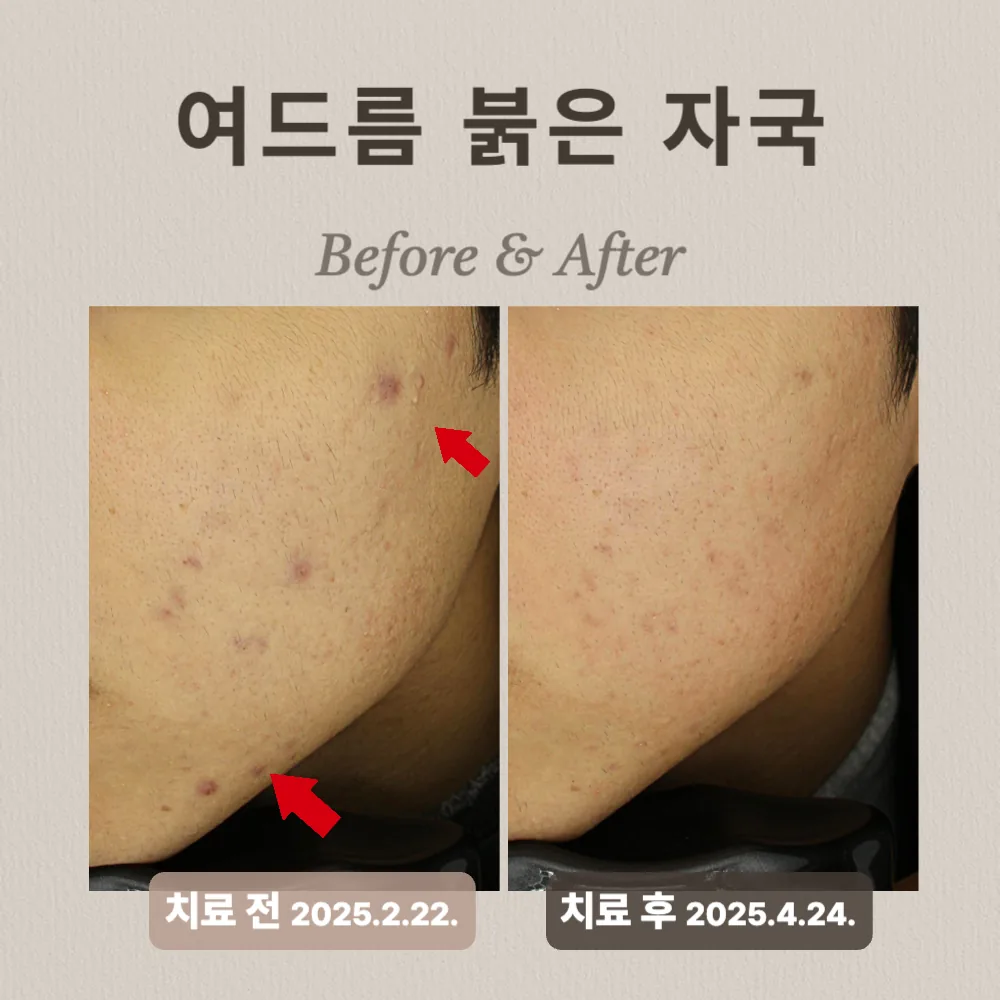 Post-acne erythema on the cheeks and jawline20s · Male
These are the treatment courses of individual patients and do not guarantee the same result. The number of sessions and combined treatments differ from case to case, and redness may look different depending on photography conditions.
If redness continues for several weeks or more or spreads quickly, if bumps and stinging keep recurring together, or if it is accompanied by red, gritty-feeling eyes, diagnosis comes before laser. If a bluish-black spot has newly appeared on the lips or face or is gradually growing, or if you cannot tell whether an acne mark is red or brown, it is also better to have it distinguished in a consultation.
If you have put up with facial redness for a long time, I hope you will start by finding out what kind of redness it is. Whether it is flushing, thread veins, marks left by acne, or a venous lake of the lip, both the way Vbeam is applied and the time you wait for change are different. In the consultation room we will look at your skin together, and I will explain thoroughly in what order to treat it. Thank you.
The doctor who wrote this article
- Education
- Graduated from Hanyang University College of Medicine
Completed dermatology residency at Asan Medical Center, Seoul
Master's degree in Dermatology, University of Ulsan College of Medicine Graduate School - Career
- Former Director, Doctors Dermatology Clinic
Former Director, Misogain Dermatology Clinic
Former Director, The Bareun Dermatology Clinic
Best Presentation Award, Korean Society of Dermatopathology (2018) - Societies
- Full member, Korean Dermatological Association
Full member, Association of Korean Dermatologists
Full member, Korean Society for Anti-Aging Dermatology
Medical References
- [1] Candela. Vbeam Perfecta pulsed-dye laser: 595nm wavelength, variable pulse duration and Dynamic Cooling Device. Manufacturer's technical material, referenced separately from clinical evidence.
- [2] Schaller M, et al. Recommendations for rosacea diagnosis, classification and management: update from the global ROSacea COnsensus 2019 panel. Br J Dermatol. 2020;182:1269–1276.
- [3] Neuhaus IM, Zane LT, Tope WD. Comparative efficacy of nonpurpuragenic pulsed dye laser and intense pulsed light for erythematotelangiectatic rosacea. Dermatol Surg. 2009;35:920–928.
- [4] Using the ultra-long pulse width pulsed dye laser and elliptical spot to treat resistant nasal telangiectasia. Lasers Med Sci. 2010.
- [5] Jasim ZF, et al. Long-pulsed (6-ms) pulsed dye laser treatment of rosacea-associated telangiectasia using subpurpuric clinical threshold. Dermatol Surg. 2004;30:37–40.
- [6] Yoon HJ, et al. Acne erythema improvement by long-pulsed 595-nm pulsed-dye laser treatment: a pilot study. J Dermatolog Treat. 2008;19(1):38–44.
- [7] Lekwuttikarn R, et al. Randomized, controlled trial split-faced study of 595-nm pulsed dye laser in the treatment of acne vulgaris and acne erythema in adolescents and early adulthood. Int J Dermatol. 2017.
- [8] Orringer JS, et al. Treatment of acne vulgaris with a pulsed dye laser: a randomized controlled trial. JAMA. 2004;291(23):2834–2839.
- [9] Kalantari Y, et al. Post-acne erythema treatment: a systematic review of the literature. J Cosmet Dermatol. 2022.
- [10] Bean WB, Walsh JR. Venous lakes. AMA Arch Derm. 1956;74(5):459–463.
- [11] Multiwavelength laser treatment of venous lakes. Dermatol Surg. 2009 Dec. (Sequential irradiation with 595nm pulsed dye laser and 1064nm Nd:YAG; complete clearance of 38 of 39 lesions in 30 patients)
- [12] Mlacker S, Shah VV, Aldahan AS, McNamara CA, Kamath P, Nouri K. Laser and light-based treatments of venous lakes: a literature review. Lasers Med Sci. 2016;31:1511–1519.
This article is intended to provide general medical information and does not replace individual diagnosis and treatment. Treatment effects and recovery time may vary from person to person, and redness, swelling, purple spots, and similar reactions may occur after the procedure.