Lumiin Dermatology · Column by a Board-Certified Dermatologist · Autumn Skin Care
Why Does Inner Dryness Appear in Autumn?Recommended Treatments, Seen ThroughRejuvelook and Water-Glow Tox

Hello. This is Dr. Yoon Jisun of Lumiin Dermatology.
“The surface is shiny, but after washing my face it feels tight inside.”
“Even if I apply cream twice, my makeup starts lifting by the afternoon.”
“Lately my cheeks keep burning and turning red.”
These are things I hear much more often in the consultation room once the cold wind starts to blow. Even people who, through the summer, thought dryness had nothing to do with them because their skin was oily complain of both tightness and flaking around this time. This state, in which the surface of the skin is oily while the inside is parched, is commonly called inner dryness.
Today I will explain why inner dryness becomes especially severe in autumn, and for whom Water-Glow Tox, which replenishes moisture, and Rejuvelook, which strengthens the skin's foundation, are each suited. And because dryness left for a long time sometimes leads to facial redness, I have also summarized why Vbeam treatment is needed at that point.
Inner dryness is a matter of moisture within the skin, not oil
How much sebum is produced and how much moisture the skin holds are two different matters. The stratum corneum, the outermost layer of the skin, is made up of corneocytes and lipids such as ceramides that fill the spaces between them, and this layer must be tightly packed for the moisture within the skin not to escape into the air. When the stratum corneum is disrupted, moisture keeps evaporating even from skin with plenty of sebum, and the moisture that escapes through the skin in this way is called transepidermal water loss.
That is why people with oily or combination skin also experience inner dryness. In fact, I often see cases where people think “I don't have dry skin” and take moisturizing lightly, or wash their face frequently because they dislike the shine, and the stratum corneum becomes even more worn out. If two or more of the three points below apply to you, you may suspect inner dryness.
Within a few minutes of washing, the face feels tight as if being squeezed, and it is uncomfortable until you apply moisturizer.
Foundation cracks beside the nose and around the mouth, and by the afternoon flakes appear to lift.
The T-zone is oily but the cheeks feel tight, and even with blotting paper the inner tightness remains.
Why inner dryness worsens in autumn
The biggest cause is the drop in humidity in the air. When skin that had little need to worry about losing moisture in the humid air all summer meets dry wind, moisture escapes from the stratum corneum more quickly. That low humidity and low temperature reduce skin barrier function has been summarized in a number of studies. [1]
The lipids of the stratum corneum are also affected by the seasons. There is research showing that stratum corneum ceramides decrease in winter compared with summer, and a tendency for that decrease to grow with age has also been reported. [2] Autumn is precisely when that change begins. Add to this the large gap between daytime and nighttime temperatures, the cold wind of early morning and night, and the indoor heating being switched on here and there, and the skin is placed in a dry environment several times a day.
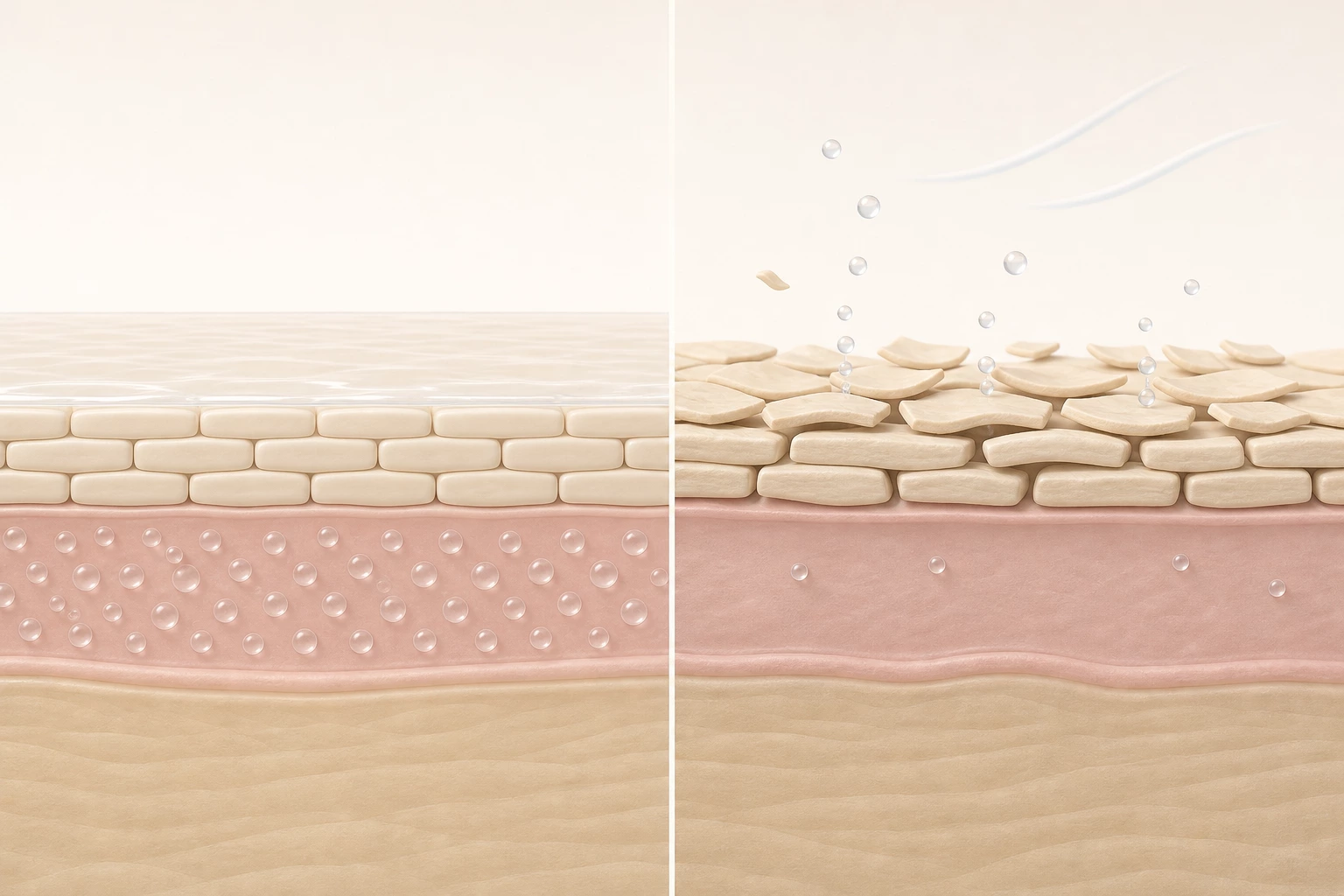
The condition of skin that has come through summer also has an effect. With strong UV rays, sweat, washing several times a day, and cooling care, the stratum corneum is often already worn out. Meeting the dry season in that state, you may feel unusually tighter than last year even at the same humidity. From what I see in the consultation room, the habits below often deepen inner dryness.
- Washing the face for a long time with hot water, or using foam cleanser three or more times a day.
- Frequently using scrubs or peeling products because flakes are visible.
- Applying only a strongly alcohol-based toner and skipping moisturizer because of a dislike of shine.
- Falling asleep with the indoor heating on, without any separate humidification.
Water-Glow Tox, which replenishes moisture directly
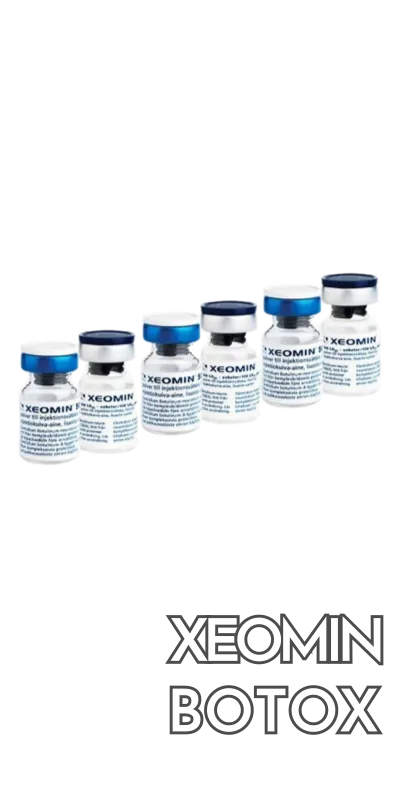
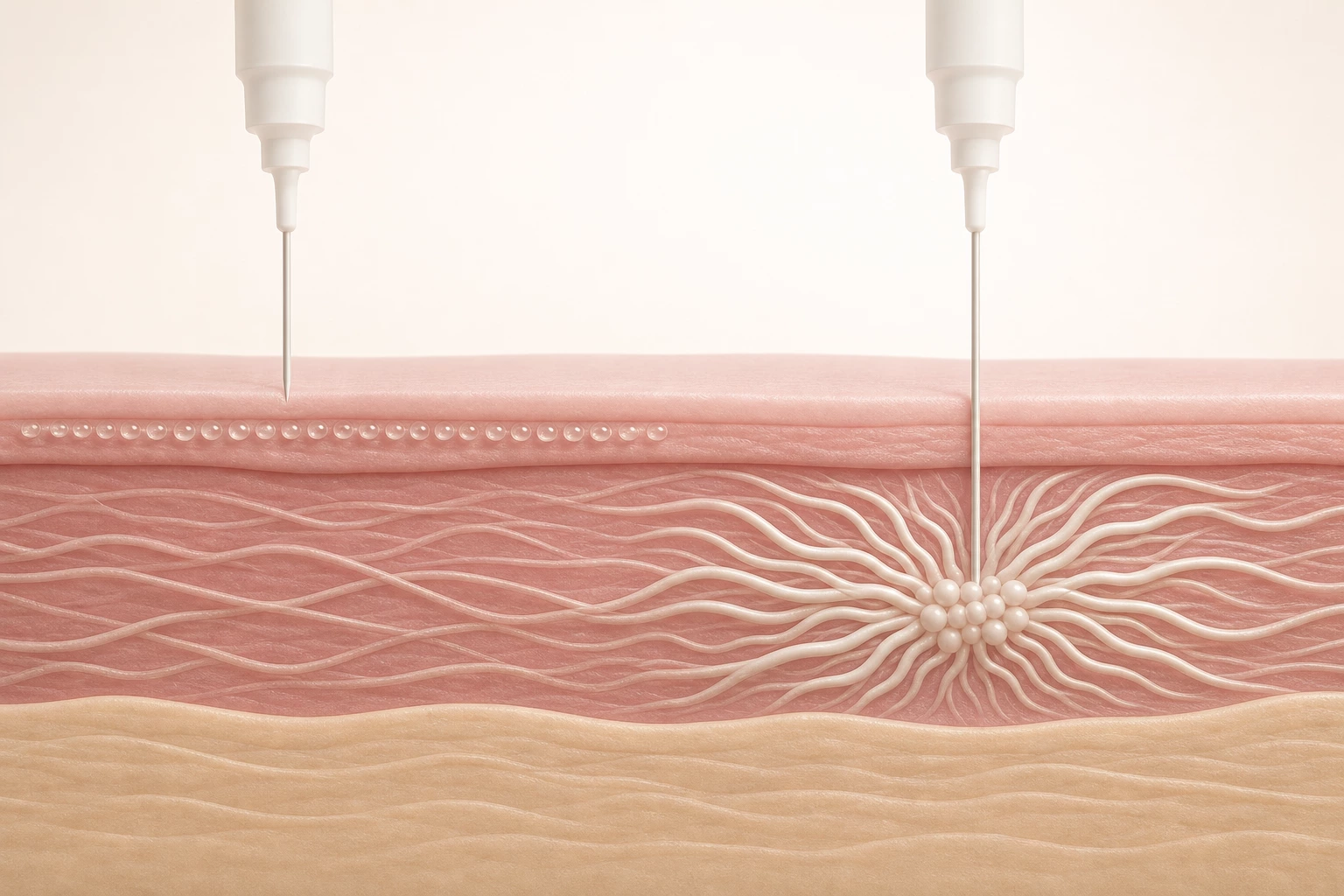
Water-Glow Tox is a procedure in which hyaluronic acid, an ingredient that holds moisture, is mixed with diluted skin Botox and placed evenly, in very small amounts, into the shallow layer of the dermis. A topical moisturizer stays in the stratum corneum, whereas Water-Glow Tox differs in that it places the moisture-holding ingredient directly within the skin. There is also research showing that skin hydration and elasticity measures improved when hyaluronic acid was injected into the dermis in fine, divided amounts. [3]
The skin Botox that goes in with it, unlike ordinary Botox used to smooth wrinkles, is diluted and placed in the shallow layer of the dermis. It helps to tidy up sebum secretion and prominent pores; a study has reported that sebum secretion decreased when it was injected intradermally in the face. [4] So it is well suited to addressing both concerns together in so-called oily-but-dehydrated skin, which is shiny on the surface and tight inside.
Many people notice their skin becoming moist and smooth within a few days of the procedure. However, hyaluronic acid is gradually absorbed over time, so maintaining that state requires a plan of repeating the procedure at intervals. To be frank, the strength of Water-Glow Tox lies in replenishing moisture quickly, and when the skin's foundation itself has become thinner and weaker, it may not be enough on its own.
Rejuvelook, which rebuilds the skin's foundation
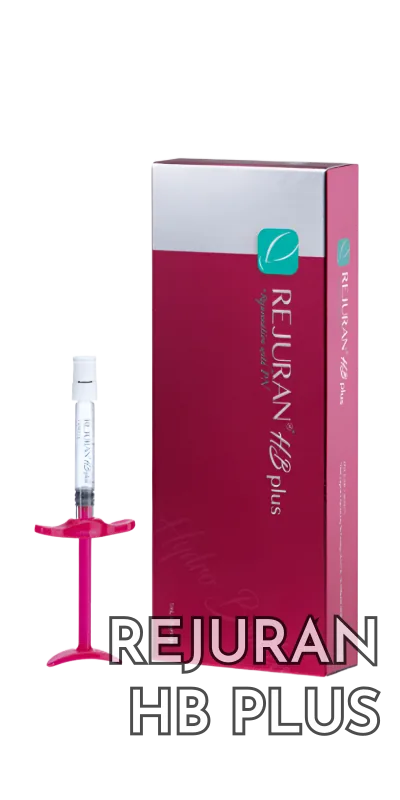
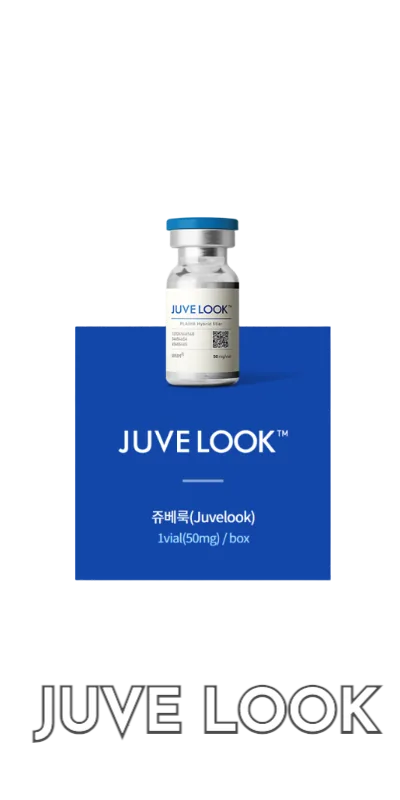
Rejuvelook is a procedure in which Rejuran and Juvelook are injected together. Polynucleotide, the ingredient of Rejuran, stimulates the fibroblasts of the dermis and helps create an environment in which damaged skin recovers. [5] The PDLLA microparticles of Juvelook break down slowly in the dermis and induce the body's own collagen production, helping to build up skin thickness and density. [6]
If inner dryness recurs every year and fine lines or loss of elasticity have begun to appear along with tightness, the skin easily returns to its original state soon after moisture alone is replenished. In such people, the very foundation with which the skin holds moisture is often weakened, so I recommend strengthening the dermis with Rejuvelook first. It is not a procedure that makes the skin moist right away like Water-Glow Tox; usually, as several sessions are carried out at 3–4 week intervals, you gradually feel the texture becoming firmer.
The differences between the two procedures, summarized
| Category | Water-Glow Tox | Rejuvelook |
|---|---|---|
| Composition | Hyaluronic acid + skin Botox | Rejuran (polynucleotide) + Juvelook (PDLLA) |
| Injection depth | Shallow layer of the dermis | Mid-dermis |
| Main role | Replenishing moisture within the skin, tidying sebum and pores | An environment for recovery from damage, inducing collagen production |
| When the change is felt | Moisture and glow within a few days | Texture and elasticity, gradually as sessions accumulate |
| Suited to | Oily-but-dehydrated skin, shiny on the surface and tight inside / lifting makeup | Inner dryness that recurs every year / accompanied by thinned skin and fine lines |
| After the procedure | Small bumps at the injection sites for half a day to a day; small bruises possible | Small bumps for 1–2 days; small bruises possible |
This table summarizes general tendencies; the actual composition and number of sessions are decided according to the skin condition after consultation.
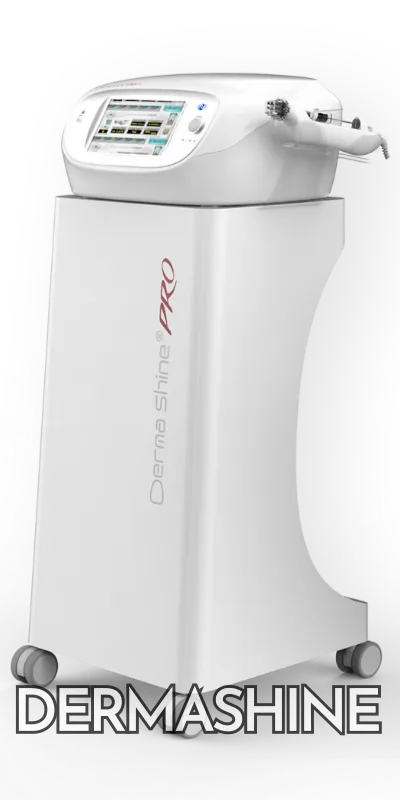
Many people have both concerns together. When the skin is uncomfortable from an immediate lack of moisture and the foundation has also weakened, we plan the order and intervals of the two procedures separately. As for the injection method, depending on the area and skin thickness, we choose whichever suits between manual injection and an injection device such as Dermashine.

“Inner dryness is not so much a lack of cream as a state in which the skin's ability to hold moisture has weakened. So before asking what to replenish, I first look at which layer has weakened.”
Yoon Jisun · Director · Board-Certified DermatologistDryness left for a long time can also lead to facial redness
It is easy to regard inner dryness as merely the discomfort of tightness, but when the stratum corneum remains in a gapped state, the skin comes to react easily to outside irritation. It stings even with your usual cleanser or cosmetics, irritants such as fine dust and cold wind enter the skin and cause an inflammatory reaction, and the vessels beneath dilate and the face turns red. In fact, research has reported that barrier function is greatly reduced in the skin of patients with rosacea. [7]
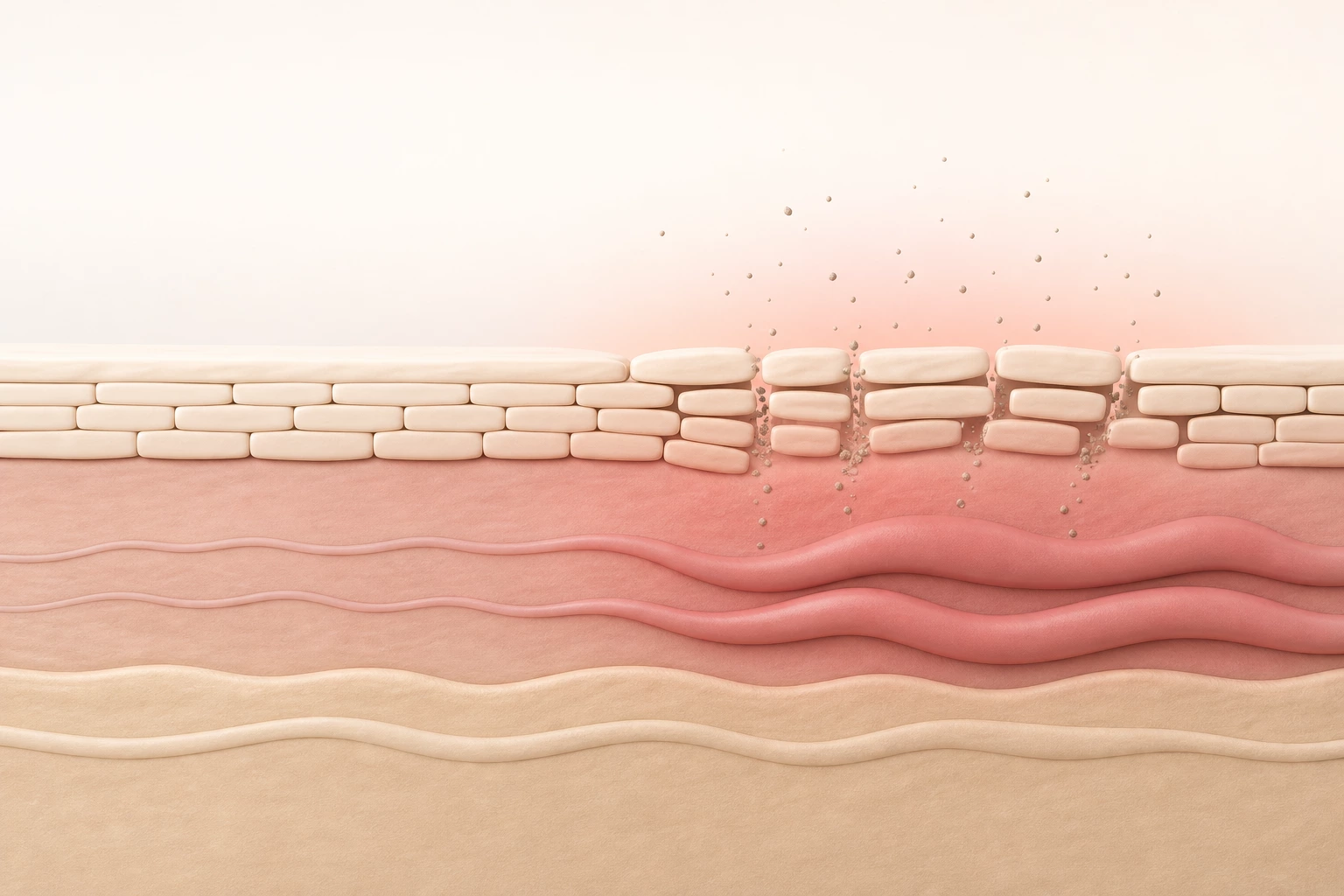
At first, the skin merely turns red briefly after washing and then settles. But as this is repeated, the time it takes for the redness to fade grows longer and longer, and at some point the whole cheek comes to look permanently flushed. If you notice changes like those below, it is better to check whether facial redness is progressing.
- Redness after washing or moisturizing does not subside for more than 30 minutes.
- Every time you move between indoors and outdoors, your cheeks burn and flush easily.
- Fine thread veins have begun to show through on the cheeks or beside the nostrils.
- Stinging continues for days even when you apply mild products.
If you feel the redness is worsening, Vbeam treatment is needed
Once the barrier recovers, the reaction of turning red in response to irritation decreases. But vessels that have already remained dilated do not narrow again with moisturizing and barrier care alone. If you feel the redness is gradually worsening, a stage of treating the dilated vessels themselves is needed at that point.
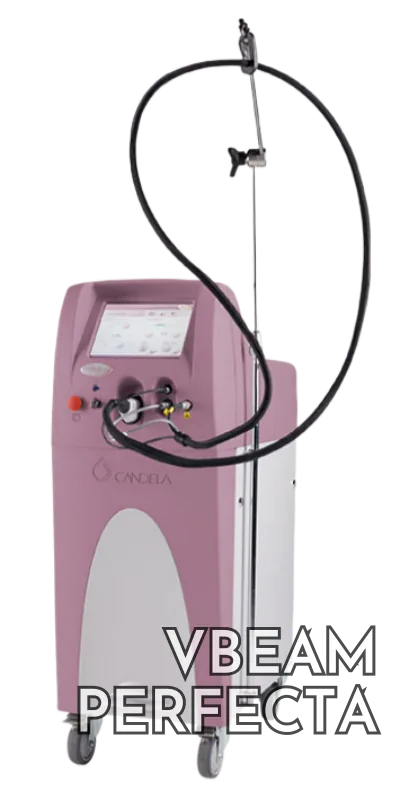
The Vbeam Perfecta used at Lumiin Dermatology is a laser in which 595nm light is absorbed by hemoglobin in the blood and delivers heat to dilated vessels to reduce them. Just before each pulse, cryogen cools the skin surface to protect the epidermis. The international rosacea expert consensus also lists the pulsed dye laser as a treatment option for persistent facial erythema. [8] Usually several sessions are carried out at 3–4 week intervals, and the red background gradually fades.
Barrier care must not stop at this point. I plan the treatment as a sequence in which barrier recovery and vascular treatment proceed together. In a period when the skin is stinging and sensitive, we first calm the irritation and then set the laser intensity, and I guide patients to continue moisturizing and sun protection while the vessels are being reduced with Vbeam. How Vbeam works differently for each type of redness is explained in detail in the column on Vbeam effects by symptom, and why we look at barrier treatment together is explained in the column on facial redness and skin barrier treatment.
Please also keep these at home before and after the procedure
Whichever procedure you receive, the results last longer only when care at home goes along with it. For the stratum corneum, small habits repeated every day have a greater effect than elaborate care.
- Wash your face with lukewarm water, and pat it dry gently with a towel rather than rubbing.
- Apply moisturizer within 3 minutes after washing. A simple product containing ceramides is enough.
- Take a break from scrubs and peeling until your skin feels comfortable.
- Keep indoor humidity at around 40–60%, and use a humidifier when sleeping with the heating on.
- Apply sunscreen every day in autumn as well.
- On the day of a Water-Glow Tox or Rejuvelook procedure, avoid saunas, alcohol, and strenuous exercise, and do not rub the injection sites.
If flaking and tightness continue for several weeks or more even with consistent use of moisturizer, if itching or oozing develops as well, or if redness lasts longer and longer or thread veins have begun to show, a consultation comes before self-care. Even if it looks like dryness, it may be seborrheic dermatitis, contact dermatitis, or rosacea, so it is safer to distinguish the cause and then decide on treatment.
If you have experienced tightness and lifting makeup every autumn, I hope that this year you will start by finding out in which layer of the skin the cause lies. Whether replenishing moisture comes first, whether strengthening the foundation comes first, or whether redness has already progressed and vascular treatment is needed can be judged only by looking at the skin directly. In the consultation room we will examine your skin condition together, and I will explain the right order step by step. Thank you.
The doctor who wrote this article
- Education
- Graduated top of class, Ajou University School of Medicine
Master of Medicine, Ajou University Graduate School of Medicine
Completed dermatology training at Ajou University Hospital - Career
- Best Resident Award, Ajou University Hospital
Former Director, Areumdaun Nara Dermatology Clinic, Bundang Branch - Societies
- Full member, Korean Dermatological Association
Full member, Association of Korean Dermatologists
Full member, Korean Society for Clinical Dermatologic Therapy
Full member, Korean Society for Vitiligo and Pigmentation - Areas of practice
- Acne · Skin texture
Medical References
- [1] Engebretsen KA, Johansen JD, Kezic S, Linneberg A, Thyssen JP. The effect of environmental humidity and temperature on skin barrier function and dermatitis. J Eur Acad Dermatol Venereol. 2016;30(2):223–249.
- [2] Rogers J, Harding C, Mayo A, Banks J, Rawlings A. Stratum corneum lipids: the effect of ageing and the seasons. Arch Dermatol Res. 1996;288(12):765–770.
- [3] Williams S, Tamburic S, Stensvik H, Weber M. Changes in skin physiology and clinical appearance after microdroplet placement of hyaluronic acid in aging hands. J Cosmet Dermatol. 2009;8(3):216–225.
- [4] Rose AE, Goldberg DJ. Safety and efficacy of intradermal injection of botulinum toxin for the treatment of oily skin. Dermatol Surg. 2013;39(3 Pt 1):443–448.
- [5] Water retention ability of the dermis following polynucleotide intradermal injection using a water distribution model: pilot study. (A small pilot study of changes in dermal water retention after intradermal polynucleotide injection; the level of evidence is still limited.)
- [6] Manufacturer and clinical data: induction of the body's own collagen production after intradermal injection of Juvelook (PDLLA). Long-term comparative studies are still limited.
- [7] Medgyesi B, Dajnoki Z, Béke G, et al. Rosacea is characterized by a profoundly diminished skin barrier. J Invest Dermatol. 2020;140(10):1938–1950.
- [8] Schaller M, et al. Recommendations for rosacea diagnosis, classification and management: update from the global ROSacea COnsensus 2019 panel. Br J Dermatol. 2020;182:1269–1276.
This article is intended to provide general medical information and does not replace individual diagnosis and treatment. Treatment effects and how long they last may vary from person to person, and redness, swelling, bruising, small bumps at the injection sites, and similar reactions may occur after the procedure.