Lumiin Dermatology · Column by a Board-Certified Dermatologist
Scalp Psoriasis:How to Tell It from Dandruff and Seborrheic DermatitisAppearance · Distinguishing points · Why it is slow to heal · Treatment steps
Hello. This is Dr. Choi Jaewon of Lumiin Dermatology.
“I’ve been using dandruff shampoo for months, but the flaking just won’t decrease.” “I was told it was seborrheic dermatitis and applied the medication, but my scalp seems to be getting thicker and thicker.” These are things I often hear from people who come in because of scalp flaking. Many also say they have come to avoid dark clothes because the white flakes falling on their shoulders bother them.
There are several causes of flaking on the scalp. It is often common dandruff or seborrheic dermatitis, but some of these cases are scalp psoriasis. Psoriasis can occur anywhere on the body, and the scalp is one of the sites where it occurs most often. The three look similar on the surface but call for different directions of treatment, so identifying which one it is at the outset is important. Today I will explain what scalp psoriasis looks like, how it differs from dandruff and seborrheic dermatitis, and in what order scalp psoriasis treatment proceeds. For why psoriasis develops, please refer to the separate page we have prepared.
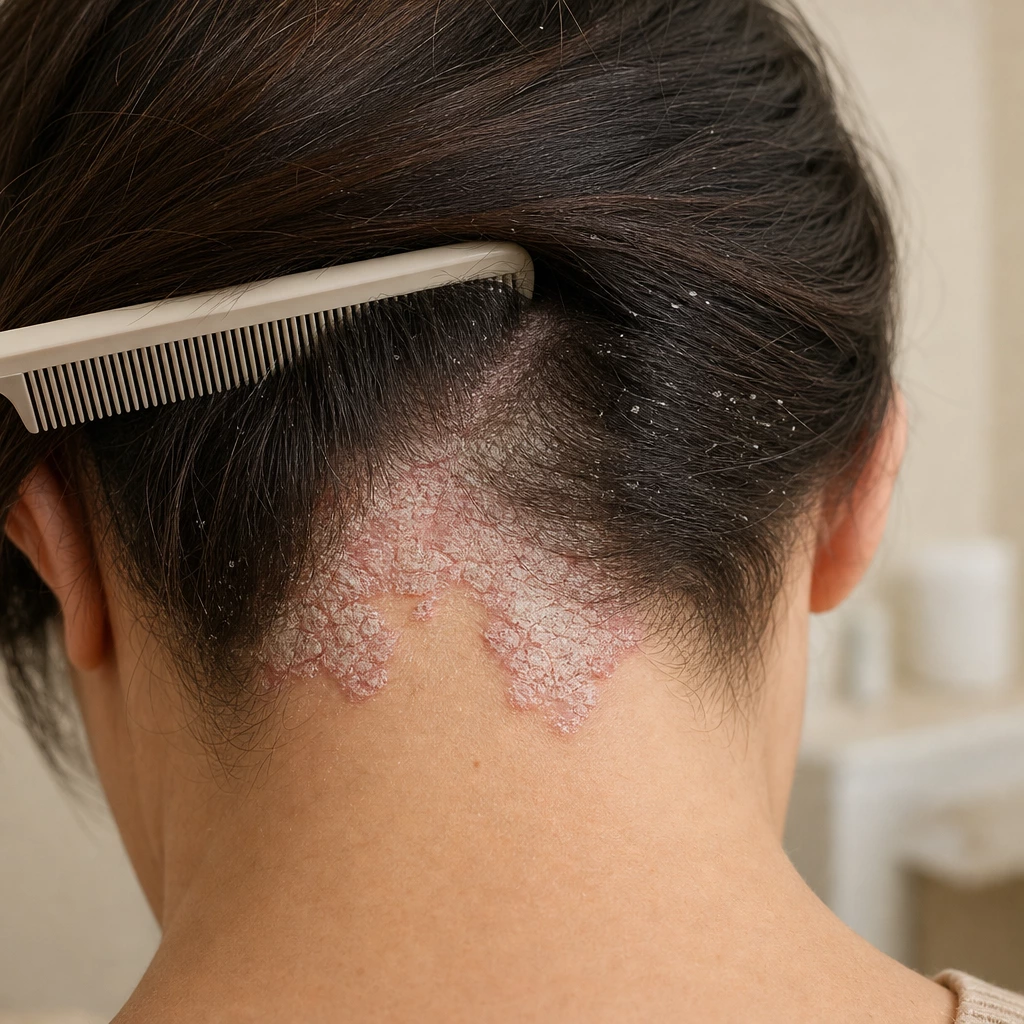
In scalp psoriasis, sharply bordered red plaques are covered with
thick silvery-white scales
When I first examine scalp psoriasis, I part the hair in several places and check the skin beneath the scales. If it is psoriasis, the following features are usually seen.
- Sharply bordered red plaques. The boundary between normal scalp and the lesion is as clear as a drawn line, and to the touch the lesion is raised and thicker than its surroundings. They range from coin-sized to plaques wide enough to cover the entire back of the head.
- Thick, silvery-white scales. The scales are dry and hard, piled in many layers, and white with a silvery sheen. They stick to the hair roots and do not come off easily even with combing.
- Borders that cross the hairline. Psoriasis often does not stop where the hair grows but extends past the hairline above the forehead and onto the nape. Because this area is visible to others when the hair is tied up or cut short, it is also the part that bothers people most.
- Itching. The itching can be quite severe, and some people say that areas with thick scales feel tight or sting.
Many people worry that their hair may fall out. If you scratch hard or pick off the scales, hair at that spot may fall out temporarily, but once the inflammation settles, most of it grows back. That is why calming the inflammation comes first, rather than forcibly removing the scales.
It differs from dandruff and seborrheic dermatitis in
scale appearance, borders, and other body sites
Dandruff is a condition in which a fungus that normally lives on the scalp and sebum are involved and the skin sheds in fine flakes, and when this becomes severe enough to be accompanied by redness and inflammation, it is regarded as seborrheic dermatitis. Placed side by side, the three compare as follows.
| Feature | Dandruff | Seborrheic dermatitis | Scalp psoriasis |
|---|---|---|---|
| Scale appearance | Fine, light, powder-like flakes | Yellowish, greasy scales, relatively thin | Dry, thick scales piled in many layers |
| Color | White; the scalp is hardly red | Yellowish scales on a light pink or reddish base | Silvery-white scales on vivid red plaques |
| Borders | Scattered over the whole scalp with no border | Spreads with blurred borders | Sharply demarcated from normal scalp and raised |
| Location | Within the scalp | Sebum-rich areas such as the scalp, eyebrows, sides of the nose, behind the ears, and center of the chest | The scalp, extending onto the forehead hairline and nape |
| Other sites involved | None | Tends to occur together on sebum-rich areas of the face | Red plaques on the elbows, knees, gluteal cleft, and lower back; nails with dot-like pits or lifting |
This table summarizes typical appearances. In practice, features of two conditions may appear mixed, so we confirm by examination.
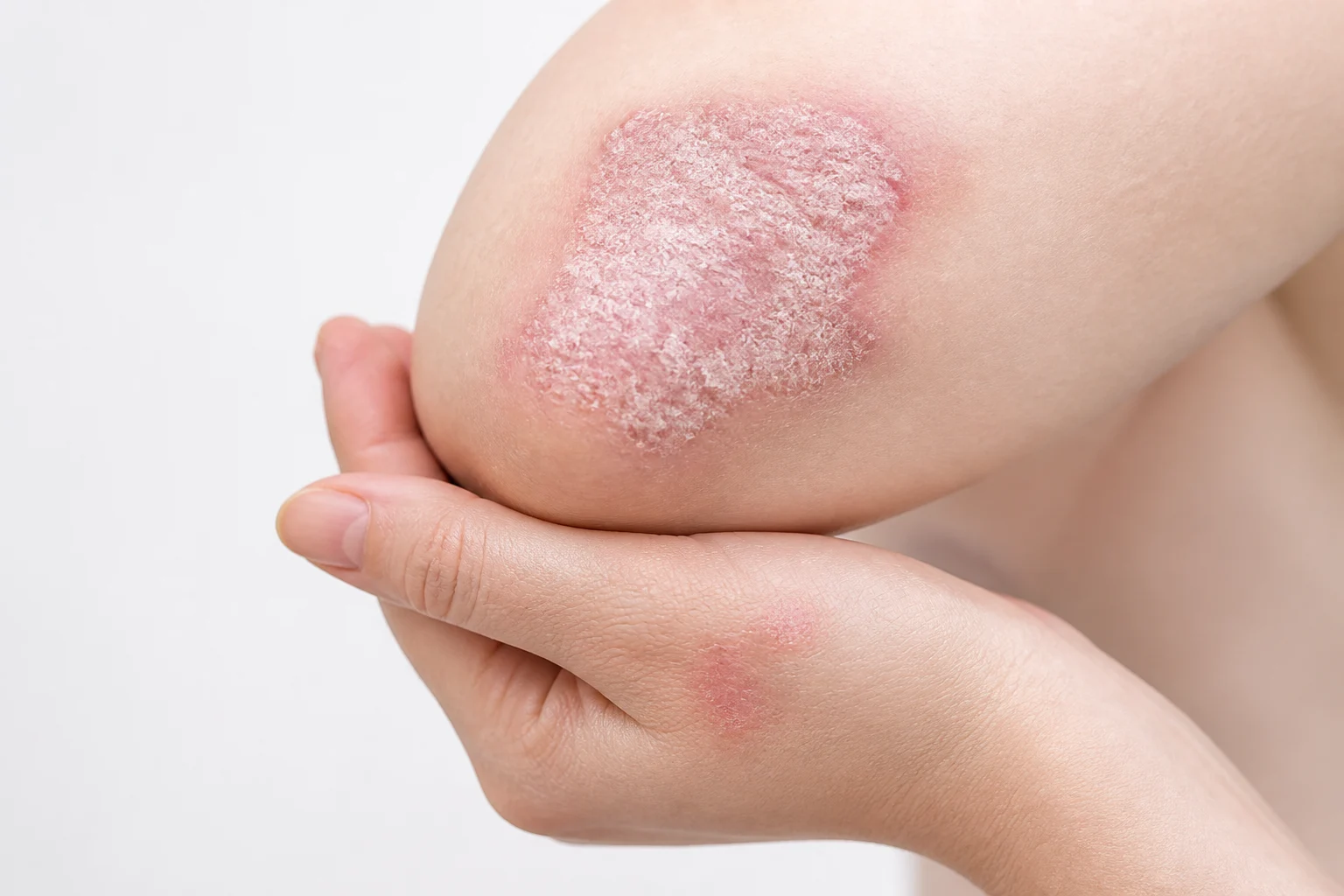
The surest clue lies outside the scalp. After looking at scalp flaking in the consultation room, I always look at the elbows, knees, and nails as well. If there is a red plaque on the elbow of the same appearance as on the scalp, or several small pits on the nail surface as if pricked with a needle, it greatly helps in judging toward psoriasis. I also ask whether anyone in the family has psoriasis.
Even so, it is not uncommon for scalp psoriasis and seborrheic dermatitis to look alike. Sometimes features of both are mixed and it is difficult to assign the condition to one or the other. In such cases we narrow the judgment while watching the response to treatment, and in rare cases perform a skin biopsy. If a child develops scalp flaking with hair falling out as if broken off, it may be tinea capitis, a fungal infection, and separate testing is needed.
There are reasons why scalp psoriasis is particularly slow to heal
“My elbows got better with ointment, but my head is just the same.” I hear this often. The scalp is a more difficult site to treat than other parts of the body.
Hair makes it hard for medication to reach the skin
When ointment or cream is applied to the head, most of it ends up on the hair and only a little actually reaches the scalp. Sticky ointments do not wash out easily even with shampooing, so applying them every morning is burdensome, and in the end the days skipped easily come to outnumber the days applied. When scales are thickly piled up, it is also hard for medication to penetrate beneath them. So for the scalp we use medications in the form of solutions, foams, and shampoos that spread well between the hairs, and when the scales are thick, we first add a medication that softens and loosens them. [1]
Scratching and combing bring psoriasis back
Psoriasis has a feature called the Koebner phenomenon. This is the phenomenon in which new psoriasis develops at a site of injury, such as where the skin is scratched or rubbed. The scalp is a place where scratching because it itches, picking off scales with the fingernails because they look unsightly, and combing down hard are repeated every day. This irritation fuels inflammation, and inflammation in turn produces itching, a cycle that continues and makes healing difficult. Hot air from a hair dryer and perm or hair-dye chemicals can also be irritating when lesions are present.
Scalp psoriasis treatment proceeds step by step, starting with topical medication
The step of treatment is decided according to the extent, thickness, and the inconvenience experienced in daily life. Even when the area is small, the scalp is visible to others and itches severely, causing considerable inconvenience in daily life, so we give it particular attention when deciding the intensity of treatment.
Step 1: topical medication in a form suited to the scalp
The first thing used is a topical steroid. For the scalp there are solutions, lotions, and foams that are easy to apply between the hairs, as well as a shampoo form that is applied to the scalp, left on for a set time, and then rinsed off. They calm inflammation and itching relatively quickly. To this we may add a vitamin D derivative (calcipotriol), which slows the excessively rapid growth of skin cells, or use a gel combining the two ingredients. The topical therapy guidelines of the American Academy of Dermatology and the National Psoriasis Foundation also recommend these medications as the basis for scalp psoriasis. [1] After using them for a set period and checking the response, we reduce the frequency of application as you improve. If the scales are thick, an ingredient that dissolves scales is used first so that the medication penetrates well.
Antifungal shampoos used for seborrheic dermatitis help with dandruff and seborrheic dermatitis, but for scalp psoriasis they are often not enough on their own. Rather than spending months switching among over-the-counter shampoos, I recommend getting a diagnosis first.
Step 2: if the response is poor, phototherapy is added
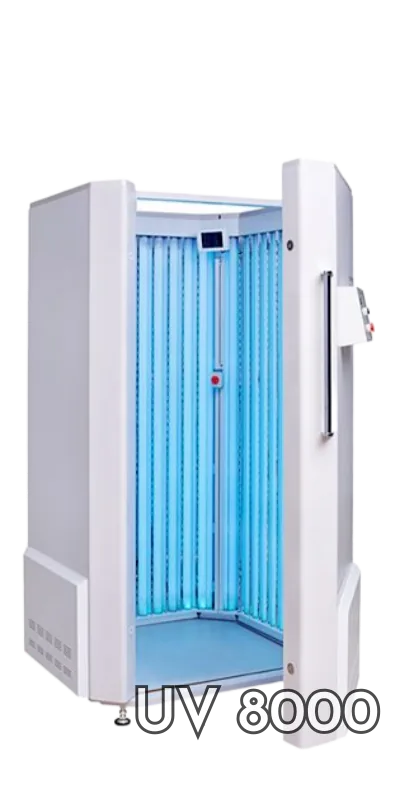
If thick plaques remain despite sufficient use of topical medication, or if the lesions quickly return when the medication is stopped, phototherapy is added. Phototherapy for psoriasis suppresses the activity of the immune cells that cause inflammation and slows the pace of skin cells that are growing too fast. The problem is that hair blocks the light. The whole-body phototherapy unit (UV 8000 N.B), in which you stand in a booth and receive light over the entire body, is well suited to psoriasis spread widely over the trunk, arms, and legs, but not enough light reaches a scalp covered with hair.
So for the scalp we use excimer treatment, in which 308nm light is applied directly to the lesions only. Our clinic’s Excimer Light works by placing the handpiece directly against the skin, so it can be used on curved areas such as the scalp, and the XTRAC Velocity excimer laser delivers intense light briefly to a narrow area. When treating the scalp, we part the hair to expose the lesion, then apply the light, avoiding the surrounding normal skin as much as possible. The phototherapy guidelines of the American Academy of Dermatology and the National Psoriasis Foundation also describe targeted phototherapy, such as the excimer laser and excimer lamp, as a method that can be used for localized psoriasis and scalp psoriasis. [2]
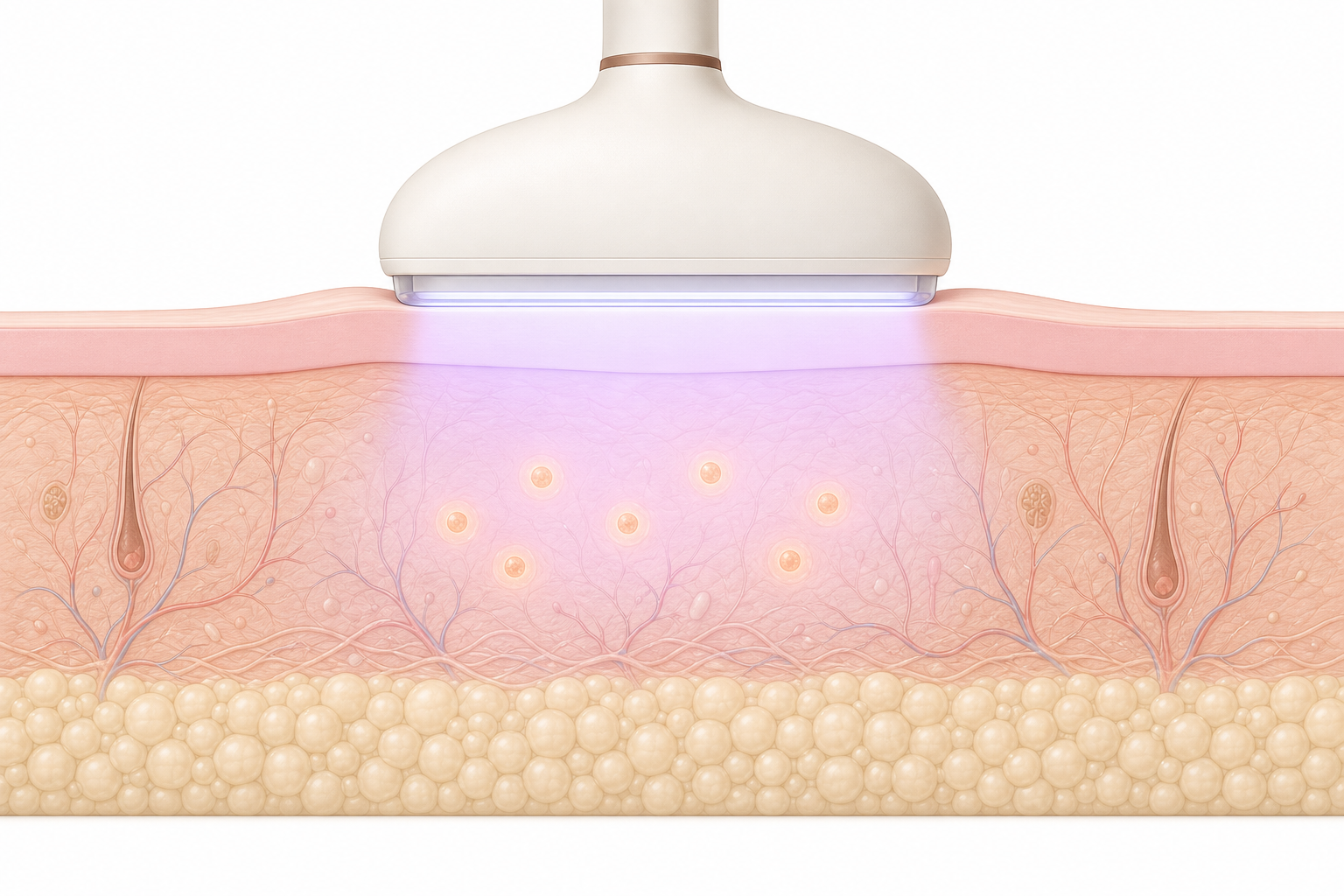
It is usually given 1–3 times a week, and scales and redness decrease as sessions accumulate. Topical medication is often continued together during phototherapy. If the treated area burns for more than a day or blisters after treatment, you must let us know before the next treatment so that we can adjust the dose. The principles and devices of excimer treatment are explained in detail on our excimer laser phototherapy for psoriasis and vitiligo page.
Step 3: for moderate or more severe disease, oral medication and injectable agents are considered
If psoriasis is widespread over many parts of the body and not only the scalp, if the nails are damaged and the joints hurt, or if it cannot be controlled even with topical medication and phototherapy, we consider treatment that addresses the immune response of the whole body. Oral medications include immunosuppressants such as methotrexate and cyclosporine, and there are also injectable biologics that selectively block inflammatory signals. [3] Injectable biologics often show a good response in scalp psoriasis as well, but screening for infections such as tuberculosis is required first, and there are separate criteria for national health insurance coverage. Which medication is suitable is decided at your consultation after considering the extent, coexisting conditions, pregnancy plans, and the medications you are taking.
Please keep these habits in daily life during treatment
- Do not scratch. When it itches, hold a cold wet towel on the area for a moment instead of using your fingernails. If the itching is so severe that it disturbs your sleep, medication to reduce itching can be prescribed as well.
- Do not force the scales off. If you scrape them off with your fingernails or a comb, that spot becomes psoriasis again. Let them come off naturally as you wash your hair after softening them with medication.
- Treat the scalp gently. Wash with lukewarm water, and use a hair dryer on cool or low air. When lesions are present, I recommend postponing perms and hair dyeing for a while.
- Prepare in advance for winter. Many people find their psoriasis worsens in winter, when it is dry and there is little sunlight. When the cold wind begins to blow, return to the habit of applying your medication and keep indoor air from becoming too dry.
- When flaking and itching remain the same even after using dandruff shampoo for 2–3 weeks or more
- When sharply bordered red plaques have extended onto the forehead hairline or nape
- When similar scaly plaques are also seen on the elbows, knees, or lower back
- When the nails develop dot-like pits, or the tips lift and change color
- When the finger joints, heels, or lower back are swollen or stiff in the morning
- When the scalp oozes and hurts, or hair is falling out noticeably
Causes and treatment of psoriasis →
Excimer laser phototherapy for psoriasis and vitiligo →
Scalp flaking is a common symptom, so it is easy to dismiss as nothing serious. But if you see sharply bordered red plaques and thick silvery-white scales, and they cross the hairline or there are also changes on the elbows and nails, you should consider the possibility of psoriasis. Scalp psoriasis takes time because it is a site that medication reaches with difficulty and that is frequently irritated, but it is a condition that can be well controlled when medication suited to the scalp and phototherapy are used in the appropriate steps. If you have been troubled by long-standing scalp flaking, I recommend first finding out together what it is at Lumiin Dermatology in Daechi-dong, Gangnam. Thank you.
Medical references
- Elmets CA, et al. Joint AAD-NPF guidelines of care for the management and treatment of psoriasis with topical therapy and alternative medicine modalities for psoriasis severity measures. J Am Acad Dermatol. 2021;84(2):432–470. Covers topical steroids, vitamin D derivatives and combination products used for scalp psoriasis, and formulations suited to the scalp (foams and solutions).
- Elmets CA, et al. Joint AAD-NPF guidelines of care for the management and treatment of psoriasis with phototherapy. J Am Acad Dermatol. 2019;81(3):775–804. Summarizes the evidence for using targeted phototherapy, such as the excimer laser and excimer lamp, for localized psoriasis and scalp psoriasis.
- Menter A, et al. Joint AAD-NPF guidelines of care for the management and treatment of psoriasis with biologics. J Am Acad Dermatol. 2019;80(4):1029–1072.
This column provides general medical information. The table and diagrams simplify typical appearances to aid understanding and differ from actual findings. The cause of scalp flaking and the treatment method, duration, and risk of side effects differ from person to person, so please have a consultation to be guided to the treatment that suits you.